
Used Can-Am Defender Right for Your Property if you manage acreage, run a hobby farm, or just spend your weekends fixing fences and hauling firewood, you’ve probably asked yourself the same question a lot of landowners ask: should you buy new, or is a used Can-Am Defender enough machine to get the job done? It’s a fair question, and the answer depends on how you’ll use it, how many hours are already on the clock, and what kind of terrain you’re working.
This guide breaks down everything you need to know before buying a used Can-Am Defender for sale what to inspect, what it’s actually good at, what it costs to own, and how it compares to buying new or choosing a different side-by-side entirely.
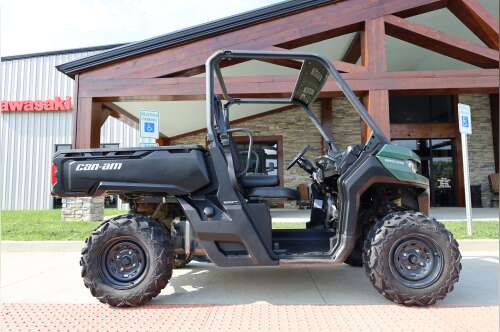
Table of Contents
- What Is a Can-Am Defender, and Why Is It Popular on Properties?
- Quick Answer: Is a Used Can-Am Defender Worth It?
- What Makes the Defender Good for Property Work
- How to Inspect a Used Can-Am Defender Before You Buy
- Used vs. New Can-Am Defender: Cost Comparison
- Which Defender Trim Fits Your Property?
- Common Problems to Watch For in Used Defenders
- Where to Find a Reliable Used Can-Am Defender
- Frequently Asked Questions
- Final Verdict
What Is a Can-Am Defender, and Why Is It Popular on Properties?
The Can-Am Defender is a utility side-by-side (UTV) built by BRP, designed specifically for work rather than sport riding. Unlike trail-focused machines like the Can-Am Maverick, the Defender lineup is built around torque, towing capacity, cargo space, and durability the exact traits that matter most on a working property.Used Can-Am Defender Right for Your Property
Property owners gravitate toward the Defender because it blurs the line between a compact tractor and a pickup truck. It can tow a loaded trailer, haul feed or fencing supplies in the bed, crawl through mud without getting stuck, and still fit through gates a full-size truck can’t.Used Can-Am Defender Right for Your Property
Why This Matters When Buying Used
Because the Defender is a workhorse, not a toy, used units often come from real property use meaning real wear on the drivetrain, suspension, and bed. That’s not a dealbreaker, but it does mean inspection matters more here than it would for a used weekend-trail UTV. If you want to see what’s currently on the lot, our Can-Am Defender for sale inventory is a good place to start comparing trims and hours before you commit to a purchase.Used Can-Am Defender Right for Your Property
Quick Answer: Is a Used Can-Am Defender Right for Your Property Worth It?
AI Overview Snapshot: Yes, a used Can-Am Defender is generally a smart buy for property owners, provided the unit has been well-maintained, has moderate hours (under 400–500), and passes a mechanical inspection. Buying used typically saves 25–40% compared to a new model with similar specs, while still delivering strong towing capacity, cargo capability, and all-terrain reliability for chores, hauling, and land management. Browse a range of inspected options in our used Can-Am Defender for sale listings to compare current pricing by trim and hours.
The short version: a used Defender is worth it if you verify maintenance history and inspect the belt, CVT, and suspension before buying — not if you buy sight unseen from an unverified seller.Used Can-Am Defender Right for Your Property
What Makes the Defender Good for Property Work
Towing and Payload Capacity
Most Defender models tow between 1,500 and 2,500 lbs, depending on trim, with a cargo bed rated for several hundred pounds. That’s enough to move a small trailer, a stock tank, or a load of lumber in a single trip tasks that would otherwise mean multiple runs with a hand cart or ATV.Used Can-Am Defender Right for Your Property
Terrain Versatility
With true 4WD, locking differentials on higher trims, and generous ground clearance, the Defender handles mud, hills, and uneven pasture far better than a standard ATV or lawn tractor. This is a major reason it’s a go-to UTV for property maintenance on farms, ranches, and rural homesteads.Used Can-Am Defender Right for Your Property
Comfort for Long Work Days
Unlike a stripped-down utility ATV, the Defender’s side-by-side cab seats two (or more, in Max models), with actual doors, a roof option, and enough room to bring a helper or a dog along on chore runs.Used Can-Am Defender Right for Your Property
Attachments and Implements
Plows, sprayers, seeders, and winches are all available for the Defender platform, which extends its usefulness well beyond hauling something worth factoring in if you’re comparing it to a compact tractor for year-round property maintenance.
How to Inspect a Used Can-Am Defender Before You Buy
Buying a used side-by-side without inspection is the single biggest risk in this purchase. Here’s a practical checklist.Used Can-Am Defender Right for Your Property
1. Check the Hour Meter, Not Just the Odometer
UTVs are measured in engine hours, not miles. A Defender with 300–400 hours used mostly for slow-speed property work has seen far less strain than one with the same hours ridden hard on trails.Used Can-Am Defender Right for Your Property
2. Inspect the CVT Belt and Clutch
The belt-driven CVT system is the most common wear item on any Can-Am. Ask when the belt was last replaced, and listen for a burning rubber smell during a test drive a telltale sign of belt slippage or overheating.Used Can-Am Defender Right for Your Property
3. Look Underneath for Frame and Skid Plate Damage
Property use means rocks, stumps, and ruts. Check the skid plates and frame rails for dents, cracks, or rust that could indicate the unit was run hard without protection.Used Can-Am Defender Right for Your Property
4. Test All Four-Wheel-Drive Modes
Engage 2WD, 4WD, and (if equipped) the locking differential to confirm each mode engages cleanly without grinding or delay.Used Can-Am Defender Right for Your Property
5. Review Maintenance Records
A seller who can show oil change intervals, belt replacement dates, and any warranty work is far more trustworthy than one who can’t. This single step does more to protect your investment than any other item on this list.Used Can-Am Defender Right for Your Property
Red Flags That Should Walk You Away
- No maintenance records at all
- Mismatched tires suggesting uneven wear or accident repair
- Excessive play in the steering or suspension
- A seller unwilling to allow a pre-purchase inspection
Used vs. New Can-Am Defender: Cost Comparison
| Factor | Used Defender | New Defender |
|---|---|---|
| Purchase price | 25–40% less | Full MSRP |
| Warranty | Often expired or limited | Full manufacturer warranty |
| Depreciation hit | Already absorbed by prior owner | You absorb it in year one |
| Customization | May already include attachments | Blank slate, added cost |
| Financing terms | Sometimes higher rates | Often promotional rates available |
For most property owners doing routine chores mowing runs, feed hauling, fence checks a used Defender delivers nearly identical utility to a new one at a meaningfully lower price. Buyers planning heavy commercial use every day, however, may find the new-unit warranty worth the premium.Used Can-Am Defender Right for Your Property
Which Defender Trim Fits Your Property?
Defender HD7 / HD8 — Best for Small to Mid-Size Properties
Lower-cost entry points with solid towing capacity, ideal for properties under 20 acres focused on general chores.
Defender HD9 / HD10 — Best for Working Farms and Ranches
Higher torque and towing capacity, built for daily hauling, larger trailers, and rougher terrain across bigger acreage.
Defender MAX — Best for Properties with a Team or Family
Adds rear seating for up to six people total, useful for properties where more than one person needs to ride along during chores or land tours.
Not sure which trim fits your acreage? Our Can-Am Defender for sale page lets you filter by trim, model year, and hours so you can compare HD7 through MAX units side by side.Used Can-Am Defender Right for Your Property
Common Problems to Watch For in Used Defenders
- Belt wear from overheating — often caused by riding in high gear at low speed under load
- Water pump seal failures on older model years — ask specifically about this
- Rusted or seized bolts on units that sat outside uncovered
- Worn ball joints and tie rods from repeated rough terrain use
None of these are automatic dealbreakers, but each should factor into your offer price if found during inspection.Used Can-Am Defender Right for Your Property
Where to Find a Reliable Used Can-Am Defender
Your best options, in order of buyer protection:
- Certified pre-owned listings through authorized dealers — often include a mechanical inspection and limited warranty. Our own used Can-Am Defender for sale listings fall into this category, with hours and trim details listed up front.
- Private sellers with full maintenance records — can offer better pricing, but require your own inspection.
- Auction or liquidation sales — lowest price, highest risk; only recommended if you can inspect in person beforehand.
If you’re comparing your options side by side, our guide to choosing the right UTV for your acreage walks through sizing a machine to your specific property type, and our pre-purchase inspection checklist goes deeper into what a mechanic should check before you sign anything.Used Can-Am Defender Right for Your Property
Frequently Asked Questions
How many hours is too many on a used Can-Am Defender?
Generally, under 400–500 hours is considered low to moderate for a well-maintained Defender. Above 800–1,000 hours, expect to budget for belt, bearing, and suspension component replacement soon after purchase.
Is a used Can-Am Defender good for hauling and towing on a farm?
Yes. Most Defender trims tow between 1,500 and 2,500 lbs and carry several hundred pounds in the bed, making them well-suited to feed runs, fencing supplies, and small trailer towing on working farms.
What’s the average price of a used Can-Am Defender?
Prices vary by trim, model year, and hours, but used Defenders typically sell for 25–40% less than a comparable new model, with older base trims available for meaningfully less than higher-spec HD10 or MAX units.
Can I put a plow or attachment on a used Defender?
Most used Defenders are compatible with the same plow, winch, and implement attachments available for new units, since the mounting platform hasn’t changed significantly across recent model years — though it’s worth confirming compatibility by model year before buying.
Is a used Can-Am Defender better than a used ATV for property work?
For hauling, towing, and multi-passenger use, the Defender generally outperforms a traditional ATV. ATVs remain lighter and more nimble for tight trail work, but the Defender’s cargo bed and towing capacity make it the stronger choice for regular property chores.
Final Verdict: Should You Buy a Used Can-Am Defender for Your Property?
If your property work involves regular hauling, towing, or rough-terrain travel, a used Can-Am Defender is very likely the right call as long as you inspect it carefully and verify maintenance history before buying. It offers most of the capability of a new unit at a significantly lower cost, and the platform’s popularity means parts, attachments, and service support are easy to find.
Ready to find the right machine for your land? Browse our current inventory of inspected, ready-to-work used Can-Am Defenders for sale and get a machine that’s already proven itself on real property work not just on a showroom floor.