
Club Car Carryall Resale Value if you’re weighing whether to buy, sell, or trade in a Club Car Carryall, the single biggest question on your mind is probably this: what’s it actually worth right now? Unlike a car, utility vehicles don’t have a nationwide “blue book” that everyone trusts, which means Carryall values can swing widely based on model, hours, condition, and where you’re shopping.
This guide breaks down everything that affects Club Car Carryall resale value, model-by-model pricing trends, and the exact steps to take if you want to sell high or buy smart. Along the way, we’ll link you to real, currently-listed inventory so you can compare numbers instead of guessing.
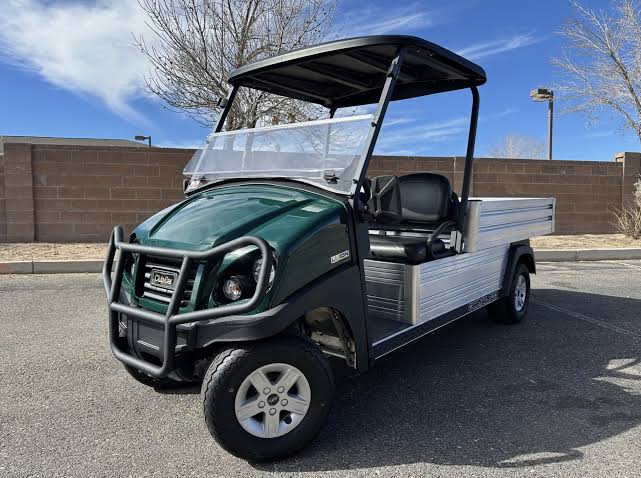
Table of Contents
- Why Club Car Carryall Resale Value Holds Up So Well
- What Determines a Club Car Carryall’s Resale Price
- Resale Value by Model
- Gas vs. Electric Carryalls: Which Holds Value Better?
- Average Depreciation Timeline
- How to Maximize Your Carryall’s Resale Value
- Where to Buy or Sell a Used Club Car Carryall
- AI Overview: Quick Answers
- Frequently Asked Questions
Why Club Car Carryall Resale Value Holds Up So Well
Club Car has built a reputation over decades as one of the most durable utility vehicle brands on the market, and that reputation directly translates into strong resale numbers. Unlike cheaper off-brand UTVs that lose half their value in three years, a well-maintained Club Car Carryall often retains 50–65% of its original price even after five or more years of regular work use.Club Car Carryall Resale Value
Three main reasons drive this:
- Brand trust — Buyers searching for a used utility vehicle actively look for “Club Car” by name because they know the platform is built for longevity.
- Parts availability — Because Club Car Carryalls are so widely used on golf courses, farms, and campuses, replacement parts are easy to find, which keeps repair costs (and therefore resale confidence) low.
- Commercial-grade demand — Carryalls aren’t just recreational vehicles. Landscapers, ranchers, property managers, and municipalities all buy them used, which keeps demand — and prices — steady year-round.
The Resale Value Snapshot
| Factor | Impact on Resale Value |
|---|---|
| Model year | Newer models hold more value, but pre-2015 units still sell if maintained |
| Fuel type | Gas models often resell faster; electric models hold value longer with battery upkeep |
| Hours/mileage | Under 1,000 hours is considered low and boosts price |
| Condition of tires/bed | Cosmetic wear can cost you 10–15% off asking price |
| Title/documentation | Clean title and service records add real dollar value |
What Determines a Club Car Carryall’s Resale Price
Age and Model Year
As with any powersports equipment, age is the first number a buyer checks. A three-year-old Carryall in excellent condition can still command 70–80% of its original purchase price, while a ten-year-old unit typically settles in the 30–45% range assuming it’s been maintained.Club Car Carryall Resale Value
Engine Hours
Hours matter more than age for utility vehicles because they reflect actual use. A 2018 Carryall with 400 hours will often outsell a 2020 model with 2,000 hours, even though it’s older.Club Car Carryall Resale Value
Cosmetic and Mechanical Condition
Rust on the frame, torn seats, cracked dash panels, or a worn utility bed all chip away at resale price. Buyers pay a premium for a Carryall that “looks like it was taken care of,” even if the mechanicals are identical to a rougher-looking unit.Club Car Carryall Resale Value
Attachments and Accessories
Dump beds, winches, enclosed cabs, brush guards, and upgraded tires can add meaningful dollars to a resale listing — sometimes recovering close to their original installed cost if they’re in good shape.Club Car Carryall Resale Value
Local Market Demand
Resale prices for used Club Car Carryalls vary by region. Rural and agricultural markets tend to pay more for gas-powered 4×4 models, while suburban and campus markets often favor electric models for quieter operation.
Resale Value by Model
Club Car Carryall 300 / 500 Series
These entry- and mid-level workhorses are the most common Carryalls on the resale market. Expect used pricing in the $4,500–$8,500 range depending on year and hours, with well-kept units at the top of that bracket.Club Car Carryall Resale Value
Club Car Carryall 700 Series
The 700 series, built for heavier hauling and towing, tends to resell higher — often $7,000–$12,000 — because contractors and farms specifically seek this model out for its payload capacity.
Club Car Carryall 1700 / XRT Series
These larger, higher-horsepower units hold some of the strongest resale value in the lineup, frequently selling for $9,000–$16,000 used, thanks to their crossover appeal between utility work and light off-road recreation.
Club Car Carryall 6 / 8 Passenger Models
Multi-passenger Carryalls used for resorts, campuses, and event transport hold steady demand, typically reselling between $6,000–$11,000, with condition of upholstery and canopy playing a bigger role in price than with cargo-focused models.
Note: Prices above are general market ranges and will vary by year, hours, region, and seller. For real-time, currently available pricing, browse the full inventory of Club Car Carryall UTVs for sale to see what similar units are actually listed at today.
Gas vs. Electric Carryalls: Which Holds Value Better?
This is one of the most common questions buyers and sellers ask, and the answer depends on use case.
Gas-powered Carryalls tend to hold value slightly better in rural and commercial markets because they can run all day without needing a charge, making them attractive for farms, ranches, and job sites. They also tend to have simpler, cheaper repairs.
Electric Carryalls hold strong resale value in campus, resort, and HOA markets where quiet operation and lower running costs matter more than nonstop range. However, electric resale value is more sensitive to battery condition a Carryall with a tired battery pack can lose several thousand dollars in resale value compared to one with a recently replaced pack.
Bottom line: if you’re buying for resale value specifically, match the fuel type to your local market’s dominant use case.Club Car Carryall Resale Value
Average Depreciation Timeline
Here’s a general depreciation curve for a well-maintained Club Car Carryall purchased new:
- Year 1: Retains roughly 85–90% of purchase price
- Year 3: Retains roughly 65–75%
- Year 5: Retains roughly 50–60%
- Year 8: Retains roughly 35–45%
- Year 10+: Retains roughly 25–35%, with well-maintained units sometimes exceeding this
This is noticeably slower depreciation than budget off-brand utility vehicles, which is one of the strongest arguments in favor of buying Club Car in the first place — the resale floor is simply higher.
How to Maximize Your Carryall’s Resale Value
If you’re planning to sell, a little preparation goes a long way.
1. Get Service Records in Order
Buyers pay more when they can see documented oil changes, belt replacements, and battery service. Digitize your receipts if you have paper copies.
2. Detail It Before Listing
A pressure wash, fresh seat cleaning, and touch-up paint on scratches can lift a listing price by hundreds of dollars for very little cost.
3. Replace Cheap Wear Items
New tires, a fresh windshield, or a repaired brush guard often return more in resale value than they cost to install.
4. Time Your Sale
Spring and early summer see the highest demand for utility vehicles, which typically means better resale prices than listing in the dead of winter.
5. List Where Serious Buyers Shop
Generic marketplace listings often attract lowball offers. Listing (or shopping) on a platform that specializes in utility vehicles connects you with buyers who already understand Carryall value browse the current Club Car Carryall listings here to see how comparable units are priced and presented.
Where to Buy or Sell a Used Club Car Carryall
Whether you’re hunting for a deal or trying to get fair value for your own unit, working with a dealer or marketplace that specializes in utility vehicles rather than a general classifieds site tends to produce better outcomes on both ends. Specialized sellers typically:
- Inspect and verify hours and condition before listing
- Price according to real market comparables, not guesswork
- Attract buyers who are already looking specifically for Club Car equipment
If you’re ready to compare real, up-to-date pricing on Carryalls similar to yours, take a look at the current Club Car Carryall UTV inventory it’s one of the fastest ways to benchmark your own vehicle’s value or find your next one at a fair price.Club Car Carryall Resale Value
Quick Answers
Q: What is the average resale value of a Club Car Carryall? A: Most used Club Car Carryalls resell between $4,500 and $16,000 depending on model, age, hours, and condition, with mid-size 300/500 series units on the lower end and larger 1700/XRT models on the higher end.
Q: Do Club Car Carryalls hold their value well? A: Yes. Club Car Carryalls typically retain 50–65% of their original value after five years, which is significantly better than most budget utility vehicle brands.
Q: Is a gas or electric Club Car Carryall worth more? A: It depends on the market gas models often resell faster in rural/agricultural areas, while electric models hold strong value in campus and resort settings, provided the battery is in good condition.
Q: Where can I check current Club Car Carryall prices? A: You can compare live listings and pricing on the Club Car Carryall UTV for sale page to see what similar units are currently selling for.
Frequently Asked Questions
How many hours is too many on a used Club Car Carryall?
There’s no strict cutoff, but units under 1,000 hours are generally considered low-use and command higher resale prices. Anything above 3,000–4,000 hours will typically need a closer mechanical inspection and may sell at a discount unless maintenance is well documented.
Does a title matter for resale value?
Yes. Vehicles sold with a clean, transferable title typically sell faster and for more money than those with no title or a bill-of-sale-only history, especially for buyers who need it for insurance or commercial use.
What adds the most resale value to a Club Car Carryall?
Low hours, a clean cosmetic condition, documented maintenance, and a well-kept utility bed or cargo area consistently add the most resale value. Aftermarket accessories like winches and enclosed cabs help but usually don’t return their full installed cost.
Should I sell my Carryall privately or through a dealer?
Private sales can net a slightly higher price but take more time and carry more risk (no inspection, payment issues, no warranty). Selling through a specialized utility vehicle dealer, like the one behind this Club Car Carryall inventory page, often trades a small amount of price for speed, safety, and buyer trust.
How often should I service my Carryall to protect resale value?
Follow Club Car’s recommended maintenance schedule typically every 100–150 hours or every few months depending on use — and keep all receipts. Consistent service history is one of the strongest resale value boosters you can create.
Is it worth restoring an older Club Car Carryall before selling?
For units under about eight years old, yes tires, seats, and paint touch-ups usually pay for themselves. For very old units with high hours, heavy restoration rarely returns its full cost, and it’s often better to price accordingly and sell as-is.
Ready to Buy or Sell?
Whether you’re trying to figure out what your Carryall is worth or you’re shopping for your next one, the best next step is comparing real listings. Browse the complete, up-to-date Club Car Carryall UTV for sale collection to see current pricing, available models, and condition photos and get a real sense of where your vehicle (or your next purchase) stands in today’s market.Club Car Carryall Resale Value