
Kawasaki Mule Model Years Explained .If you have ever scrolled through listings for a used Kawasaki Mule and wondered why a 2006 and a 2016 look nothing alike, you are not alone. Kawasaki has built the Mule since the late 1980s, and across more than three decades the lineup has grown from a simple farm hauler into a full family of work-ready side-by-sides. Understanding Kawasaki Mule model years is the single best way to avoid overpaying, buying the wrong engine, or ending up with a machine that does not fit your job.
In this guide, we walk through each generation, explain what changed, and show you how to decode a model year so you can shop with confidence. Whether you are hunting for a used Kawasaki Mule for sale to run a ranch, a hunting lease, or a job site, this breakdown will save you time and money.
Table of Contents
- Quick Answer: Kawasaki Mule Model Years at a Glance (AI Overview)
- Why Kawasaki Mule Model Years Matter
- The Early Years: Mule 1000 to Mule 2510 (1988 to Early 2000s)
- The Workhorse Era: Mule 3000, 3010 and 4010 (Early 2000s to 2010s)
- Compact Mules: Mule 500, 550, 600, 610 and SX
- The Modern Era: Mule PRO-FX, PRO-DX and PRO-MX
- How to Find the Model Year of a Kawasaki Mule
- Gas vs. Diesel Kawasaki Mule Models
- Which Kawasaki Mule Model Year Is Best for You?
- What to Check Before Buying a Used Kawasaki Mule
- Frequently Asked Questions
- Final Thoughts and Next Steps
Quick Answer: Kawasaki Mule Model Years Explained
Short on time? Here are the questions buyers ask most, answered directly.
What are the main Kawasaki Mule generations?
There are four broad generations. The early Mules (1000, 2000 and 2500 series) arrived from the late 1980s. The mid-size workhorses (3000, 3010, 4000 and 4010) dominated the 2000s. Compact models (500 series, 600, 610 and SX) filled the lighter-duty niche. The modern lineup (PRO-FX, PRO-DX, PRO-MX and related trims) started arriving in the mid-2010s.
Which Kawasaki Mule model years are the most popular on the used market?
The Mule 3010 and Mule 4010 Trans4x4 are the most commonly searched, thanks to their reliable V-twin gas engines, selectable four-wheel drive and strong parts support. Newer PRO-FX units are popular with buyers who want more power and comfort.
How do I tell what year my Kawasaki Mule is?
Check the VIN. The tenth character is the model year code. Letters and numbers repeat on a roughly thirty-year cycle, so use the body style, engine and features to confirm which cycle you are looking at.
Where can I browse used Mules?
You can see current inventory on our Kawasaki Mule UTV for sale page.
Why Kawasaki Mule Model Years Matter
Two Mules can share the same name and still be very different machines. A model year tells you about the engine, the drivetrain, the bed design, the suspension, the safety features and even how easy it will be to find parts.
Here is what changes from year to year and generation to generation:
- Engine and fuel system: Older units used carbureted engines. Newer ones use electronic fuel injection for easier cold starts and better efficiency.
- Drivetrain: Some early models are two-wheel drive only. Later ones offer selectable 4×4 with a differential lock.
- Comfort and safety: Cabs, roll cages, seat belts, windshields and suspension all improved over time.
- Capacity: Towing and bed ratings grew with each generation.
- Price and parts: Popular years are easier to service and tend to hold value better.
Put simply, the model year is a shortcut to understanding what you are really buying. Before you commit, it is worth comparing a few options on our main used utility vehicles page so you can see how age, hours and condition affect pricing.
The Early Years: Mule 1000 to Mule 2510 (1988 to Early 2000s)
The first Kawasaki Mule models were built to do one thing well: carry loads on farms, ranches and work sites without fuss. They were simple, rugged and a little rough around the edges by today’s standards.
Mule 1000 and Mule 2000 Series
The earliest Mules were basic, compact haulers. Most were two-wheel drive, with small engines and a steel cargo bed. They are rare to find today and appeal mostly to collectors or buyers who want a cheap, simple farm cart.
What to expect
- Basic controls and minimal creature comforts
- Limited availability of some wear parts
- Very low purchase prices, but higher restoration effort
Mule 2500 and Mule 2510 Series
The 2500 series stepped up the capability, and the 2510 became a long-running favorite. These models introduced more power, a stronger frame and better payload ability. Some versions offered a diesel option, which made them popular with ranchers who wanted torque and fuel economy.
Why buyers still like them
- Proven, simple mechanicals
- Easy to repair with basic tools
- Good value if you only need light-duty hauling
If you find a clean example of this era, inspect the frame, bed and drivetrain carefully. Age matters more than hours on machines this old.
The Workhorse Era: Mule 3000, 3010 and 4010 (Early 2000s to 2010s)
This is the generation that cemented the Mule’s reputation. If you ask a long-time ranch hand which Kawasaki Mule they trust, there is a good chance they will name one of these.
Mule 3000 and Mule 3010
The Mule 3010 brought a liquid-cooled V-twin engine and a confident, utilitarian design. Many were sold in a 4×4 configuration known as Trans4x4, which let drivers switch between two-wheel and four-wheel drive depending on conditions. The 3010 also came in a diesel version for buyers who valued torque.
Key highlights of the 3010
- Strong, durable V-twin engine
- Selectable 4WD for mud, hills and slick pasture
- Dump bed and steady towing ability
- Excellent parts support due to high production numbers
Mule 4000 and Mule 4010
The Mule 4010 is arguably the most recognized model in the lineup. It rolled out as a bigger, more capable sibling to the 3010, with an improved cargo bed, better ground clearance and a more refined ride. It was offered in two-seat form, and a four-seat variant (the 4010 Trans4x4 4-seater) became a favorite for hunters, campgrounds and property managers.
4010 trims you will see
- Standard gas 2WD and 4×4: The baseline workhorse.
- Trans4x4: Selectable 4WD with a locking differential for tough terrain.
- Diesel versions: A three-cylinder diesel option for strong low-end torque.
- Special editions: Camouflage and other appearance packages that add style rather than capability.
Because so many 3010 and 4010 models were sold, you will usually find a good selection of used examples. They are a smart middle-ground choice for buyers who want proven reliability without paying new-machine prices. You can compare current options on our used Kawasaki Mule UTV inventory.
Compact Mules: Mule 500, 550, 600, 610 and SX
Not every job needs a full-size workhorse. Kawasaki has also built a line of smaller, lighter Mules that are cheaper to buy and easier to maneuver.
Mule 500 and 550 Series
These older compact Mules were designed for light chores, tight paths and small properties. They are not built for heavy loads, but they are nimble and economical.
Mule 600 and Mule 610
The Mule 600 and 610 arrived in the mid-2000s with a single-cylinder engine, a compact footprint and a surprisingly capable payload for their size. The 610 4×4 variant is still a favorite for hunters, small-acreage owners and groundskeepers.
Pros of the 600 and 610
- Lighter weight and easier transport
- Lower purchase price
- Simple, dependable engine
Cons to consider
- Less towing and hauling capacity than a 3010 or 4010
- Fewer power reserves for steep, heavy-load work
Mule SX
The Mule SX followed as a modern compact option, with updated styling and the same go-anywhere attitude. It makes sense if you want a small, tidy utility vehicle for light-duty work.
The Modern Era: Mule PRO-FX, PRO-DX and PRO-MX
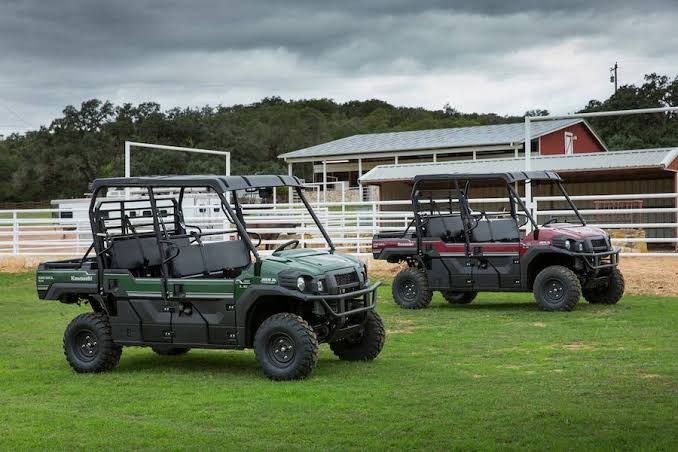
In the mid-2010s, Kawasaki redesigned the Mule from the ground up. The PRO series brought a more modern look, a more powerful engine, a better ride and class-leading towing in its category.
Mule PRO-FX and PRO-FXT
The PRO-FX uses a fuel-injected V-twin engine that delivers strong power for work and play. The PRO-FXT adds a third seating position, making it a flexible option for crews and families. Later trims include Ranch Edition and EPS (electric power steering) packages that make long days less tiring.
Why people love the PRO-FX
- Strong power and a smooth ride
- Comfortable seating and modern controls
- High towing ability for its class
- EPS available on many trims
Mule PRO-DX and PRO-DXT
The PRO-DX is the diesel counterpart. A three-cylinder diesel engine provides steady low-end torque and good fuel economy, which is ideal for heavy loads and long workdays. The PRO-DXT adds the extra seat.
Mule PRO-MX
The PRO-MX is the newest member of the family, aimed at buyers who want a more refined, feature-rich machine for work and recreation. If you want the latest technology and are comfortable with a higher price tag, this is the one to watch.
Because modern PRO models are newer, used examples tend to cost more than older Mules. But they offer better comfort, stronger performance and often lower mileage. Browse the complete selection in our used utility vehicles shop to see what is available right now.
How to Find the Model Year of a Kawasaki Mule
Identifying a Mule’s exact model year takes only a few minutes.
Step 1: Locate the VIN
The vehicle identification number is stamped on the frame, usually near the front or under the seat area. It may also appear on a sticker or plate.
Step 2: Read the tenth character
On a standard seventeen-character VIN, the tenth character represents the model year. Letters and digits are used in sequence, and they repeat after about three decades. For example, the digit 5 can represent 2005, and the letter A can represent 2010.
Step 3: Confirm with the model code and features
Because the code repeats, check the model designation on the frame or engine, the engine type, the bed style and the drivetrain to make sure you are looking at the correct cycle.
Quick reference table
| Model Family | Typical Engine Type | Typical Use | General Era |
|---|---|---|---|
| Mule 1000 / 2000 | Small gas | Light farm hauling | Late 1980s to 1990s |
| Mule 2500 / 2510 | Gas or diesel | General farm work | 1990s to early 2000s |
| Mule 3000 / 3010 | V-twin gas or diesel | Ranch and property work | Early 2000s to 2010s |
| Mule 4000 / 4010 | V-twin gas or diesel | Heavy-duty work, 2 or 4 seats | Mid-2000s to 2010s |
| Mule 500 / 550 / 600 / 610 / SX | Single-cylinder gas | Light-duty and hunting | 1990s to 2010s |
| Mule PRO-FX / FXT | Fuel-injected V-twin | Work and recreation | Mid-2010s onward |
| Mule PRO-DX / DXT | Three-cylinder diesel | Torque-heavy work | Mid-2010s onward |
| Mule PRO-MX | Modern gas platform | Premium utility | 2020s |
Note: Eras are approximate. Always confirm exact specs with the VIN, owner’s manual or a trusted dealer before buying.
Gas vs. Diesel Kawasaki Mule Models
Choosing between gas and diesel is one of the biggest decisions you will make.
Gas Mule models
Gas engines are quieter, usually cheaper, and easier to find. They start easily in cold weather, especially fuel-injected versions. They suit most homeowners, hunters and light ranch use.
Diesel Mule models
Diesel Mules provide stronger low-speed torque and better fuel economy under load. They are a smart choice if you tow often, haul heavy cargo or put in long hours. The trade-off is a higher purchase price and slightly higher service costs.
Quick decision guide
- Choose gas if you want lower cost, simplicity and quieter operation.
- Choose diesel if you need torque, range and endurance.
Which Kawasaki Mule Model Year Is Best for You?
There is no single best Mule. The right model year depends on how you use it and what you want to spend.
Best for tight budgets
Older Mule 2510, 3010 and 610 models offer the lowest entry price. Just budget for some wear-and-tear repairs.
Best all-around value
The Mule 3010 and 4010 Trans4x4 hit the sweet spot for most buyers. They have great parts support, strong capability and plenty of used examples to choose from.
Best for comfort and power
The PRO-FX and PRO-FXT are ideal if you want a smoother ride, more power and modern features.
Best for heavy-duty work
A diesel 4010 or PRO-DX is the better pick for heavy hauling and long hours.
Best for small properties and hunting
The Mule 610 or SX is lightweight, affordable and easy to handle in tight spaces.
What to Check Before Buying a Used Kawasaki Mule
Even the most reliable Mule can be a headache if it has been neglected. Use this checklist when inspecting a used unit.
Mechanical checks
- Listen for knocking, ticking or unusual noises at idle and under load.
- Look for oil leaks around the engine, transmission and differentials.
- Test both two-wheel and four-wheel drive, and the differential lock if equipped.
- Check the belt, if applicable, for cracks or glazing.
Body and frame checks
- Inspect the frame for rust, cracks or old repair welds.
- Make sure the dump bed raises and lowers smoothly.
- Look at the roll cage for bends or damage.
Wear items
- Tires, brakes and suspension bushings
- Battery condition and electrical connections
- Seat condition and seat belts
Paperwork and history
- Verify the VIN matches the title.
- Ask about service records and hour-meter readings.
- Confirm there are no liens.
When possible, buy from a seller who inspects and services units before sale. That is why many buyers start with a trusted source like our used Kawasaki Mule UTVs page, where listings are presented with clear details.
Frequently Asked Questions
What year did Kawasaki start making the Mule?
Kawasaki introduced the Mule in the late 1980s, starting with simple utility models and expanding into a full lineup over the following decades.
What is the most reliable Kawasaki Mule model year?
Many owners point to the Mule 3010 and 4010 Trans4x4 as the most dependable. Their V-twin engines, strong parts availability and straightforward design make them easy to keep running for years.
Are older Kawasaki Mules worth buying?
Yes, if the price is right and the machine has been maintained. Older Mules are simple and cheap to repair, but you should inspect the frame, drivetrain and electrical system carefully.
How long does a Kawasaki Mule last?
With regular maintenance, a Mule can last well over a decade of regular use. Hours, care and working conditions matter more than age alone.
What is the difference between the Mule 3010 and the Mule 4010?
The 4010 is the larger, more refined model with improved bed design, ride and capability. The 3010 is a bit more basic but still very dependable and often cheaper.
Is a diesel Mule better than a gas Mule?
It depends on your needs. Diesel offers more low-end torque and better fuel economy for heavy work. Gas is cheaper, quieter and perfectly suitable for most uses.
What is the difference between the PRO-FX and the older 4010?
The PRO-FX is newer, with a fuel-injected engine, a more modern design, a smoother ride and available EPS. The 4010 is older, simpler and usually less expensive.
Where can I buy a used Kawasaki Mule?
You can browse our selection on the Kawasaki Mule UTV for sale page, or explore our full range of used utility vehicles.
Can I decode the model year from the VIN myself?
Yes. The tenth character of a seventeen-character VIN indicates the model year. Confirm with body style and model code because the characters repeat over time.
Final Thoughts and Next Steps
Kawasaki Mule model years tell a clear story: the brand started with simple farm haulers, perfected the formula with the 3010 and 4010, added compact options for lighter work, and then reinvented the lineup with the modern PRO series. Once you know what each generation offers, choosing the right used Mule becomes far easier.
Start by deciding how you will use the machine, how many seats you need, whether gas or diesel suits your work, and how much you want to spend. Then match those needs to the right model family.
Ready to find your next workhorse? Browse our current Kawasaki Mule UTV for sale listings, or look through the full used utility vehicles shop to compare other makes and models. Have a question about a specific year or model? Reach out to our team and we will help you pick the right machine with confidence.