
Best Used Kawasaki Mule for Heavy Hauling and Towing
Table of Contents
- Quick Answer: What Is the Best Used Kawasaki Mule for Heavy Hauling and Towing?
- Why Work Crews and Landowners Keep Choosing the Kawasaki Mule
- Understanding Hauling Capacity vs. Towing Capacity
- The Best Used Kawasaki Mule Models for Heavy Work
- Side-by-Side Comparison Table
- Gas vs. Diesel: Which Mule Pulls Harder?
- How to Inspect a Used Kawasaki Mule Before You Buy
- What Should You Pay for a Used Kawasaki Mule?
- Upgrades That Improve Hauling and Towing
- Where to Find a Reliable Used Kawasaki Mule
- Frequently Asked Questions
- Final Thoughts
Quick Answer: What Is the Best Used Kawasaki Mule for Heavy Hauling and Towing?
The Short Version
Q: What is the best used Kawasaki Mule for heavy hauling and towing?
A: For most buyers, the Kawasaki Mule PRO-FXT and Mule PRO-DX diesel are the strongest used choices. Both offer a 1,000-pound bed capacity and a towing rating around 2,000 pounds, depending on model year. If you want a more budget-friendly option, the Mule 4010 Trans4x4 is a proven workhorse with a long track record.
Q: Which is better for towing, gas or diesel?
A: Diesel Mules deliver more low-end torque and better fuel economy under load. Gas models like the PRO-FX are quicker and quieter. If you tow every day, go diesel.
Q: How much does a used Kawasaki Mule cost?
A: Prices usually run from a few thousand dollars for older, higher-hour units to well over ten thousand for newer, low-hour PRO series models. Hours, condition, and options drive the price.
Want to skip the reading and start browsing? Check out the current inventory of used Kawasaki Mule UTVs for sale and compare models side by side.
Why Work Crews and Landowners Keep Choosing the Kawasaki Mule
Walk onto almost any farm, ranch, job site, or hunting property, and you’ll spot a Mule somewhere. There’s a reason. Kawasaki has been building these machines since the late 1980s, and the basic recipe hasn’t changed much: a tough frame, a reliable engine, a real dump bed, and a suspension built to carry weight instead of chasing lap times.Best Used Kawasaki Mule for Heavy Hauling and Towing
A used Kawasaki Mule is a smart buy because these machines are built to take abuse. A well-maintained unit with a few thousand hours still has plenty of life left. That’s why the used market is so active, and why a good Mule holds its value better than most utility vehicles.
Built for Work, Not Weekends
Sport side-by-sides trade durability for speed. The Mule goes the other way. You get a steel bed, a tight turning radius, and a drivetrain tuned for torque. If your day involves hauling firewood, feed, fence posts, gravel, or equipment, that matters far more than top speed.Best Used Kawasaki Mule for Heavy Hauling and Towing
Easy to Service, Easy to Own
Parts availability is excellent, and most routine maintenance is simple enough to handle in your own barn. Oil, filters, belts, and grease points are accessible. That keeps ownership costs low, which matters when you’re buying used and want your money going into work instead of repairs.
Understanding Hauling Capacity vs. Towing Capacity
Before you compare models, get these two terms straight. They get mixed up constantly, and mixing them up can wear out a machine fast.
What Is Bed (Hauling) Capacity?
Bed capacity is the weight you can carry in the cargo box. It’s measured in pounds and covers everything you load: cargo, tools, and sometimes your passengers, depending on how the manufacturer rates it.Best Used Kawasaki Mule for Heavy Hauling and Towing
What Is Towing Capacity?
Towing capacity is how much weight the Mule can pull behind it on a hitch. This figure is usually higher than bed capacity because a trailer’s weight rides on its own axle.
Don’t Forget Tongue Weight
Here’s what many first-time buyers miss: the trailer’s tongue weight presses down on the Mule’s rear and counts against the bed capacity. A trailer with 150 pounds of tongue weight means 150 fewer pounds you can safely carry in the bed.Best Used Kawasaki Mule for Heavy Hauling and Towing
Terrain Changes Everything
A published towing number assumes decent conditions. Steep hills, mud, loose gravel, and wet grass all shrink your safe working limit. If your property is hilly, shop for a bigger-capacity Mule than the flat-ground math suggests. Don’t push the rated limit on slopes, because stopping a loaded trailer is harder than pulling it.
The Best Used Kawasaki Mule Models for Heavy Work
Here are the used Mule models that earn their place on a serious work list. Always confirm exact specs against the model year of the specific unit you’re considering, since ratings shifted between generations.
1. Kawasaki Mule PRO-FXT: Best Overall for Hauling and Towing
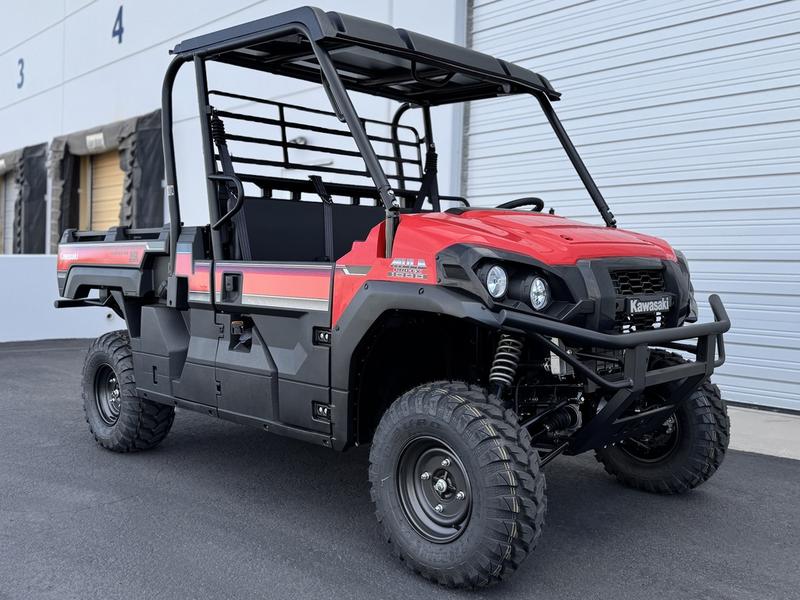
The PRO-FXT is the one most people picture when they say “heavy-duty Mule.” It’s a crew-style machine with seating for up to six, an 812cc V-twin engine, and a big, tough bed.Best Used Kawasaki Mule for Heavy Hauling and Towing
Why It Stands Out
- Strong towing rating for its class (roughly 2,000 lbs)
- A 1,000 lb bed capacity
- Comfortable seating for crews
- Quality suspension that handles loads well
Who Should Buy It
Contractors, ranchers, and property managers who move people and material together. If your day involves hauling a crew to a remote fence line plus tools and supplies, the FXT is hard to beat.
2. Kawasaki Mule PRO-FX: Best for Two-Person Work
The PRO-FX uses the same potent 812cc engine in a two-seat layout with a bigger cargo area. It’s the quick, capable choice when you don’t need crew seating.Best Used Kawasaki Mule for Heavy Hauling and Towing
Why It Stands Out
- Strong power-to-weight balance
- Smooth, responsive throttle
- High payload capacity for a gas model
Who Should Buy It
Solo operators and two-person teams who want brisk performance and big cargo room, especially on farms and hunting properties.
3. Kawasaki Mule PRO-DX Diesel: Best for Daily Towing
If towing is the main job, the PRO-DX diesel deserves a hard look. The diesel engine makes its power at low RPM, so it pulls steadily without screaming.
Why It Stands Out
- Excellent low-end torque
- Better fuel economy under load
- Long engine life with proper maintenance
- Lower engine speeds mean less wear during heavy work
Who Should Buy It
Anyone who tows trailers, hauls heavy materials, or runs long days. It costs a little more up front, but the savings on fuel and the reduced strain on the engine add up.Best Used Kawasaki Mule for Heavy Hauling and Towing
4. Kawasaki Mule 4010 Trans4x4: Best Value Workhorse
The 4010 is a legend in the used market. It’s simpler than the newer PRO series, which is exactly why many owners love it. Fewer electronics, proven mechanicals, and a huge parts supply.
Why It Stands Out
- A true 4×4 system with a locking differential
- Affordable on the used market
- Proven reliability
- Strong hauling ability for its price
Who Should Buy It
Budget-minded buyers who want honest, dependable work capability without paying for the latest features. It’s a great first Mule.
5. Kawasaki Mule 4010 Diesel: Best Budget Diesel
The 4010 Diesel pairs the same rugged frame with a torquey diesel engine. It’s slower than the gas version but pulls with real conviction.Best Used Kawasaki Mule for Heavy Hauling and Towing
Who Should Buy It
Farmers and landowners who prefer diesel’s efficiency and don’t mind a more relaxed pace.
6. Kawasaki Mule 3010 and 600/610: Best for Lighter Duty
These smaller Mules fit tight trails and lighter loads. They aren’t the top picks for truly heavy hauling, but they’re handy for light towing, feed runs, and general property work.Best Used Kawasaki Mule for Heavy Hauling and Towing
A Word of Caution
Don’t buy a light-duty Mule and expect it to behave like a PRO series machine. Match the machine to the job, or you’ll be fixing transmissions and belts sooner than you’d like.Best Used Kawasaki Mule for Heavy Hauling and Towing
Browse the full selection of Kawasaki Mule models for sale to see which of these are in stock right now.
Side-by-Side Comparison Table
Specifications are approximate and vary by model year. Always verify against the owner’s manual or listing details before buying.
| Model | Engine | Seating | Approx. Bed Capacity | Approx. Towing Capacity | Best For |
|---|---|---|---|---|---|
| Mule PRO-FXT | 812cc gas V-twin | Up to 6 | ~1,000 lbs | ~2,000 lbs | Crews + cargo |
| Mule PRO-FX | 812cc gas V-twin | 2–3 | ~1,000 lbs | ~2,000 lbs | Fast, capable work |
| Mule PRO-DX Diesel | Diesel | 2–3 | ~1,000 lbs | ~2,000 lbs | Daily towing |
| Mule 4010 Trans4x4 | Gas V-twin | 2–3 | ~800 lbs | ~1,200 lbs | Value and reliability |
| Mule 4010 Diesel | Diesel | 2–3 | ~800 lbs | ~1,200 lbs | Budget diesel |
| Mule 3010 / 600 / 610 | Gas | 2 | ~400–600 lbs | ~1,200 lbs | Light-duty tasks |
Gas vs. Diesel: Which Mule Pulls Harder?
This is probably the most common question buyers ask, and the honest answer is: it depends on how you work.Best Used Kawasaki Mule for Heavy Hauling and Towing
The Case for a Gas Kawasaki Mule
Gas Mules, like the PRO-FX and PRO-FXT, are quicker, quieter, and usually cheaper to buy. They suit mixed-use work where you drive faster between jobs and tow occasionally.Best Used Kawasaki Mule for Heavy Hauling and Towing
The Case for a Diesel Kawasaki Mule
Diesel engines produce strong torque at low RPM, which is exactly what you want when pulling a loaded trailer up a grade. They also sip fuel and tend to last longer under constant load.
The Trade-Offs
Diesels are heavier, a bit louder, and slower on flat ground. Cold starts in winter may take a little patience, and the purchase price tends to run higher.
The Bottom Line
If you tow daily or haul heavy loads for hours, choose diesel. If you want a flexible all-rounder with more speed, choose gas.
How to Inspect a Used Kawasaki Mule Before You Buy
A great Mule can run for years. A neglected one can drain your wallet. Spend 30 minutes with this checklist before you hand over money.
Check the Hours and Maintenance History
Hours matter more than age. Ask for service records, and look for regular oil changes. A Mule with 1,500 hours and full records can be a better buy than one with 600 hours and no history.Best Used Kawasaki Mule for Heavy Hauling and Towing
Inspect the Drivetrain
Listen to the Engine
Cold-start it if you can. Listen for knocking, ticking, or rough idle. Look for blue or white smoke from the exhaust.
Test the Transmission and Belt
The CVT belt takes a beating in towing work. During your test drive, watch for slipping, shuddering from a stop, or a burning smell. A worn belt is a cheap fix, but damaged clutches are not.
Engage the 4WD and Diff Lock
Make sure the four-wheel-drive system and the differential lock engage cleanly. Skipping this test is a common and expensive mistake.Best Used Kawasaki Mule for Heavy Hauling and Towing
Examine the Frame, Bed, and Hitch
Look for cracks, bent mounts, and heavy rust, especially around the hitch receiver and bed hinges. Make sure the dump function works smoothly and the bed latches securely. A bent frame from overloading is a deal-breaker.
Check the Suspension and Tires
Sagging rear suspension is a sign the Mule has carried too much weight for too long. Check the shocks for leaks and the tires for even wear. Uneven wear can point to alignment or suspension problems.Best Used Kawasaki Mule for Heavy Hauling and Towing
Test the Brakes Under Load
If possible, test-drive with weight in the bed or a trailer attached. Brakes should stop the vehicle smoothly and in a straight line. Soft pedals or pulling to one side need attention.
Look at the Electrical System
Check lights, gauges, the key switch, and the battery. Electrical gremlins can be time-consuming to track down.Best Used Kawasaki Mule for Heavy Hauling and Towing
Ask About the Vehicle’s Past
Find out how it was used. A Mule that spent its life on a flat farm is a different animal from one that towed trailers up mountain trails daily. Honest sellers will tell you.
What Should You Pay for a Used Kawasaki Mule?
Pricing varies widely based on a few key factors:
- Model and year: Newer PRO series machines command a premium.
- Hours: Lower hours usually mean a higher price, but only if maintenance backs it up.
- Condition: Cosmetic wear matters less than mechanical health.
- Options: Winches, cabs, windshields, and upgraded tires add value.
- Location and demand: Rural markets with high demand often see stronger prices.
How to Spot a Fair Deal
Compare several similar units rather than judging a single listing. A price that seems too good might hide mechanical trouble. A price that seems high might include a recent rebuild or valuable accessories.Best Used Kawasaki Mule for Heavy Hauling and Towing
Why Buying From a Specialist Helps
Buying from a dealer who focuses on used utility vehicles often means the machine has been inspected and serviced before listing. That can save you from surprise repairs. Explore the wider selection in the used utility vehicles shop to see how different brands and models are priced.
Upgrades That Improve Hauling and Towing
Once you’ve picked your Mule, a few smart upgrades can make heavy work safer and easier.
Heavy-Duty Tires
All-terrain or mud tires improve traction and stability when pulling loaded trailers.
A Quality Hitch and Brake Controller
A solid receiver hitch is essential. For heavier trailers, consider a trailer with its own braking system so the Mule isn’t doing all the stopping.
Winch
A front-mounted winch earns its keep when you get stuck or need to pull a stubborn load.
Bed Accessories
Bed extenders, tie-downs, and liners protect your cargo and your Mule.
Upgraded Suspension
Heavier springs or helper kits reduce sag if you routinely load near capacity.
Protective Gear
Skid plates and brush guards guard the underside from rocks and stumps.
Where to Find a Reliable Used Kawasaki Mule
Finding the right machine is half the battle. You can scroll through classifieds and auction sites, but quality varies wildly and many listings lack detail. A dedicated seller can give you clearer specs, honest condition notes, and support after the sale.
At Used Utility Vehicles, you’ll find a constantly updated lineup of used Kawasaki Mule UTVs alongside other brands, so you can compare options without driving across the state.
Ready to find your Mule?
- 👉 Browse Kawasaki Mule UTVs for sale and find the right model for your workload.
- 👉 Want to see everything? Visit the full used utility vehicle shop and compare other makes and models.
Have questions about a specific unit? Reach out and ask about hours, service history, and towing setup before you buy.
Frequently Asked Questions
What is the towing capacity of a used Kawasaki Mule?
It depends on the model. Newer PRO series Mules like the PRO-FXT, PRO-FX, and PRO-DX are generally rated around 2,000 pounds. Older models like the 4010 are typically around 1,200 pounds. Always confirm with the specific model year.
Is a Kawasaki Mule good for heavy hauling?
Yes. Mules are among the most respected work UTVs for hauling because of their steel beds, strong frames, and torque-focused engines. The PRO series in particular handles heavy loads with confidence.
How many hours is too many on a used Kawasaki Mule?
There’s no single cutoff. A well-serviced Mule can run well past 3,000 hours. Maintenance history matters more than the number on the hour meter. Be cautious with high-hour machines that have no records.
Which Kawasaki Mule is best for towing a trailer?
The Mule PRO-DX diesel and PRO-FXT are top picks. The diesel offers excellent low-end torque, while the FXT combines power with crew seating.
Are diesel Kawasaki Mules more reliable?
Diesel Mules are known for durability under load and strong fuel efficiency. Reliability for either engine type depends heavily on how well the machine was maintained.
Can a Kawasaki Mule pull a heavy trailer up a hill?
It can, within its rated capacity and with careful driving. Use low gear, avoid overloading, and remember that downhill braking with a heavy trailer is the bigger risk. Never exceed the rated limits, especially on slopes.
What should I check before buying a used Kawasaki Mule?
Check hours and records, engine sound, CVT belt condition, 4WD and diff lock operation, frame and hitch integrity, suspension sag, brakes, and electrical function.
Is a used Kawasaki Mule worth buying?
For most work buyers, yes. Mules hold their value well, parts are easy to find, and a properly inspected unit offers years of dependable service at a lower price than new.
Where can I buy a used Kawasaki Mule?
You can browse a wide selection of used Kawasaki Mule UTVs for sale at Used Utility Vehicles, or explore the broader used utility vehicle shop for more brands.
Final Thoughts
The best used Kawasaki Mule for heavy hauling and towing comes down to how you work. If you need crew seating plus strong capacity, the PRO-FXT is a standout. If you tow every day, the PRO-DX diesel is built for the grind. If you want proven reliability at a friendlier price, the 4010 Trans4x4 remains one of the smartest buys around.
Whichever you choose, inspect carefully, ask for service records, and match the machine’s rated capacity to your real workload with some margin to spare. Do that, and a used Mule will pay you back in work done for a very long time.
Your next step: Shop used Kawasaki Mule UTVs now or browse the complete used utility vehicle inventory to find the right machine for your property or job site.