History and Evolution of the Yamaha Viking Lineup
Table of Contents
- Quick Answer: The Yamaha Viking in 60 Seconds
- Why the Yamaha Viking Mattered When It Launched
- 2014: The All-New Viking Arrives
- The Viking VI: Six Seats, Same Toughness
- 2016: The Update That Defined the Lineup
- The Ranch Edition Era
- Yamaha Viking Evolution at a Glance (Comparison Table)
- What Never Changed: The Viking’s Core DNA
- Buying a Used Yamaha Viking Today
- Frequently Asked Questions
- Final Thoughts and Next Steps
Quick Answer: History and Evolution of the Yamaha Viking Lineup
What is the Yamaha Viking? The Yamaha Viking is a utility side-by-side built in Newnan, Georgia, and introduced for the 2014 model year. It was designed as a roomy, comfortable work vehicle for farms, ranches, and hunting land, with a 686cc engine, On-Command 4WD, electric power steering (EPS), and a 1,500-pound hitch rating.
How did it evolve? Yamaha first sold a three-seat Viking, then added the six-seat Viking VI. A major 2016 refresh brought a quieter cabin and a reinforced chassis, and the premium Ranch Edition trims became the lineup’s flagship look.
Is it a good used buy? Yes, for most buyers who want a proven, serviceable machine at a friendly price. You can browse current inventory in our Yamaha Viking UTV for sale category.
Why the Yamaha Viking Mattered When It Launched
Before the Viking appeared, the utility side-by-side world had a clear split. You could buy a bare-bones work mule that rode like a hay wagon, or you could buy a sporty trail machine that struggled to carry real cargo. Yamaha saw a gap in the middle: a vehicle that could haul fence posts at dawn and carry the family to a deer stand by dusk without anyone complaining about the ride.History and Evolution of the Yamaha Viking Lineup
That idea shaped everything about the Viking. Instead of treating comfort as a luxury add-on, Yamaha made it part of the foundation. The cab layout allowed pass-through bucket seating and generous headroom without giving up ground clearance, a trade-off that many rivals simply accepted. For owners who spent long days in the seat, that design choice was a big deal.History and Evolution of the Yamaha Viking Lineup
If you are researching Yamaha Viking history, this is the context to keep in mind. The Viking was never meant to win a drag race. It was built to be the dependable partner you reach for every single day.
The Market Gap Yamaha Targeted
Three groups of buyers shaped the early demand:
- Farmers and ranchers who needed steady power and cargo capability.
- Hunters who wanted quiet comfort, a roomy cab, and dependable four-wheel drive.
- Property owners and landscapers who valued easy maintenance and reliable starts.
Each group wanted the same thing in slightly different words: a machine that would not let them down.
2014: The All-New Viking Arrives
The Viking made its debut for the 2014 model year as the Viking FI 4×4 EPS. According to ATV.com’s spec listing, the original model carried an MSRP of $12,599 and used a liquid-cooled, single-cylinder, four-stroke engine with fuel injection. Yamaha promoted it with a simple message: the all-new Viking had landed.History and Evolution of the Yamaha Viking Lineup
Key Features of the Original Viking
Engine and Drivetrain
The heart of the machine was a torquey 686cc engine with a broad, usable powerband. That matters more than peak horsepower for real work. A wide powerband means the engine pulls steadily at low speeds when you are crawling through mud or towing a loaded trailer.
Paired with it was Yamaha’s On-Command 4WD system. Unlike automatic systems that decide for you, On-Command puts the driver in control of when to engage four-wheel drive and the differential lock. Many experienced owners still prefer this hands-on approach because they know their terrain better than any computer does.
Electric Power Steering
Electric power steering was a headline feature. Yamaha’s EPS reduces steering effort and driver fatigue, which becomes noticeable after a full day of fieldwork. It also keeps a natural feel from the terrain, so you are not driving blind.
Owner Reactions
Early owner reviews praised the smooth, comfortable ride, and one even joked that it was hard to hold a conversation without yelling because of engine and trail noise. That small complaint is exactly what Yamaha would go on to address a couple of years later.History and Evolution of the Yamaha Viking Lineup
The Viking VI: Six Seats, Same Toughness
Once the three-seat Viking proved itself, Yamaha stretched the concept into the Yamaha Viking VI, a six-passenger version. Think of it as the same trusted formula with a longer wheelbase and a lot more family room.
Why the Viking VI Changed the Conversation
The Viking VI uses a class-leading 115.6-inch wheelbase, which gives the cabin generous space and a smooth, stable ride. For hunting camps, guided tours, big ranch crews, and families with kids, six seats solved a real problem. Instead of taking two vehicles to the same destination, one machine could carry everyone.History and Evolution of the Yamaha Viking Lineup
Cabin Comfort Details
- A latching glove box for small items.
- Eight in-dash cup holders, which sounds minor until you ride with a full crew.
- A digital instrument panel showing speed, odometer, dual trip meters, hour meter, 4WD status, transmission position, clock, and fuel level.
- An air cleaner box that owners can access from inside the cabin, making routine service easier.
Built for Protection
A steel skid plate under the frame shields critical components from rocks, logs, and ruts. Ground clearance is listed at about 11.4 inches on the 2019 Viking VI EPS Ranch Edition and 11.8 inches on the 2026 Viking EPS Ranch Edition, which helps the vehicle clear obstacles while protecting the underbelly.History and Evolution of the Yamaha Viking Lineup
If you want a six-seater, take a look at our listing for a used Yamaha Viking VI EPS Ranch Edition.
2016: The Update That Defined the Lineup
If one model year deserves a spotlight in the history of the Yamaha Viking, it is 2016. Announced in the fall of 2015 for harvest and hunting season, the 2016 Viking and Viking VI received a thoughtful batch of improvements.History and Evolution of the Yamaha Viking Lineup
What Changed for 2016
According to Yamaha’s announcement, all Viking and Viking VI models gained:
- A smoother, quieter cabin.
- Additional rider conveniences.
- A reinforced chassis.
- A standard sun top, with Viking pricing starting at $11,999.
- New color choices: Hunter Green, Red, and Realtree Xtra camo for the EPS models.
That quieter cabin directly answered the early complaint about noise. The reinforced chassis added confidence for owners who towed and hauled hard. And making the sun top standard showed that Yamaha was listening to how people actually used these machines in the sun and rain.History and Evolution of the Yamaha Viking Lineup
Special Editions
The 2016 lineup also included Special Edition (SE) Carbon Metallic trims for the Viking EPS and Viking VI EPS, priced at $14,049 and $14,999 respectively, plus a Steel Blue option on the Viking EPS. If you see a “SE” badge on a used machine, this is the family it comes from. You can check out a used Yamaha Viking EPS SE UTV for sale right now.
The 1,500-Pound Hitch
The standard two-inch receiver hitch is rated to pull 1,500 pounds. That figure positioned the Viking as a serious workhorse for trailers loaded with feed, firewood, or equipment, while still keeping it manageable on tight trails.History and Evolution of the Yamaha Viking Lineup
The Ranch Edition Era
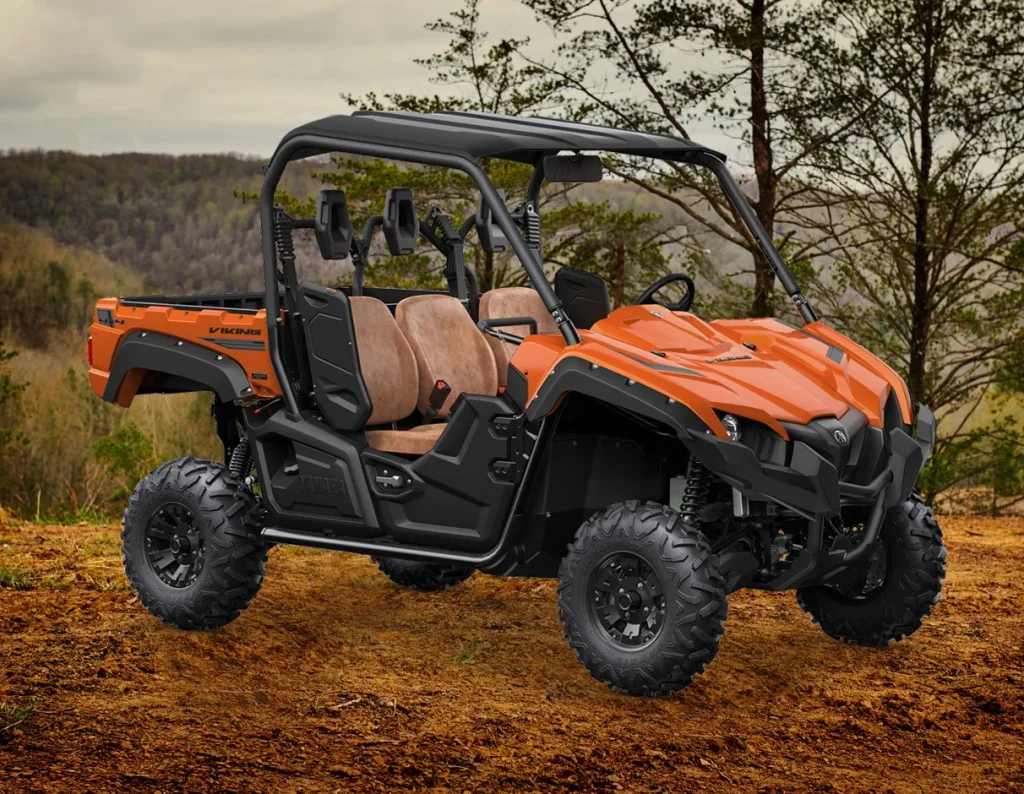
The biggest personality shift in the lineup arrived with the Yamaha Viking EPS Ranch Edition. Debuting in Viking VI form for 2016 with an MSRP of $15,499, it proved that a work vehicle could also look sharp.History and Evolution of the Yamaha Viking Lineup
What Makes a Ranch Edition Special
The 2016 Viking VI EPS Ranch Edition introduced a Copper Metallic finish with a color-matched brown interior and soft sun top. Along with it came:
- Silver cast aluminum wheels.
- A rearview center mirror.
- Mud flaps and overfenders.
- Underseat storage.
- A rear bed grab bar.
- A heavy-duty front brush guard.
- Distinct Ranch Edition badging.
Yamaha’s marketing manager at the time said the company expected enthusiasm for the Viking and Viking VI to keep growing across the utility, hunting, and farming communities. The sales history suggests that prediction held up.History and Evolution of the Yamaha Viking Lineup
Ranch Editions Through the Years
Yamaha kept the Ranch Edition alive well beyond its debut. Dealer and marketplace listings show Viking VI EPS Ranch Edition and Viking EPS Ranch Edition models across the 2019, 2023, 2024, 2025, and 2026 model years, which tells you the formula has staying power. The Ranch Edition’s chassis width is also designed to help limit damage to 30-inch crop rows, a detail that farmers appreciate.
Why This Matters for Used Buyers
Because Yamaha has stayed consistent with the core platform, parts and service knowledge carry over from one model year to the next. That makes shopping for a used Yamaha Viking less risky than shopping for a machine that gets reinvented every two years.History and Evolution of the Yamaha Viking Lineup
Yamaha Viking Evolution at a Glance (Comparison Table)
| Milestone | Model Year | What Changed | Why It Mattered |
|---|---|---|---|
| Original launch | 2014 | Viking FI 4×4 EPS debuts with fuel-injected engine, On-Command 4WD, and EPS | Brought comfort to the work-focused UTV segment |
| Six-seat option | After launch | Viking VI added with longer 115.6-inch wheelbase | Gave families and crews a one-vehicle solution |
| Major refresh | 2016 | Quieter cabin, reinforced chassis, standard sun top, new colors | Solved noise concerns and boosted durability |
| Ranch Edition debut | 2016 | Premium Viking VI EPS Ranch Edition with matched interior and extras | Created the lineup’s flagship look |
| Special Edition trims | 2016 | Carbon Metallic SE for Viking EPS and Viking VI EPS | Added style choices at mid-range prices |
| Continued Ranch Editions | 2019 to 2026 | Ranch Edition and EPS trims stay in production | Proved long-term platform stability |
What Never Changed: The Viking’s Core DNA
One of the most interesting parts of Yamaha Viking history is how little the fundamentals moved. Yamaha polished, refined, and re-dressed the machine, but it never abandoned the original recipe.History and Evolution of the Yamaha Viking Lineup
Consistent Strengths Across Model Years
Proven Engine Platform
The 686cc engine remained the heart of the Viking, which gives owners a familiar, well-understood powerplant. Mechanics know it, aftermarket support exists, and common service items are easy to find.History and Evolution of the Yamaha Viking Lineup
Driver-Controlled 4WD
On-Command 4WD continued to give drivers direct control. For hunters crossing creek beds and farmers working soft ground, that matters.
Assembled in the USA
Every Viking is assembled at Yamaha’s factory in Newnan, Georgia, for worldwide distribution. For many buyers, that detail is a point of pride and a signal of consistent build quality.
Comfort First
From the very first model, the pass-through bucket seating and generous headroom set the Viking apart. Later years simply refined the formula with better trim, storage, and styling.
Buying a Used Yamaha Viking Today
Because the lineup is so consistent, a used Viking can be a smart way to get into a quality side-by-side without paying new-vehicle prices. Marketplace data shows Viking listings ranging from the high $6,000s to nearly $18,000, so condition, year, and trim make a big difference.History and Evolution of the Yamaha Viking Lineup
On our own shelves, you will find options such as the used Viking EPS SE at $8,000 and the used Viking VI EPS Ranch Edition at $9,000. Inventory changes quickly, so check the latest listings on our Yamaha Viking UTV for sale page.
Used Yamaha Viking Inspection Checklist
Mechanical Checks
- Listen for unusual engine noise on a cold start.
- Check the hour meter and compare it to the overall condition.
- Test On-Command 4WD engagement and the differential lock.
- Look for leaks around the engine, CVT area, and differentials.
Steering and Suspension
- Turn the wheel lock to lock and note any binding or excess play.
- Check for worn bushings and uneven tire wear.
- Confirm the EPS assists smoothly at low speeds.
Body and Cabin
- Inspect the sun top, seats, and dash for sun damage.
- Make sure the digital display works correctly.
- Check the bed, hitch, and underbody skid plate for dents or hard use.History and Evolution of the Yamaha Viking Lineup
Which Viking Is Right for You?
Choose the Viking EPS if you:
- Mostly ride with one or two passengers.
- Need a tighter turning radius for wooded or crowded properties.
- Want a lower purchase price.
Choose the Viking VI EPS if you:
- Regularly carry four to six people.
- Run hunting trips, guided tours, or farm crews.
- Value a longer wheelbase and a calmer ride.
Compare Before You Commit
If you are still weighing brands, our shop lets you browse more than 40 used utility vehicles side by side, including Polaris Ranger, Honda Pioneer, Kawasaki Mule, and John Deere Gator models. You can also read how our Return Policy works before you buy.
Frequently Asked Questions
When did Yamaha introduce the Viking?
Yamaha launched the Viking for the 2014 model year as the Viking FI 4×4 EPS, with an original MSRP of $12,599.
What engine does the Yamaha Viking use?
The Viking and Viking VI use a 686cc engine known for its broad, usable powerband and strong low-end torque, which suits both fieldwork and trail driving.History and Evolution of the Yamaha Viking Lineup
How many people can a Yamaha Viking carry?
The standard Viking seats three, while the Viking VI is a six-passenger model with a 115.6-inch wheelbase.
How much can a Yamaha Viking tow?
The standard two-inch receiver hitch is rated to pull 1,500 pounds.
What is the Yamaha Viking Ranch Edition?
The Ranch Edition is a premium trim that adds painted bodywork, a color-matched interior, aluminum wheels, a soft sun top, a rearview mirror, overfenders, underseat storage, a rear grab bar, a front brush guard, and Ranch Edition badging.History and Evolution of the Yamaha Viking Lineup
Where is the Yamaha Viking built?
Every Viking and Viking VI is assembled at Yamaha’s factory in Newnan, Georgia.
Does the Yamaha Viking have power steering?
Yes. Electric Power Steering is available on EPS models and reduces steering effort and fatigue during long days.
Is a used Yamaha Viking worth buying?
For most buyers, yes. The platform stayed consistent across years, which supports easy servicing and parts availability. Inspect the machine carefully, review the maintenance history, and buy from a seller with a clear return policy. Questions? Visit our FAQs page.
What did Yamaha improve for 2016?
The 2016 update brought a smoother, quieter cabin, additional conveniences, a reinforced chassis, a standard sun top, and new colors, along with the new Viking VI EPS Ranch Edition.History and Evolution of the Yamaha Viking Lineup
Where can I find a used Yamaha Viking for sale?
You can browse current inventory on our used Yamaha Viking page or explore the full used utility vehicles for sale catalog.
Final Thoughts and Next Steps
The story of the Yamaha Viking is a story of steady improvement rather than dramatic reinvention. Yamaha launched a comfortable, capable side-by-side in 2014, expanded it with the six-seat Viking VI, answered owner feedback with the 2016 refresh, and then gave the lineup a premium personality through the Ranch Edition. Through all of it, the core ingredients stayed the same: a torquey 686cc engine, driver-controlled 4WD, smooth EPS, and a cabin that treats you like a passenger worth caring about.History and Evolution of the Yamaha Viking Lineup
That consistency is exactly why a used Viking remains such a smart pick today.
Ready to Find Your Viking?
- Browse now: See every available Yamaha Viking UTV for sale and add your favorite to the cart today.
- Compare brands: Explore the full used utility vehicles shop to see how the Viking stacks up.
- Need help choosing? Contact our team and we will point you to the right machine for your land, your crew, and your budget.
Don’t wait too long. Good used Vikings move fast, and the one you want may not be around next week.