
Bobcat UTV Model Years Explained If you’ve ever shopped for a used Bobcat UTV or tried to order the right parts for one, you’ve probably run into the same headache: Bobcat’s utility vehicle lineup has changed names, engines, and features more than a few times since it first hit the market. A “Bobcat UTV” from 2011 is a very different machine than one built in 2024, and knowing which model year you’re dealing with can save you from ordering the wrong belt, the wrong filter, or the wrong entire vehicle.
This guide walks through Bobcat UTV model years from the very first release to the current UV34 lineup, explains what changed and when, and shows you exactly how to figure out which model year your own machine is.
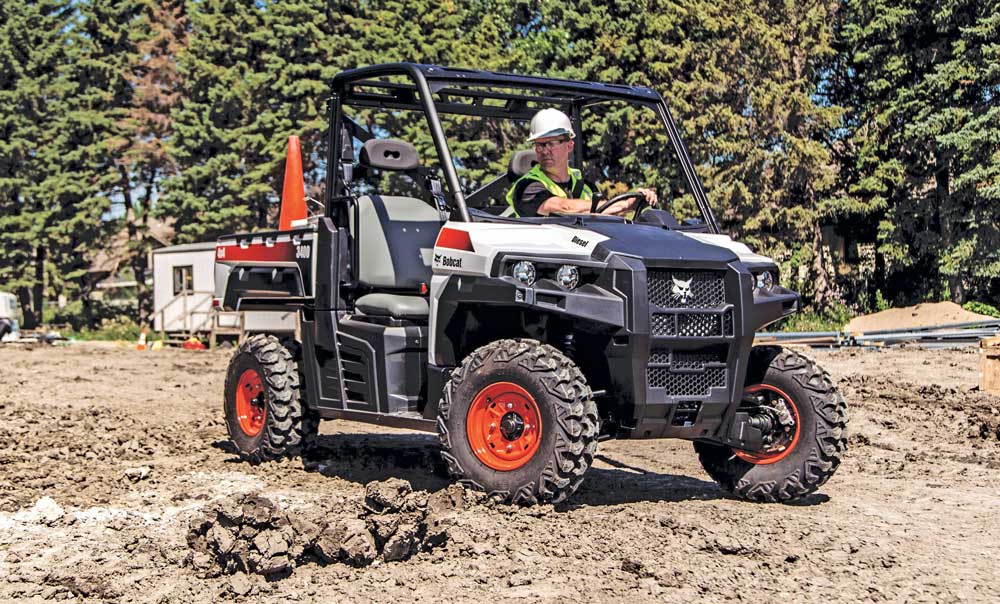
Quick Answer: Bobcat UTV Model Years Explained at a Glance
Q: What are the main Bobcat UTV model years and generations? A: Bobcat utility vehicles fall into four broad generations: the original 2100/2200/2300 series (2002–2009), the CVT-driven 3400 and 3400XL series (2010–present, non-current after 2019), the hydrostatic-drive 3600 and 3650 series (2015–2019), and the current UV34 and UV34XL platform (2020–present).
Q: When did Bobcat start making UTVs? A: Bobcat entered the utility vehicle market in 2002 with the Bobcat 2100, its first side-by-side style utility vehicle.
Q: What is Bobcat’s newest UTV model? A: As of 2026, Bobcat’s current UTV lineup is the UV34 (gas and diesel) and UV34XL, which replaced the older 3400-series naming convention.
The Origins of Bobcat Utility Vehicles (2002–2009)
2002: The Bobcat 2100 Kicks Things Off
Bobcat, best known for inventing the skid-steer loader, didn’t jump into the UTV space until 2002 with the release of the Bobcat 2100. This was Bobcat’s first attempt at a compact, work-ready utility vehicle designed to move people, tools, and materials around jobsites, farms, and large properties.Bobcat UTV Model Years Explained
Early Growth: The 2200 and 2300
Following the success of the 2100, Bobcat rounded out the early lineup with the 2200 and 2300 models. These early Bobcat UTV model years established the brand’s core identity: rugged, work-focused vehicles built more like compact utility trucks than recreational off-roaders. They weren’t flashy, but they were built to survive job-site abuse, which is exactly what set the tone for every Bobcat UTV model year that followed.Bobcat UTV Model Years Explained
The Bobcat 3200 Bridges the Gap
Before the 3400 became the flagship, the 3200 quietly carried the utility vehicle line forward, introducing incremental engine and suspension improvements that would later show up in the more well-known 3400 series.
The 3400 Era Begins (2010–2014)
2010: The Bobcat 3400 Launches
The Bobcat 3400, released in 2010, is arguably the most important Bobcat UTV model year for anyone researching the brand’s history. It quickly became the second most popular product in Bobcat’s entire lineup, trailing only the skid-steer loader that made the company famous. The 3400 offered a modular design, dependable power, and the kind of off-road durability that farmers and contractors could rely on daily.Bobcat UTV Model Years Explained
Gas vs. Diesel: Two Engine Paths
From the early 3400 model years onward, buyers had a choice between:
- A 40-horsepower gas engine (570cc) for higher top speeds and lower upfront cost
- A 24-horsepower diesel engine (1120cc) for torque-heavy work and fuel efficiency on job sites
Both configurations used a sealed continuously variable transmission (CVT) and were capable of true four-wheel drive, with a top speed of 35 mph (up to 40 mph with an optional speed kit).Bobcat UTV Model Years Explained
The 3400XL Joins the Lineup
Shortly after the standard 3400, Bobcat introduced the 3400XL, a stretched version with extra cargo capacity and towing capability for heavier-duty applications. Throughout the early-to-mid 2010s, the 3400 and 3400XL were sold side by side, giving buyers flexibility depending on payload needs.
Hydrostatic Drive Arrives: The 3600 and 3650 (2015–2019)
2015: Model Year 15 Introduces a New Transmission Type
One of the biggest shifts in Bobcat UTV model years came in 2015, when Bobcat introduced the 3600 and 3650, its first hydrostatic-drive utility vehicles. Unlike the belt-driven CVT system in the 3400, hydrostatic drive used a single two-speed motor with fewer moving parts, which made these UTVs especially well suited to repetitive-motion tasks like mowing, snow removal, and material hauling.Bobcat UTV Model Years Explained
Both new models shared the same 24-horsepower Kohler diesel engine already used in the 3400 and 3400XL, but capped their top speed at 30 mph in exchange for smoother, more controlled low-speed operation. A standout feature of hydrostatic drive was dynamic braking: releasing the travel pedal closed a valve in the drive motor, slowing the machine automatically without touching the brake pedal.Bobcat UTV Model Years Explained
The M.A.X. Attachment System
The 3650 in particular introduced Bobcat’s Multi-Attachment X-Change (M.A.X.) system, which let operators quickly swap front-mounted, PTO-driven attachments such as:
- Angle brooms
- Mowers
- Snow blowers
- Snow V-blades
Non-PTO attachments like buckets, grapples, pallet forks, and landplanes were also compatible, making the 3650 one of the most versatile Bobcat UTV model years for property maintenance and light construction work.Bobcat UTV Model Years Explained
2017–2018: Refinements and a Recall to Know About
Model year 2017 brought a larger eight-ply radial mud tire option for the 3400 and 3400XL, improving off-road traction and ground clearance. If you’re shopping for a used unit from this window, it’s also worth knowing that model year 2017–2018 Bobcat 3650 units were subject to a safety recall related to a rear brake line that could become punctured, leading to brake failure. If you’re buying a used 3650 from these model years, confirm with the seller or a Bobcat dealer that the recall repair was completed.Bobcat UTV Model Years Explained
Modernization: The UV34 and UV34XL Generation (2020–Present)
A New Naming Convention, A New Platform
Around 2020, Bobcat retired the old 3400-series naming and rebranded its flagship utility vehicles as the UV34 and UV34XL. This wasn’t just a name change — the UV34 platform brought updated suspension geometry, improved service access, and a stiffer frame designed to boost both ground clearance and ride quality.Bobcat UTV Model Years Explained
UV34 Gas Specs
The gas-powered UV34 runs a 39.9-horsepower, 1,000cc two-cylinder SOHC engine with electronic fuel injection, paired with a large 900-watt stator (about 75 amps of output) to run electric accessories like snow blades. It’s built for buyers who want strong acceleration and easy cold-weather starts without the added cost of a diesel engine.Bobcat UTV Model Years Explained
UV34 Diesel Specs
The diesel UV34 uses a 23.5-horsepower, three-cylinder diesel engine tuned for a flatter torque curve. Because it stays just under the 25-horsepower threshold, it avoids the need for a diesel particulate filter (DPF), meaning no regeneration cycles to manage. A 140-amp peak alternator and automatic glow plugs round out the package for reliable performance in cold climates.Bobcat UTV Model Years Explained
UV34XL: More Room, More Capacity
The UV34XL seats up to six people and adds extra ground clearance along with industry-leading payload and towing figures for the class. Like the standard UV34, it’s available in gas or diesel configurations, with a cargo box rated to haul up to 1,250 pounds of tools or materials.Bobcat UTV Model Years Explained
How to Identify Your Bobcat UTV’s Model Year
Check the VIN
Every Bobcat UTV has a vehicle identification number (VIN) affixed to the frame, typically located under the seat or storage bin on the passenger side. This VIN encodes the model, plant, and production year information.
Match the Serial Number Range
Bobcat and its dealers can cross-reference serial number ranges against published model year charts. If you’re buying used and the dealer sticker or paperwork is missing, a quick call to any Bobcat dealership with your VIN in hand will confirm the exact model year.
Look at Model Name Clues
As a fast rule of thumb:
- 2100 / 2200 / 2300 → 2002–2009
- 3200 / 3400 / 3400XL → 2005–2019 (non-current after the UV34 launch)
- 3600 / 3650 → 2015–2019
- UV34 / UV34XL → 2020–present
Bobcat UTV Model Year Comparison Table
| Model | Model Years | Transmission | Engine Options | Top Speed |
|---|---|---|---|---|
| 2100 / 2200 / 2300 | 2002–2009 | Early CVT | Gas | Varies |
| 3400 / 3400XL | 2010–2019 | Sealed CVT | 40-hp gas or 24-hp diesel | 35 mph (40 mph with speed kit) |
| 3600 / 3650 | 2015–2019 | Hydrostatic | 24-hp diesel | 30 mph |
| UV34 (Gas) | 2020–present | CVT | 39.9-hp gas | Varies by dealer setup |
| UV34 / UV34XL (Diesel) | 2020–present | CVT | 23.5-hp diesel | Varies by dealer setup |
Choosing the Right Bobcat UTV Model Year for Your Needs
For Heavy Jobsite or Farm Work
If you’re hauling attachments, towing trailers, or running PTO-driven tools daily, a 3650 (used) or a current UV34XL diesel gives you the most versatility and payload capacity.
For General Property and Recreational Use
A gas-powered 3400 or UV34 offers a lower entry cost, higher top speed, and simpler maintenance a solid choice if you’re not running heavy attachments regularly.
For Buyers Shopping Used
Stick to model years after 2015 if you want hydrostatic drive smoothness, or after 2020 if you want the latest suspension and service-access improvements found on the UV34 platform. Always confirm recall history on any 2017–2018 3650 before purchasing.
Frequently Asked Questions About Bobcat UTV Model Years
What was Bobcat’s first UTV model year? Bobcat’s first utility vehicle was the 2100, released in 2002.
What year did the Bobcat 3400 come out? The Bobcat 3400 was released in 2010 and remained in production, alongside the 3400XL, for nearly a decade.
What’s the difference between the Bobcat 3600 and 3650? Both were introduced in 2015 with hydrostatic drive and the same 24-horsepower diesel engine, but the 3650 added the M.A.X. attachment system for PTO-driven tools like mowers and snow blowers, while the 3600 was the simpler, non-M.A.X. version.
When did Bobcat switch from the 3400 to the UV34? Bobcat transitioned its flagship UTV naming from the 3400 series to the UV34 and UV34XL around 2020, alongside a redesigned frame and suspension.
How can I tell what model year my Bobcat UTV is? Check the VIN plate located under the seat or storage bin on the passenger side, and cross-reference it with a Bobcat dealer or the model year serial number charts.
Are older Bobcat UTV model years still supported with parts? Yes. Even non-current models like the 3400 and 3650 are still supported through Bobcat dealers and third-party UTV parts suppliers, though some parts may need to be special-ordered.
Was there a recall on any Bobcat UTV model years? Yes. Model year 2017–2018 Bobcat 3650 utility vehicles were recalled due to a rear brake line that could puncture and cause brake failure. Confirm the recall repair status before buying a used unit from this range.
What is the newest Bobcat UTV as of 2026? The current lineup centers on the UV34 and UV34XL in both gas and diesel configurations, continuing to receive annual updates from Bobcat.
Final Thoughts
Understanding Bobcat UTV model years isn’t just trivia — it directly affects which parts fit your machine, what it’s worth on the used market, and whether it’s the right fit for your work. From the original 2100 in 2002 to today’s UV34 and UV34XL platform, each generation reflects Bobcat’s ongoing push toward more capable, more durable utility vehicles. Whether you’re buying new, shopping used, or just trying to identify the machine sitting in your barn, matching the model name to its production years is the fastest way to get accurate answers.