
Bobcat UTV Models Year Explained if you’ve been shopping for a used Bobcat UTV, you’ve probably run into a wall of confusing model numbers, model years, and trim names 3400, 3400XL, 3600, 3650, UV34, UV34XL and wondered how they all fit together. You’re not alone. Bobcat has been building utility vehicles since 2002, and the lineup has evolved quite a bit since then, with engine upgrades, transmission changes, and even a full model-name overhaul in recent years.
This guide breaks down Bobcat UTV model years in plain language, so you know exactly what you’re looking at whether you’re buying used, comparing trims, or just trying to figure out what year your machine actually is.
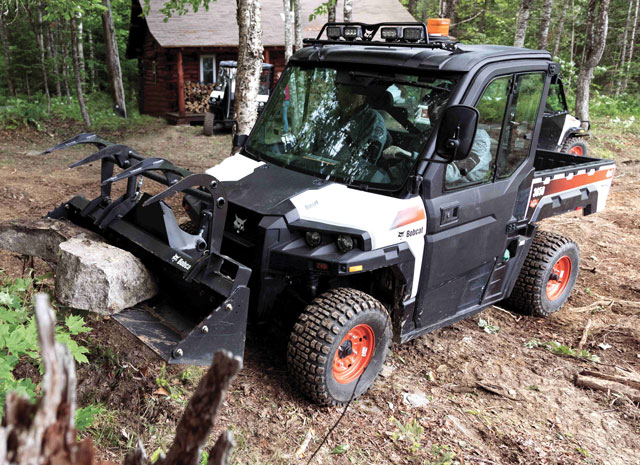
Quick Answer: What Are the Main Bobcat UTV Model Years?
Short answer: Bobcat’s UTV lineup started in 2002 with the 2100, expanded through the 2200 and 2300 in the mid-2000s, moved into the 3400 and 3400XL era through the 2010s, added the hydrostatic-drive 3600 and 3650 in Model Year 2015, and was rebranded around 2021–2022 into the current UV34 and UV34XL lineup that’s sold today.
Here’s the timeline at a glance:
| Era | Model(s) | Approx. Model Years |
|---|---|---|
| First generation | Bobcat 2100 | 2002 |
| Second generation | Bobcat 2200 4×4 | 2004 |
| Third generation | Bobcat 2300 | 2006 |
| CVT era | Bobcat 3400 / 3400XL | ~2010–2020 |
| Hydrostatic era | Bobcat 3600 / 3650 | 2015–present (as legacy models) |
| Current lineup | Bobcat UV34 / UV34XL | 2021–2026 |
A Brief History of Bobcat UTV Models Year Explained
How the Bobcat UTV Lineup Got Started
Understanding Bobcat UTV model years starts with the company’s entry into the utility vehicle market. Bobcat introduced its <cite index=”10-1″>first utility vehicle, the 2100, in 2002</cite>. That single machine set the tone for everything that followed: a compact, work-focused side-by-side built for jobsites, farms, and grounds maintenance rather than recreational trail riding.
<cite index=”10-1″>Two years later, the 2200 4×4 made its debut</cite>, adding true four-wheel drive to the lineup. Then, in 2006, <cite index=”10-1″>Bobcat introduced the 2300, which operated front-mounted attachments and served as the testing ground for the RapidLink attachment mounting system</cite> — a feature that would go on to define Bobcat’s utility vehicle philosophy for the next two decades.
The 3400 and 3400XL Era
By the early 2010s, Bobcat had moved its UTV lineup into the 3400 and 3400XL, which became the workhorses of the brand for nearly a decade. These models were offered with two engine choices: a <cite index=”4-1″>40-horsepower gas engine or a 24-horsepower diesel engine</cite>, both paired with a continuous variable transmission (CVT) and true four-wheel drive.
<cite index=”6-1″>The 3400 and 3400XL utility vehicles offered a top speed of 35 mph, and when combined with an optional speed kit, could travel up to 40 mph</cite>. <cite index=”6-1″>Operators could haul up to 1,250 lbs of material in a composite cargo box</cite>, and improved suspension along with four-wheel disc brakes gave the models strong payload and towing numbers for their class.
In 2017, Bobcat gave the 3400 lineup a meaningful upgrade for off-road use. <cite index=”6-1″>A new spreader attachment became available for model year 17 3400, 3600, and 3650 utility vehicles, and Bobcat introduced a larger eight-ply radial mud tire for better off-road performance and increased ground clearance on the 3400 and 3400XL</cite>.
Model Year 2015: The Hydrostatic 3600 and 3650 Arrive
Model Year 2015 (often shortened to “MY15″ in Bobcat literature) marked one of the biggest shifts in Bobcat UTV history. <cite index=”1-1”>Bobcat’s Model Year 15 lineup of utility vehicles added two new hydrostatic drive models, the 3600 and 3650, powered by the same 24-horsepower Kohler diesel engine used in the existing MY15 3400 and 3400XL models</cite>.
The hydrostatic transmission was a big deal for buyers doing repetitive, stop-and-go work. <cite index=”1-1″>The hydrostatic system was especially suited for applications involving repetitive back-and-forth movement, such as hauling and mowing, as well as cleanup jobs like snow removal and sweeping</cite>. Bobcat also touted the smoother pedal-based operation: <cite index=”5-1″>operators of both the 3600 and 3650 could drive forward or reverse simply by pressing their toe or heel to the travel pedal, with a maximum forward speed of 30 mph</cite>.
The 3650 stood apart from the rest of the lineup because of one key feature. <cite index=”9-1″>The 3650 took utility vehicle versatility to a new level with the ability to operate front-mounted power-take-off (PTO) and non-PTO attachments</cite>. This came through Bobcat’s Multi-Attachment X-Change system, commonly abbreviated as M.A.X. <cite index=”6-1″>The M.A.X. system allowed operators to use approved front-mounted PTO-driven attachments including an angle broom, mower, snow V-blade, and snowblower — with a lift height of 2 feet and a lift capacity of 500 lbs</cite>.
Comfort features also separated the two hydrostatic models. <cite index=”7-1″>Tilt steering, ample legroom, and a three-passenger bench front seat came standard on the 3600, while the 3650 came standard with bucket seats and integrated controls for the M.A.X. system</cite>.
The Shift to UV34 and UV34XL
Sometime around 2021–2022, Bobcat retired the 3400-series naming convention in favor of the UV34 and UV34XL names that are still used today. While the model numbers changed, the core mission — a rugged, work-first UTV rather than a recreational one — did not.
The current UV34 is offered with either a gas or diesel engine. The gas version uses a <cite index=”15-1″>39.9-hp, 1,000cc two-cylinder SOHC engine, along with a 900-watt stator producing about 75 amps for electric-powered accessories like a snow blade, and electronic fuel injection for reliable cold-weather starting</cite>.
The diesel UV34XL takes a different approach. <cite index=”14-1″>It uses a 23.5-hp three-cylinder diesel engine that delivers a flatter horsepower and torque curve, and because it stays under 25 hp it does not require a diesel particulate filter (DPF) — meaning no regeneration cycles to manage</cite>. <cite index=”16-1″>This is the same engine used in Bobcat’s mini track loaders</cite>, giving it a long track record for reliability. Both current models retain the <cite index=”14-1″>1,250-lb cargo box capacity and standard 140-amp high-output alternator</cite> that Bobcat UTV buyers have come to expect.
Bobcat UTV Models Year Explained by Generation (Detailed Breakdown)
2002–2009: The Founding Models (2100, 2200, 2300)
These early Bobcat UTV model years are the hardest to find today, since production numbers were lower and many units have aged out of service. If you’re looking at a Bobcat 2100, 2200, or 2300 on the used market, expect a simpler machine with fewer electronics, a manual steering setup, and basic RapidLink attachment compatibility on the 2300.
2010–2016: The CVT 3400 Series Matures
This stretch of Bobcat UTV model years is where the lineup really found its footing as a jobsite tool. <cite index=”10-1″>Comparing a 2012 model against current 3400XL specs at the time, Bobcat’s changes largely focused on the engine — increased horsepower, improved compression ratio, and bigger displacement while steering evolved from manual to power steering in the more recent model years</cite>.
2015–2020: Gas, Diesel, and Hydrostatic Side-by-Side
By this stretch, Bobcat was running three distinct UTV platforms simultaneously: the gas 3400/3400XL, the diesel 3400/3400XL, and the hydrostatic 3600/3650. <cite index=”6-1″>Continuous variable transmission (CVT) and true four-wheel drive delivered quick acceleration and peak performance even under heavy loads on the 3400-series, while the 3600 and 3650 used their hydrostatic system for smoother, more controlled low-speed work</cite>.Bobcat UTV Models Year Explained
2021–Present: UV34 and UV34XL
This is the current Bobcat UTV model year range, and it’s the one most active buyers are shopping in today. Listings show the UV34 has been continuously produced across model years 2022 through 2026, with both gas and diesel XL trims available depending on dealer inventory.Bobcat UTV Models Year Explained
How to Identify Your Bobcat UTV Models Year Explained
If you’re trying to pin down the exact model year on a used machine, here are a few practical steps:
Check the VIN/PIN Plate
Every Bobcat UTV has a Product Identification Number (PIN) plate, usually located on the frame near the operator’s seat or under the hood. The PIN encodes the model and serial number, which a Bobcat dealer can decode to confirm the exact model year.Bobcat UTV Models Year Explained
Match Features to the Timeline
If the PIN plate is missing or worn, cross-reference visible features against the generational breakdown above:
- Manual steering generally points to an older 3400-series unit.
- A M.A.X. front attachment system narrows it down to a 3650.
- A pedal-operated hydrostatic drive (no separate gear shifter for forward/reverse ranges beyond hi/lo) points to a 3600 or 3650.
- The UV34 or UV34XL badge on the hood confirms a 2021-or-newer machine.
Ask Your Dealer to Run the Serial Number
Bobcat dealers can look up the full production and warranty history of a machine using its serial number, which is the most reliable way to confirm the exact Bobcat UTV model year, engine type, and factory options.Bobcat UTV Models Year Explained
Which Bobcat UTV Model Year Should You Buy Used?
Budget-Focused Buyers
If you’re working with a tighter budget, an older 3400 or 3400XL from the CVT era offers solid value. Parts availability is generally good since the platform was produced for close to a decade, and the CVT transmission is simple to service compared to the hydrostatic system.
Buyers Who Need Attachment Versatility
If you regularly swap between mowing, sweeping, snow removal, and general hauling, a 3650 (or the modern UV34XL, which carries forward much of that same work-first design philosophy) is worth prioritizing because of its front PTO attachment capability.
Buyers Who Want the Newest Technology
If you want the latest emissions compliance, the most current electronics, and full dealer support, sticking with a current-generation UV34 or UV34XL model year is the safer long-term choice, since parts and technician familiarity will remain strongest for the newest platform.Bobcat UTV Models Year Explained
AI Overview: Fast Answers About Bobcat UTV Models Year Explained
What was Bobcat’s first UTV model year? A: <cite index=”10-1″>Bobcat entered the utility vehicle market in 2002 with its first model, the Bobcat 2100</cite>.
What replaced the Bobcat 3400 and 3400XL? A: The 3400-series was replaced by the UV34 and UV34XL, which Bobcat introduced around 2021–2022 and continues to produce as its current UTV lineup.
What model year did Bobcat introduce the 3600 and 3650? A: <cite index=”2-1″>Bobcat expanded its Model Year 15 utility vehicle lineup with the 3600 and 3650 models</cite>, adding hydrostatic drive to the UTV family for the first time.
What’s the difference between the Bobcat 3600 and 3650? A: Both use the same hydrostatic drivetrain and engine, but <cite index=”9-1″>only the 3650 can operate front-mounted power-take-off (PTO) and non-PTO attachments</cite> through Bobcat’s M.A.X. attachment system, while the 3600 is a simpler, non-PTO model.
How fast do Bobcat UTVs go? A: <cite index=”6-1″>The 3400 and 3400XL top out at 35 mph, or up to 40 mph with an optional speed kit, while the hydrostatic 3600 and 3650 have a maximum speed of 30 mph</cite>.
How do I find out what model year my Bobcat UTV is? A: Check the Product Identification Number (PIN) plate on the frame, or ask a Bobcat dealer to look up the full production history using the serial number.
FAQs About Bobcat UTV Models Year Explained
Are older Bobcat UTV model years still supported for parts? Yes, in most cases. Because the 3400-series ran for roughly a decade, parts availability from Bobcat dealers is generally strong, even for older model years.
Is the Bobcat UV34 the same as the old 3400? They’re closely related in purpose and positioning both are the “core” gas/diesel utility model in the lineup but the UV34 reflects updated engineering, emissions compliance, and electronics compared to the original 3400-series.
Which Bobcat UTV model year has the best resale value? Generally, newer model years within the UV34/UV34XL lineup hold value best, since buyers place a premium on lower hours, current emissions standards, and full dealer support.
Did Bobcat ever offer a gas-powered hydrostatic UTV? No. <cite index=”1-1″>The hydrostatic 3600 and 3650 models were built around the same 24-horsepower Kohler diesel engine</cite>; the hydrostatic drivetrain was never paired with a gas engine in Bobcat’s lineup.
What is the M.A.X. system, and which model years have it? M.A.X. stands for Multi-Attachment X-Change, and it’s a front-mounted PTO attachment system. It debuted on the 3650 in Model Year 2015 and remains a defining feature of Bobcat’s higher-end utility vehicle trims today.
Can I still buy a brand-new Bobcat 3400 or 3650? No those model names have been phased out in favor of the UV34 and UV34XL. Buyers looking for a 3400 or 3650 today will be shopping the used market.
Whether you’re buying your first Bobcat UTV or trying to date one already sitting in your barn, understanding how the model years line up — from the original 2100 all the way to today’s UV34XL makes it far easier to judge condition, value, and whether a given machine still fits the work you need it to do.