
History and Evolution of the Kawasaki Mule Lineup .Walk onto almost any farm, ranch, hunting lease, or job site, and there’s a good chance a Kawasaki Mule is parked somewhere nearby, probably with a few dents and a lot of character. The Mule has been working hard for more than three decades, and it earned its reputation one hauled load at a time.
This guide covers the full Kawasaki Mule history. We’ll look at how it started, which models mattered most, and how the lineup changed as buyers’ needs changed. If you’re shopping for a used Kawasaki Mule for sale, knowing this history will help you buy smarter.
Table of Contents
- Quick Answer: What Is the Kawasaki Mule?
- The Origins of the Kawasaki Mule
- The Classic Era: Mule 1000, 2000, 2500, and 3000
- The Mid-2000s Shift: Mule 600, 610, 3010, and 4010
- The Diesel Mule Models
- The Modern Era: Mule SX and the PRO Series
- Kawasaki Mule Models at a Glance (Table)
- Why the Mule Has Lasted So Long
- Buying a Used Kawasaki Mule: What to Check
- Frequently Asked Questions
- Final Thoughts
Quick Answer: What Is the Kawasaki Mule?
Key Questions, Answered Fast
What is the Kawasaki Mule?
The Kawasaki Mule is a line of utility task vehicles (UTVs) built by Kawasaki for hauling, towing, and everyday work. It launched in the late 1980s and has grown from a simple two-seat workhorse into a family of gas and diesel side-by-sides.
When did the Kawasaki Mule first come out?
The first Mule arrived in 1988 with the Mule 1000. It was one of the earliest purpose-built utility side-by-sides sold in North America.
What are the main Kawasaki Mule generations?
The lineup is usually grouped into three eras. The classic era covers the Mule 1000, 2000, 2500, and 3000. The mid-2000s era covers the Mule 600/610, 3010, and 4010. The modern era covers the Mule SX and the PRO-FX, PRO-DX, PRO-MX, and PRO-FXR series.
Are used Kawasaki Mules worth buying?
Yes, for most buyers. Mules are known for durability and simple mechanics, and parts are widely available. A well-maintained unit can offer excellent value, especially when it comes from a trusted seller of used utility vehicles.
The Origins of the Kawasaki Mule
Why Kawasaki Built a Utility Vehicle
Before the Mule existed, farmers and groundskeepers mostly relied on pickup trucks, ATVs, and old golf carts. Trucks were too big for narrow trails and soft ground. ATVs were nimble but couldn’t carry much or seat a passenger comfortably. Golf carts were not built for mud, hills, or hard labor.History and Evolution of the Kawasaki Mule Lineup
Kawasaki saw the gap. The company already had a strong engine business, and it had learned a lot from building rugged off-road machines. The idea was simple: build a small, tough, go-anywhere truck that could carry tools, feed, fencing, or people.History and Evolution of the Kawasaki Mule Lineup
The 1988 Kawasaki Mule 1000
The Kawasaki Mule 1000 debuted in 1988 and set the template for everything that followed. It was a compact two-seat vehicle with a small cargo bed, a gas engine, and a no-nonsense design. It wasn’t flashy, and it didn’t need to be.History and Evolution of the Kawasaki Mule Lineup
What Made the Mule 1000 Different
Compact Size, Real Capability
At a time when most work vehicles were bulky, the Mule 1000 could fit through gates and down tight trails while still hauling a useful load.
Simple Mechanics
The design was easy to service. Owners could handle routine maintenance in a barn or shop without specialty tools, which is a big reason so many of these machines survived for decades.History and Evolution of the Kawasaki Mule Lineup
A Name That Stuck
The name “Mule” fit perfectly. It promised toughness, stubbornness, and a willingness to carry whatever you loaded on.
The Classic Era: Mule 1000, 2000, 2500, and 3000
Through the late 1980s and 1990s, Kawasaki expanded the lineup quickly. Buyers wanted more power, more payload, and more comfort, so the Mule family grew to match.History and Evolution of the Kawasaki Mule Lineup
Kawasaki Mule 2000 and 2500
The Mule 2000 and Mule 2500 were larger steps up. They offered stronger engines, bigger beds, and better towing ability. These models were especially popular with ranchers and landscapers who needed to move heavier loads every day.History and Evolution of the Kawasaki Mule Lineup
Some versions in this range were also offered with diesel power, which opened the door to buyers who preferred the torque and fuel economy of a diesel engine.
Kawasaki Mule 3000
The Mule 3000 pushed the formula further. It had more refined styling, improved suspension, and a more capable chassis. Many people still see the Mule 3000 as the point where the Mule stopped being just a farm tool and started becoming a true all-purpose UTV.History and Evolution of the Kawasaki Mule Lineup
Common Features of Classic-Era Mules
- Simple, air-cooled or liquid-cooled engines depending on the model
- Basic steel frames built to take abuse
- Manual-style dump beds on many versions
- Two-wheel-drive and four-wheel-drive configurations
- Minimal electronics, which makes repairs easier today
If you like the old-school, mechanical feel, browsing used classic-style Mules is a great way to get a capable machine on a budget. Our collection of Kawasaki Mule UTV for sale is a good place to start.History and Evolution of the Kawasaki Mule Lineup
The Mid-2000s Shift: Mule 600, 610, 3010, and 4010
By the early 2000s, customers wanted more than raw toughness. They wanted a smoother ride, better traction, and easier handling. Kawasaki responded with a new wave of models.
Kawasaki Mule 3010
The Mule 3010 was a refinement of the 3000, with updated styling and improved comfort. It became a favorite for property owners who used their Mule for both work and weekend errands.History and Evolution of the Kawasaki Mule Lineup
Kawasaki Mule 600 and 610
The Mule 600 and Mule 610 were designed for people who wanted a lighter, more agile machine. They were easier to maneuver on tight trails, simpler to transport, and often cheaper to run than the larger models.History and Evolution of the Kawasaki Mule Lineup
Why the 610 Became So Popular
Easier Handling
The smaller footprint made it a great fit for hunters, small-acreage owners, and anyone working around trees or fences.
Four-Wheel-Drive Options
Four-wheel-drive versions gave the 610 impressive grip for its size, which helped it handle wet fields and loose terrain.
Kawasaki Mule 4010
The Mule 4010 was one of the most important models in the entire lineup. It brought stronger engines, a more advanced drivetrain, and available four-seat configurations in the Trans4x4 versions. That made it popular for families, hunting parties, and crews that needed to move several people at once.
The 4010 also showed that Kawasaki was paying attention to how people actually used these vehicles. Work and play were blending together, and the Mule evolved to handle both.History and Evolution of the Kawasaki Mule Lineup
The Diesel Mule Models
Why Diesel Mattered
Gas engines are common, but diesel-powered Mules built a loyal following of their own. Diesel offers strong low-end torque, better fuel economy, and long engine life, all useful traits for towing and steady, heavy work.History and Evolution of the Kawasaki Mule Lineup
Notable Diesel Mules
Over the years, Kawasaki offered diesel versions across several generations, including units in the 2500 family and later the PRO-DX and PRO-DXT. These machines were popular on farms, construction sites, and large properties where the vehicle might run for hours at a time.History and Evolution of the Kawasaki Mule Lineup
Pros and Cons of a Used Diesel Mule
Pros:
- Excellent torque for towing and hauling
- Strong fuel efficiency
- Long engine life with proper maintenance
Cons:
- Usually higher purchase price than gas models
- Can be noisier
- Cold-weather starting may need extra attention
If you’re considering diesel, check service records carefully and ask about hours of use. You can browse current options through our range of used utility vehicles.
The Modern Era: Mule SX and the PRO Series
A Redesign for a New Generation
In 2015, Kawasaki introduced the Mule PRO series, and it marked the biggest shift in the lineup’s history. The older Mules were tough but dated. The PRO models were built to compete with the latest work UTVs while keeping the Mule’s reputation for reliability.History and Evolution of the Kawasaki Mule Lineup
Kawasaki Mule PRO-FX and PRO-FXT
The Mule PRO-FX is a two-seat, gas-powered model, while the PRO-FXT adds a second row for three-person seating. Both use a Kawasaki-built V-twin gas engine and offer a car-like cab, improved suspension, and a larger cargo bed.History and Evolution of the Kawasaki Mule Lineup
Kawasaki Mule PRO-DX and PRO-DXT
The PRO-DX and PRO-DXT brought diesel power into the modern generation. They kept the torque and efficiency diesel owners love while adding the comfort and design upgrades of the PRO platform.
Kawasaki Mule PRO-MX and PRO-FXR
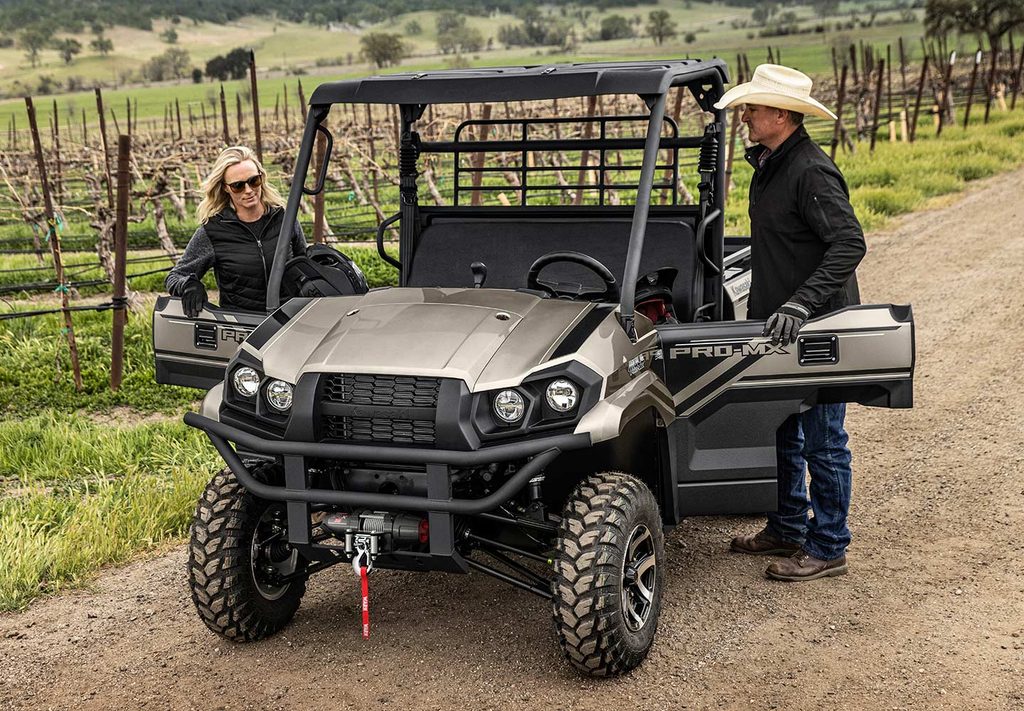
Later additions, like the PRO-MX and PRO-FXR, gave buyers more variety, including different seating layouts, more value-oriented trims, and added features. The point was clear: Kawasaki wanted a Mule for nearly every kind of buyer.History and Evolution of the Kawasaki Mule Lineup
Kawasaki Mule SX
The Mule SX is a more compact, budget-friendly option that carries the Mule name into the entry-level segment. It’s lighter than the PRO models, easier to handle, and well suited to small properties, light work, and recreation.History and Evolution of the Kawasaki Mule Lineup
What Changed in the Modern Mules
Comfort and Cab Design
Seating, steering, and ride quality improved dramatically compared with the classic models.
Payload and Towing
Bigger beds and stronger drivetrains let the PRO series handle more demanding work.
Updated Styling
The new body design looks more modern, which also helps resale value.
Kawasaki Mule Models at a Glance
| Era | Model | Seating | Best For |
|---|---|---|---|
| Classic | Mule 1000 | 2 | Light farm and property work |
| Classic | Mule 2000 / 2500 | 2 | Heavier hauling, available diesel |
| Classic | Mule 3000 | 2 | General-purpose work and towing |
| Mid-2000s | Mule 600 / 610 | 2 | Tight trails, hunting, small acreage |
| Mid-2000s | Mule 3010 | 2 | Work and weekend use |
| Mid-2000s | Mule 4010 | 2 or 4 | Families, crews, hunting parties |
| Modern | Mule SX | 2 | Entry-level, light-duty use |
| Modern | Mule PRO-FX / FXT | 2 or 3 | Gas-powered work and recreation |
| Modern | Mule PRO-DX / DXT | 2 or 3 | Diesel torque and efficiency |
| Modern | Mule PRO-MX / FXR | 2 or 3 | Value and variety in the PRO platform |
Specifications vary by model year and trim, so always confirm details before buying.
Why the Mule Has Lasted So Long
Reliability People Can Trust
The biggest reason is trust. Owners talk, and the word on the Mule has been consistent for decades: it starts, it works, and it keeps going. That reputation is hard to build and easy to lose, and Kawasaki has protected it.History and Evolution of the Kawasaki Mule Lineup
Easy Maintenance
Many Mules, especially the older ones, use straightforward mechanical systems. Oil changes, belt checks, and basic repairs are manageable for most owners. Fewer electronics mean fewer things to fail.History and Evolution of the Kawasaki Mule Lineup
Strong Parts Availability
Because the Mule has been around so long, aftermarket parts, accessories, and used components are easy to find. That helps keep older units on the road.
Versatility
A Mule can be a farm truck, a hunting rig, a groundskeeping tool, a ranch hauler, or a weekend trail machine. That flexibility keeps demand strong in the used market.
Strong Resale Value
Mules tend to hold their value well. That’s good news if you buy used, since you’re less likely to lose money if you sell down the road.
Buying a Used Kawasaki Mule: What to Check
Now that you know the history, here’s how to apply it. Not every Mule is the same, and age, usage, and maintenance all matter.History and Evolution of the Kawasaki Mule Lineup
Step 1: Choose the Right Generation
Pick Classic If You Want Simplicity
Older Mules are mechanical, affordable, and easy to repair. They’re great if you want a no-frills workhorse.
Pick Mid-2000s If You Want Balance
Models like the 610 and 4010 offer a nice mix of capability, comfort, and price.
Pick Modern If You Want Comfort and Features
PRO-series Mules offer the best ride and the most refined cab, but they cost more.
Step 2: Inspect the Machine
Engine and Drivetrain
Look for smooth starting, steady idling, and no unusual smoke. Test both two-wheel-drive and four-wheel-drive modes if equipped. Listen for grinding or clunking.
Frame and Bed
Check for cracks, heavy rust, or damaged welds. If it has a dump bed, make sure it lifts and lowers properly.
Tires and Suspension
Uneven tire wear can point to alignment or suspension problems. Check bushings, shocks, and ball joints.
Electrical and Controls
Test lights, gauges, switches, and the battery. Small electrical issues can be annoying and sometimes costly.
Ask About History
Request service records and ask how the vehicle was used. A Mule that hauled light loads on a small property will often be in better shape than one that worked hard every day.
Buy From a Reputable Source
A trustworthy seller makes a big difference. Look for clear photos, honest descriptions, and responsive communication. You can explore our current inventory of Kawasaki Mule UTV for sale or browse the full selection of used utility vehicles to compare options.
Ready to find your Mule? Shop used Kawasaki Mules now and get the right machine for your property, your budget, and your workload.
Frequently Asked Questions
When did Kawasaki start making the Mule?
Kawasaki introduced the Mule in 1988 with the Mule 1000. It has been in continuous development ever since.
What is the most popular Kawasaki Mule model?
The Mule 4010 and the Mule 610 are among the most popular used models, thanks to their balance of capability and price. In newer machines, the PRO-FX and PRO-FXT lead the way.
Which Kawasaki Mule models come in diesel?
Diesel versions have appeared across several generations, including units in the 2500 family and the modern PRO-DX and PRO-DXT.
How long do Kawasaki Mules last?
With regular maintenance, many Mules last well over a decade, and plenty of older units are still working today. Lifespan depends on use, service history, and storage conditions.
Is a gas or diesel Kawasaki Mule better?
It depends on your needs. Gas models are usually cheaper and quieter, while diesel models offer more torque, better fuel economy, and long engine life. If you tow or haul heavy loads often, diesel is worth a look.
Are parts easy to find for older Mules?
Yes. Because the Mule has such a long production history, both new and used parts are widely available.
What should I check before buying a used Kawasaki Mule?
Inspect the engine, drivetrain, frame, bed, tires, suspension, and electrical system. Ask for service records and confirm the model year and specifications.
Where can I find a used Kawasaki Mule for sale?
You can browse a wide selection at Used Utility Vehicles, which lists a range of Kawasaki Mule models, or explore the broader used utility vehicle shop.
Final Thoughts
The story of the Kawasaki Mule is really the story of how work vehicles evolved. It began in 1988 as a simple, compact hauler. Over the years it grew into a full family of gas and diesel UTVs, with options for every budget and job. The classic models gave us rugged simplicity, the mid-2000s models added comfort and capability, and the modern PRO and SX lines brought the Mule up to date.
Through all of it, the Mule kept the qualities that made it famous: durability, versatility, and honest value. That’s why used Mules stay in demand and why a good one can serve you for years.
If you’re ready to put a piece of that history to work on your own property, take a look at our current used Kawasaki Mule for sale listings, or browse our full range of used utility vehicles. Your next workhorse might already be waiting.