
Choosing a Reliable Used Utility Vehicle, on the other hand, has already taken that hit. You can often snag a 3–5-year-old machine with low hours, modern features, and a ton of life left for a fraction of the original price . That means more money stays in your pocket for the things that actually matter like upgrades, maintenance, or fuel (which isn’t getting any cheaper).
But let me be real with you: not all used utility vehicles are created equal. Some are absolute gems that’ll run for decades. Others are ticking time bombs disguised with a fresh coat of wax. In this guide, I’m going to walk you through exactly what to look for, what to walk away from, and how to make sure the used rig you’re eyeing is a workhorse not a headache.
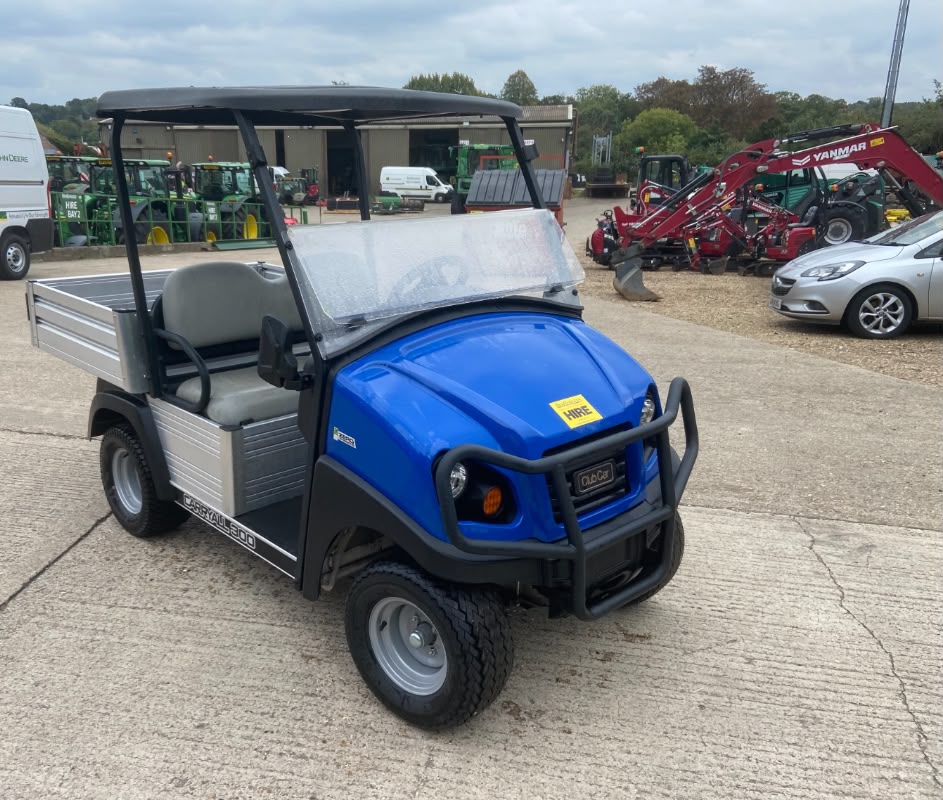
Defining Your Needs: What’s the “Utility” in Utility Vehicle?
Before we dive into the nitty-gritty of inspections and red flags, we need to have an honest conversation with ourselves about what we actually need. I’ve seen too many people buy a machine that’s either way overkill for their needs or completely inadequate for the job .
What is a utility vehicle, anyway?
At its simplest, a utility vehicle is a commercial-grade machine built for real work – hauling materials, transporting crews, navigating rough terrain, and getting jobs done . They’re not recreational toys (though they can be fun too). Unlike a delivery van or a standard pickup, utility vehicles feature specialized bodies designed for specific tasks – often with cargo beds, tool compartments, hydraulics, or even lift gear .
Ask yourself these questions before you start shopping:
- What’s the primary job? Are you moving materials around a job site, transporting people, doing maintenance work, or all of the above?
- What’s your payload requirement? How much weight do you need to carry in the bed? People plus gear adds up fast.
- Do you need 4WD? If you’re working in muddy fields, snowy conditions, or rough terrain, four-wheel-drive isn’t a luxury – it’s essential.
- What’s your towing capacity requirement? If you’re pulling trailers or heavy equipment, you need a vehicle that can handle it.
- Gas, diesel, or electric? Each has pros and cons – and diesel engines come with their own inspection checklist, which we’ll get into shortly.
Here’s what experienced operators say: “If you’re buying a service vehicle, you’re buying the body, not just the cab. The cab runs fine unless it’s fried, but the body kills or saves you” . That’s the real talk you need to hear.
The Diesel Decision: Power vs. Maintenance
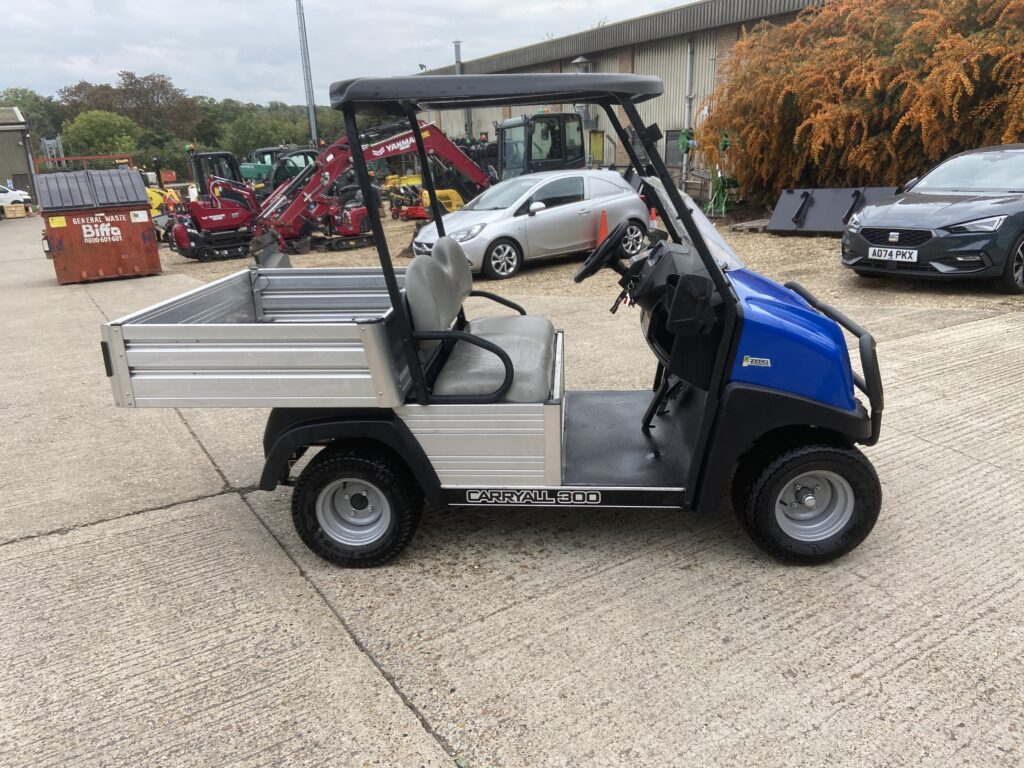
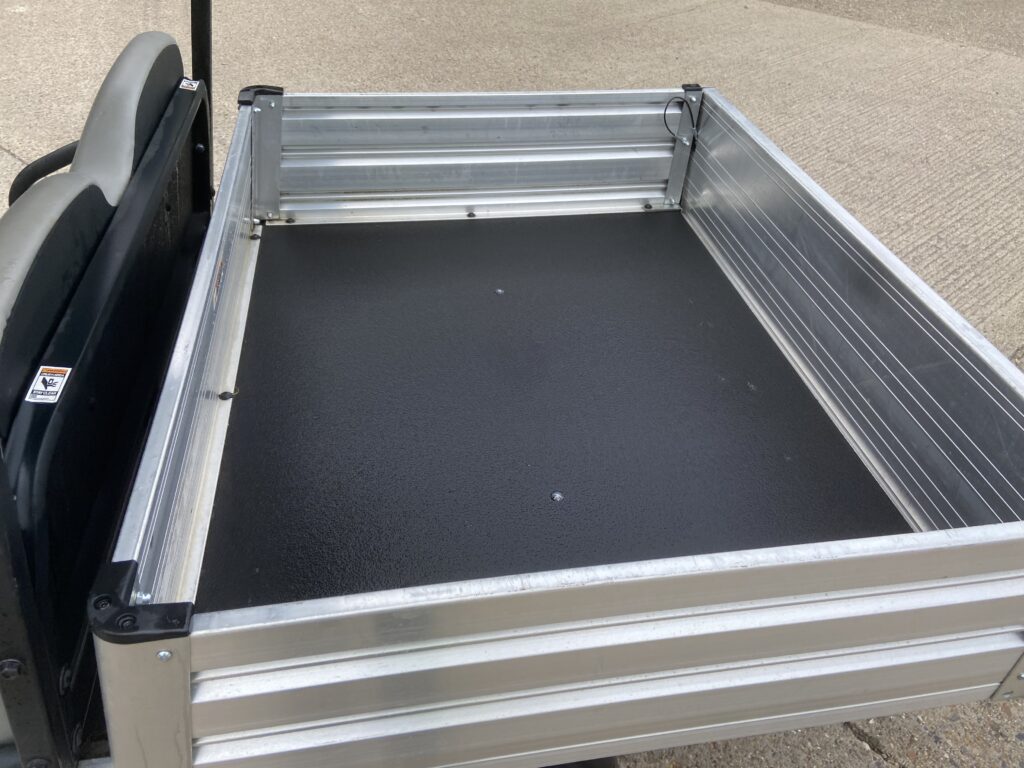
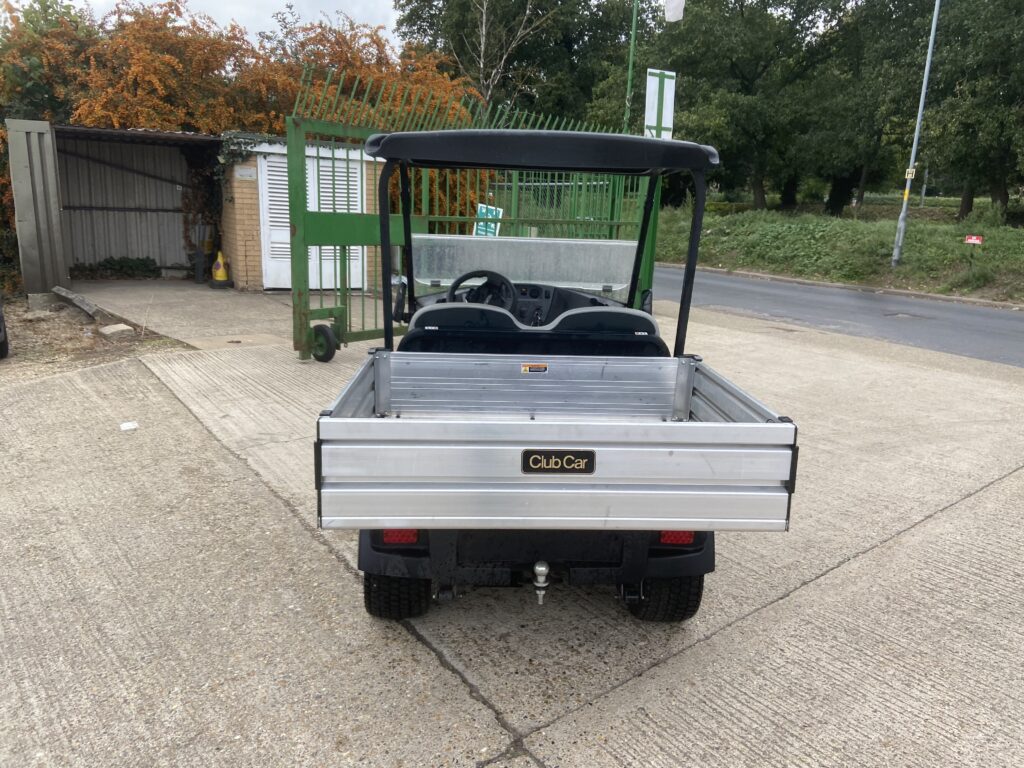
Let’s talk about diesel, because if you’re looking at a utility vehicle like the Club Car Carryall 1700 (which features the reliable Kubota D722 diesel engine), you need to understand what you’re getting into.
Why diesel makes sense for utility vehicles:
- Torque and pulling power: Diesels are built to move heavy loads and tackle tough terrain.
- Fuel efficiency: Diesels typically get better fuel economy than gas engines, especially when working hard.
- Longevity: A well-maintained diesel engine can run for hundreds of thousands of hours .
But here’s the catch:
- More expensive to maintain and repair: Diesel repairs cost more – parts are pricier, and labor is more specialized .
- Fuel system complexity: Diesel fuel systems operate at extremely high pressures. When something goes wrong, repair costs can add up fast .
- Cold-start issues: Diesels can be temperamental in cold weather if the glow plugs are tired .
Bottom line: If you need the power and you’re willing to stay on top of maintenance, diesel is worth it. But if your needs are lighter, gas might be the smarter play.
The Real-World Inspection: What to Look For
Okay, let’s get down to business. You’ve found a used utility vehicle that seems promising. Now it’s time to inspect it like your wallet depends on it – because it does.
🔍 1. Service History: The Vehicle’s Medical Record
This is non-negotiable. A clean, consistent service history is the single best indicator that a vehicle has been cared for .
What to look for:
- Oil changes at regular intervals (every 5,000–7,500 miles or as recommended by the manufacturer)
- Fuel filter replacements
- Coolant flushes
- Transmission fluid services
- Brake replacements
For diesel engines specifically: Check the coolant overflow reservoir for any signs of fuel or oil in the coolant. Contaminated coolant is a red flag for oil cooler issues, EGR cooler problems, or head gasket failures – and those repairs can cost a small fortune .
Keep in mind: “I do my own maintenance” isn’t necessarily bad – it just means follow-up questions are important. Ask for receipts. Ask for documentation. Odometers show distance; maintenance records show character .
🔍 2. Hour Meter vs. Mileage: Which Matters More?
With utility vehicles, hours are often a better indicator of wear than miles. A machine that’s been sitting idle but running for thousands of hours has experienced far more engine wear than one that’s racked up miles at speed .
Example from the real world: A Club Car Carryall 1700 with 1,836 hours found at auction had CV axle issues and wouldn’t even start when inspected . Another with 2,477 hours had steering problems and low tires . Hours tell a story listen to it.
What to ask:
- How many hours on the engine?
- Was the vehicle used for short trips (more wear) or longer runs (less wear per hour)?
- How was it driven? Commuting vs. heavy towing makes a huge difference .
🔍 3. The Cold Start Test
This is crucial, especially for diesel engines.
When you arrive to inspect the vehicle, it should be completely cold. Do not let the seller warm it up before you get there . A cold start reveals a lot about the engine’s health.
What to watch for during a cold start:
- Cranking time: How long does it take to start? Extended cranking could point to fuel system issues or compression concerns .
- Idle smoothness: A healthy diesel should wake up confidently. Rough idle that “just needs a minute” is a warning sign .
- Unusual noises: Some mechanical noise is normal. Sounding like a toolbox falling down stairs is not .
Pro tip: If the seller says “it just needs to warm up” or makes excuses for why it won’t start, walk away. You may have just discovered why it’s for sale .
🔍 4. Exhaust Smoke: What’s Normal vs. What’s a Red Flag
Exhaust behavior can tell you a lot about an engine’s condition .
Smoke color guide:
- Brief puff of white smoke on a cold start: Can be normal .
- Persistent white smoke: May indicate fuel or coolant issues .
- Blue smoke: Typically means oil consumption – not good .
- Black smoke during acceleration: Some is normal for diesels. Excessive black smoke under light driving? Red flag .
Remember: “It’s just a diesel thing” is not a diagnosis .
🔍 5. Underbody Inspection
Get on your back and look underneath. This is where the real story lives .
Check for:
- Fluid leaks: Look for oil under the engine, transmission leaks, and axle seal leaks .
- Rust and corrosion: Surface rust on the frame might be manageable. Deep rust on the undercarriage, suspension mounts, or rocker panels? Walk away .
- CV axle condition: If you’re looking at a 4×4, check the CV boots for tears or damage. These can be expensive to replace .
- Suspension components: Look for worn bushings, loose parts, or signs of heavy use .
🔍 6. Transmission Health
Diesels produce serious torque, and the transmission feels every bit of it .
For automatic transmissions:
- Pull the dipstick and check the fluid. It should be reddish and have little smell. If it’s brownish or smells burnt, the transmission may have internal issues .
- During the test drive, pay attention to shift quality. Watch for slipping, flaring, or delayed engagement .
For manual transmissions:
- Short-shift into a high gear and accelerate fairly hard to check clutch condition. There should be no slipping or chatter .
- Listen for gear whine or drivetrain vibrations when cruising in 3rd, 4th, or 5th gear without much throttle .
Pro tip: Engines make power; transmissions decide how long you enjoy it. A strong engine with a tired transmission is like a marathon runner in flip-flops .
🔍 7. 4×4 System Test
If you’re buying a 4WD utility vehicle, you need to test it properly .
What to do:
- Get off the pavement and engage 4WD in both high range and low range .
- Listen for odd sounds or grinding from the transfer case .
- Make sure the front hubs are locking and the front tires are driving .
- Switch back to 2WD and spin the rear tires to check if the limited-slip or locking differential is operating correctly .
Pro tip: You’re not abusing the truck – you’re making sure you’re buying a 4×4 that works as it should .
🔍 8. Tires and Hitch Wear
These details can tell you a lot about how the vehicle was used .
Check:
- Uneven tire wear: This can indicate alignment issues, suspension problems, or improper inflation .
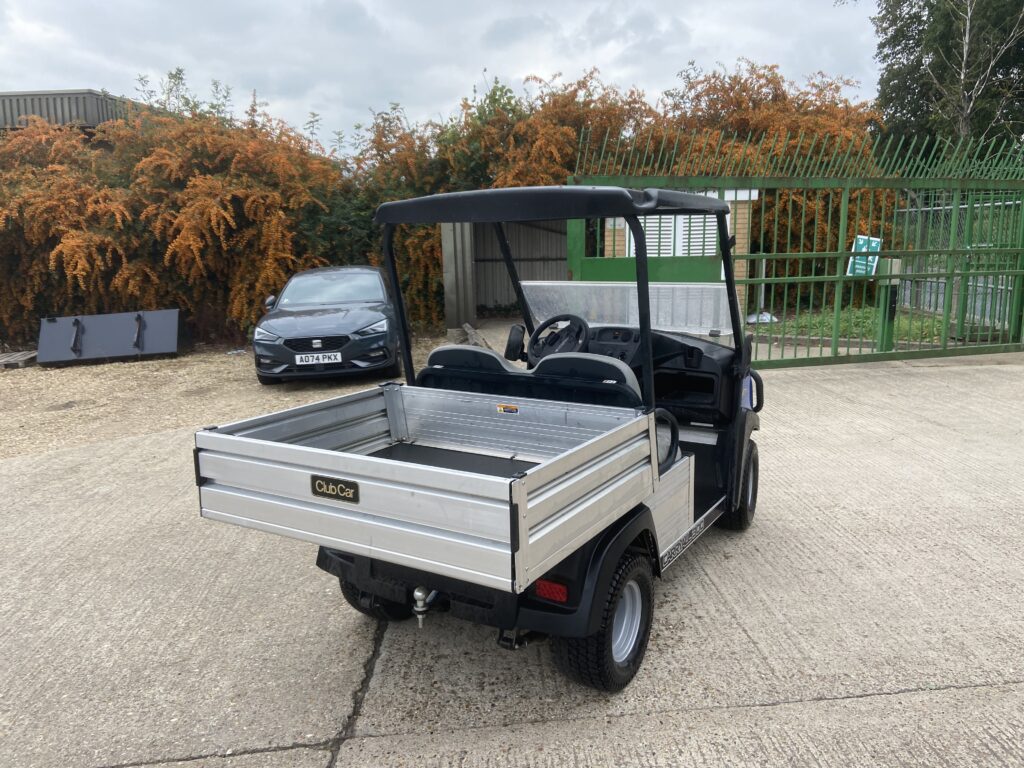
- Hitch wear: A heavily worn hitch suggests the vehicle has done a lot of towing. That’s not automatically bad, but it means you should inspect the drivetrain and transmission more carefully .
- Tire condition: If the tires are marked “off-road use only,” that could be a challenge if you want to drive on public roads .
Real-world example: In the Pacific Northwest, one Carryall 1700 owner found that his local DMV required proof that the vehicle was made for road use – and Club Car wouldn’t provide it. Tires marked for off-road use only became a significant obstacle . Always check your local regulations!
🔍 9. Title and Legal Status
This might sound boring, but it’s critical .
Check for:
- Clean title: Make sure the vehicle has a clear title. No salvage titles unless you understand exactly what you’re getting into .
- Flood damage: Vehicles that have been flooded can be refurbished and sold. Water submersion wreaks a slow, cancerous death on mechanical, electronic, and fuel systems. Look for bubbles under paint, new carpet and seats, mold on seat belts, or rust in the cab .
- Street legality: As the Carryall 1700 owner in Virginia discovered, getting a used utility vehicle registered for road use isn’t always straightforward .
Brands to Trust: What Consumer Reports and the Pros Say
Here’s where we look at the broader pickup and utility vehicle market for guidance on reliability.
Toyota Tacoma (2020 model year recommended)
Consumer Reports subscribers gave the 2020 Tacoma high marks for reliability. It’s a mid-size truck that’s tough, reliable, and holds its value incredibly well . Available with a 2.7L four-cylinder (159 hp) or a 3.5L V6 (278 hp), it can tow up to 6,800 pounds .
Toyota Tundra (2018 model year recommended)
The Tundra has an admirable reliability record. The 2018 model earned high marks from Consumer Reports, with two proven V8 engine options and standard Toyota Safety Sense – P .
Ford F-150 (2017–2024 recommended)
America’s best-selling vehicle for a reason. The 2015+ models introduced an aluminum body that resists rust and shaves weight. The 2.7L EcoBoost V6 is a sleeper hit – great torque, solid MPG, and surprisingly durable .
Honda Ridgeline (2021+ recommended)
The Ridgeline offers car-like ride and handling with decent utility – can tow up to 5,000 pounds and carry nearly 1,600 pounds of payload . Consumer Reports rated the 2021 model highly reliable .
Ford Maverick (2022+)
This compact pickup is practical and efficient. The hybrid powertrain delivers up to 37 mpg, and it’s been on Car and Driver’s 10Best list for three years running .
For serious work duty: If you need a heavy-duty workhorse with a diesel engine, the Ram 2500 with the 6.7L Cummins turbo diesel is legendary for torque and longevity .
The Test Drive: Where Everything Comes Together
After the visual inspection, it’s time to drive .
What to do:
- Accelerate hard and give the brakes a workout .
- Get the engine and transmission up to operating temperature (20 minutes is good) .
- Check for steering play and wandering .
- Test how the vehicle brakes straight and strong .
- Shift through all gears and listen for odd sounds .
- Watch for exhaust smoke during hard acceleration or when you let off the throttle .
Trust your gut: If something feels off, it probably is. Don’t force it. There are plenty of other vehicles out there .
Red Flags: When to Walk Away
Here’s my no-BS list of deal-breakers:
- “Just needs a little TLC” = Translation: “I didn’t take care of it, and now it’s your problem” .
- Check engine light on during test drive – Get a code scan or walk away .
- Mismatched paint or panels – Could indicate accident damage or poor repairs .
- Lifted trucks with no alignment records – Uneven tire wear, steering issues, and potential suspension damage ahead .
- Flood history – Just say no .
- No title available – You’ll find horror stories online about vehicles sold without titles. Don’t become one of them .
- Missing emissions components – Some owners remove diesel particulate filters and EGR components for more power. Replacing them can cost thousands, and many counties require them for registration .
The Auction Alternative: What to Know
If you’re considering buying at auction (where many utility vehicles end up), keep a few things in mind:
Pros:
- Potential for great deals
- Wide selection
Cons:
- As-is sales: Vehicles like a 2019 Club Car Carryall 1700 sold at auction for $3,500 – but it had mechanical issues including lower ball joint problems and a damaged CV boot .
- Limited inspection: Some auction items are sold without full operational verification .
- Hidden problems: That 2018 Carryall 1700 with 1,836 hours? It wouldn’t even start when inspected .
- Oversupply/demand swings: UTV prices at auctions spike when times are good in agriculture – so timing matters .
Bottom line: Auctions can be great if you know what you’re doing and can do your own inspection. They’re risky if you’re buying blind.
Final Thoughts: Your Checklist for Success
Before you hand over any cash, go through this checklist:
- Service records available? Oil changes, fuel filter swaps, coolant flushes, major repairs?
- Cold start test passed? No excessive cranking, rough idle, or strange noises?
- Exhaust smoke normal? No blue or persistent white smoke?
- Underbody clean? No major leaks, severe rust, or damaged CV axles?
- Transmission smooth? No slipping, hard shifts, or burnt fluid?
- 4×4 works? Engages smoothly in high and low range?
- Tires and suspension good? Even wear, no play in steering?
- Title clear? No flood damage, salvage, or registration issues?
- Trust your gut? Does the seller seem honest? Does the vehicle feel right?
A well-maintained high-hour vehicle can be a far better buy than a neglected low-hour one . Mileage tells part of the story; maintenance tells the rest
Evo888game? Yeah, I’ve spun a few times there. The games are pretty smooth, and I haven’t had any major problems. Worth a look if you’re bored. Hit it up here: evo888game.