
Essential Farm ATV Maintenance Tips to Extend Your Vehicle's Lifespan
Farm ATVs earn their keep hauling fencing materials, checking livestock, spreading seed, and moving through terrain that would stop most vehicles cold. To achieve all of that year after year, the machine needs consistent, structured care. The good news is that most of the upkeep is straightforward, and doing it yourself saves real money compared to ignoring small problems until they become expensive ones.
This guide walks through every core farm ATV maintenance task in practical order, from engine fundamentals to off-season storage. Whether your ATV is brand new or a well-used workhorse purchased from a seller like Used Farm Utility Vehicles, the same principles apply: stay ahead of wear, follow your owner’s manual, and treat maintenance as an investment rather than a chore.
Key Takeaways
- Oil changes are the single highest-impact habit: Change the engine oil and filter every 50-100 engine hours, or at least once per season, whichever comes first, skipping this accelerates wear faster than any other oversight.
- Air filter neglect causes the most irreversible damage: Most of the dust and debris from a dirty air filter goes straight into your ATV engine’s combustion chamber, scratching and scarring the cylinder walls, piston heads, and piston rings, leading to very expensive top-end rebuilds and cylinder head replacements.
- Repair costs dwarf maintenance costs: An ATV top-end rebuild runs $725-$800 plus parts, while a bottom-end rebuild costs $1,250-$1,325 plus parts, a comparison that makes routine oil and filter changes look like bargains.
- Tires have a defined lifespan: The average lifespan of ATV tires is 3-5 years with proper care, depending on terrain and usage. Track manufacturing dates and inspect pressure before every ride.
- Seasonal storage preparation protects against off-season damage: Gasoline can degrade over time and gum up the fuel system, leading to poor engine performance or even damage when you restart in spring. Always stabilize fuel before storing.
Quick-Start Prioritization Framework
| Maintenance Task | Best For | Effort Level | Time to Results |
|---|---|---|---|
| Engine oil and filter change | All ATV owners | Low | Immediate engine protection |
| Air filter inspection and cleaning | All conditions, especially dusty farms | Low | Same ride |
| Tire pressure check | Every pre-ride inspection | Very Low | Instant handling improvement |
| Chassis greasing | High-use or muddy terrain | Low-Medium | Prevents premature joint wear |
| Brake inspection | All owners, safety-critical | Low | Immediate safety assurance |
| Fuel stabilization and winterization | Seasonal storage | Low | Protects full off-season |
Start here if you are:
- A new owner or just bought used: Perform a full service immediately, oil change, filter replacement, fluid top-offs, and a frame inspection. After purchasing a used ATV perform a full service including oil change, filter replacements, and fluid top-offs.
- Running in heavy farm conditions: Shorten every interval. Riders who push their machines harder should consider reducing service intervals by 20-30%.
- Heading into off-season storage: Prioritize fuel stabilization, battery removal, and oil change before the machine sits idle.
Step 1, Master Your Engine Oil Routine
Why Engine Oil Is Your First Line of Defense
One of the most critical fluids is the engine oil. Regularly checking and changing it is a fundamental ATV maintenance practice that can significantly impact your machine’s performance and lifespan. Over time, engine oil breaks down and accumulates contaminants, which leads to increased wear on internal components.
Farm ATVs face a compounding challenge. ATV oil changes are required more often than car oil changes because ATV engines run hotter, at higher revs, with less oil, meaning the oil loses its viscosity faster. That means a maintenance schedule designed for a car simply does not transfer.
Frequent starts and stops extended storage periods, extreme temperature changes, and severe use can all lead to premature oil degradation. Changing your oil at the recommended intervals ensures consistent and reliable performance for the life of your vehicle.
Setting the Right Change Interval
Consult your owner’s manual for the recommended oil change interval, typically every 50 to 100 hours of use. When changing the oil, also replace the oil filter to ensure optimal filtration and protection. If you cannot track hours easily, the practical rule from Boost ATV’s oil change interval guide is simple: for most ATVs, change the engine oil and filter every 6 months, and gearcase and differential oils every 12 months.
Step 2, Keep the Air Filter Clean and Protected
How a Dirty Filter Damages Your Engine
The air filter is one of the cheapest parts on your ATV, and one of the most expensive to ignore. The ATV air filter is your engine’s first line of defense against contaminants. A clean filter ensures proper airflow, allowing your engine to breathe and operate at peak performance. Neglecting filter maintenance can lead to poor acceleration, reduced fuel efficiency, and costly engine repairs.
Farm work intensifies the risk. The abrasive effect of dust on the engine’s internal components is significant, the damage is irreversible and results in substantial, costly engine repairs.
Cleaning Schedule for Farm Conditions
At a bare minimum, inspect and clean your ATV’s air filter with every motor oil change, or approximately after every 50 hours of use. However, if you ride in dusty or sandy conditions often, you should clean the air filter more frequently than that.
According to NAPA’s ATV air filter guide, NAPA’s ATV air filter guide an ATV air filter after about 50 hours of use, but in especially sandy or muddy conditions, you may want to check it more often.
For working farms with regular dusty field conditions, dusty environments require more frequent cleaning. Cleaning the air filter every 10-20 hours of riding time helps maintain optimal filtration and engine performance.
Step 3, Tires, Brakes, and Chassis Integrity
Tire Pressure and Inspection
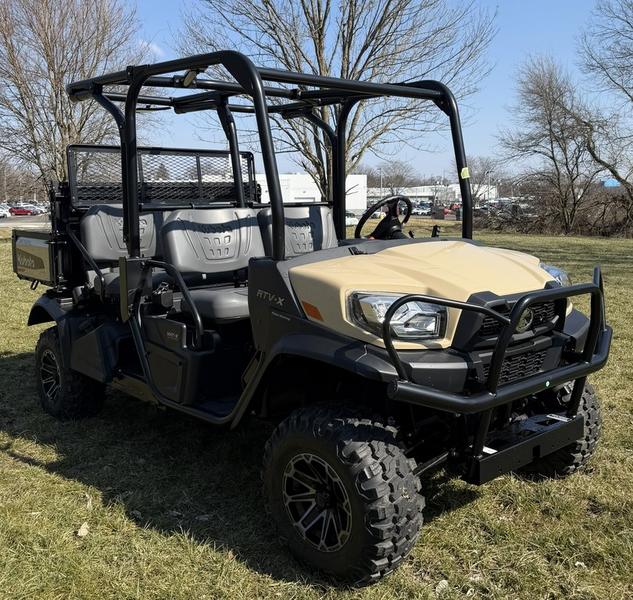
Tire health is vital for farm ATVs that often face rugged terrains. Keep tire pressure at optimal levels, this helps with fuel efficiency and provides better traction on various surfaces. Inspect tires regularly for cuts or punctures that might compromise safety during operation.
Maintaining proper tire pressure means your tires will wear evenly, which can prolong their life and fuel efficiency. Use the pressure rating in your owner’s manual, and check it with a gauge every time before heading out. Under-inflation on rough farm ground accelerates tread wear and risks a blowout far from the barn.
Balancing and rotating your tires can also extend their life and improve your ATV’s performance. Over time, the weight distribution on your ATV can cause certain tires to wear more quickly than others.
Brake System Maintenance
Proper maintenance keeps your ATV running smoothly, gives it a longer life, and ensures your safety while riding. Failure to perform routine maintenance can result in costly repairs and even serious injury.
According to the Progressive ATV maintenance checklist, the easiest way to test your brakes is by squeezing the brake levers. In addition to checking brake fluid, it is important to check the levels of engine oil, coolant, and the fuel system, and leaks or puddles under your ATV indicate a potential problem.
Chassis Lubrication
Farm ATVs work their suspension joints, A-arms, and steering components hard. The chassis of your ATV undergoes substantial stress during off-road work. Proper lubrication of chassis components such as joints, pivots, and linkages is essential to prevent premature wear.
According to Finntrail’s greasing guide, although greasing frequency depends on how much you use the ATV and the terrain you cover, you should grease it at least every 6 months to a year. In practice, heavy farm use in muddy or wet conditions warrants greasing every few months. Making sure the parts of your ATV are clean and well lubricated will prevent corrosion, which leads to deterioration over time. There are different products available to prevent friction, like grease or chain wax.
Step 4, Battery Care and Electrical Health
Preventing Battery Failure
Farm ATVs often sit unused between jobs, which drains the battery. Keep it charged with a trickle charger. Battery neglect is one of the most common and easily avoided causes of failed starts, especially in cold mornings during planting or harvest season.
One of the most common issues for ATVs is battery failure, which can often be costly to replace, especially for advanced or older models. Your ATV battery will typically last between 2 and 4 years, depending on use and storage conditions. If you are seeing that range drop, start shopping before you get stranded.
Tire health is vital for farm ATVs from corrosion by cleaning them occasionally with a solution of baking soda and water. Corroded terminals reduce charging efficiency and can mimic a dead battery even when the cell itself is fine.
Maintaining the Fuel System
Gasoline starts to break down after about two weeks of sitting idle. You do not want to run your ATV with old, broken-down gasoline. For a farm ATV that may sit for a few weeks during slow periods, this is a real concern.
If you bought the ATV used or are starting it for the first time after several months of sitting, check the gas tank. If there is no gas, just add some and you are good to go. If there is gas in it, consider that it might be old gas. If you are not sure how long it has been since the ATV was ridden, empty the tank and carburetor, dispose of the fuel properly, and add fresh gas.
Step 5, Seasonal Maintenance and Off-Season Storage
Pre-Storage Checklist
Skipping seasonal preparation is one of the most damaging things a farm ATV owner can do. By aligning your maintenance tasks with the seasons, you can extend your ATV’s lifespan, maintain its performance, and avoid costly repairs.
Follow this sequence before long-term storage:
- Change the oil and filter before storing. Old oil can contain contaminants that may damage your engine during storage. Changing the oil and filter protects the engine’s internal components and ensures your ATV is ready to go when you are.
- Stabilize the fuel. Add a fuel stabilizer to your ATV’s fuel tank. This product prevents fuel from breaking down and causing blockages in the carburetor or fuel lines. Run the engine for a few minutes to circulate the stabilizer throughout the system.
- Manage the battery. Batteries are vulnerable to cold temperatures and long periods of disuse. To preserve your ATV battery, remove it from the vehicle before storing and keep it in a temperature-controlled environment, hooked up to a battery tender or trickle charger.
- Protect the tires. Old oil can contain contaminants pressure on your ATV’s tires and may lead to flat spots. Elevate your ATV on blocks or stands to take the weight off the tires.
Spring Start-Up Inspection
Before riding again after storage, inspect for any signs of wear or damage that may have occurred during storage. Check tire pressure, test the brakes, confirm the battery holds a charge, and run the engine briefly before putting the ATV to work.
Step 6, Record-Keeping and Owner’s Manual Habits
The Value of a Maintenance Log
In my experience, the farmers who get the most years out of their ATVs are the ones who keep a simple written log. Keep track of repairs with a maintenance log; it helps spot patterns and plan future upkeep.
This matters even more with a used ATV. A well-kept service book is a sign of a responsible owner. It includes dates the ATV was serviced, maintenance intervals, and records of any replaced parts. If you buy a used machine without documented history, treat it as if no maintenance has been done and start fresh.
Trust Your Owner’s Manual
The manufacturer of your ATV created the owner’s manual for a reason, to help you maintain it. If you shove the manual in a drawer and never read it, you will not know what types of products to use with your vehicle, how much air pressure to put in your tires, or what part numbers you need for worn components. Your owner’s manual is a valuable resource, so keep it somewhere easily accessible.
I’ve found that owners who consult their manual at each service interval almost always catch small specification details, the right oil viscosity, the correct tire pressure, the specific grease type for each zerk fitting, that make a real difference over a machine’s lifetime.
Common Maintenance Mistakes to Avoid
- Using automotive engine oil instead of ATV-specific oil. The average lifespan of ATV tires always use ATV-specific oil for proper lubrication.
- Pressure-washing directly at bearings, seals, and electrical connectors, which forces water into components.
- Ignoring a slow tire leak. A tire that loses pressure incrementally usually has a thorn, nail, or small puncture that can be patched before it fails at the worst possible moment.
- Skipping the post-storage service. Leaving old oil in an ATV for a long time will corrode internal components, so replace it with fresh oil before storing.
- Assuming a used ATV was well maintained by the previous owner. If the air filter housing is dusty when you inspect a used purchase, seriously consider walking away, neglect at this level means other maintenance tasks were likely ignored as well.
Frequently Asked Questions
How often should I change the oil on my farm ATV?
Oil changes should be done every 50 to 100 hours of ride time, or at least once per year. On a working farm with heavy daily use, lean toward the shorter end of that range. Aggressive use, including hard acceleration, high-speed operation, and heavy load hauling, creates additional stress on components. Riders who push their machines harder should reduce service intervals by 20-30%.
What are the signs that my ATV air filter needs immediate attention?
A clogged filter can cause the engine to make unusual sounds such as coughing, sputtering, or backfiring due to restricted airflow. If your ATV feels sluggish, struggles with acceleration, or stalls frequently, a dirty filter might be starving the engine of air. When airflow is restricted, the engine works harder and burns more fuel, so if you notice a sudden drop in fuel efficiency, check your air filter.
How do I prepare my farm ATV for winter storage?
The five core steps are: change the oil and filter, add a fuel stabilizer and run the engine to circulate it, remove and trickle-charge the battery, elevate the ATV off its tires, and cover it in a dry space. Whenever possible, store your ATV indoors to shield it from extreme cold, which can cause corrosion and damage. For farms without indoor storage, a quality ventilated cover is the minimum protection.
When should I replace rather than repair my ATV?
Consider replacement when repair costs consistently exceed 50% of the ATV’s value within a 12-month period, or when major components such as the engine, transmission, or frame require simultaneous replacement. For farmers evaluating used options, Used Farm Utility Vehicles offers well-inspected used ATVs and utility vehicles with the kind of documented history that makes ownership planning straightforward.
How long do ATV tires typically last on farm terrain?
The average lifespan of ATV tires 3-5 years, depending on terrain and usage. Farm terrain, including rocky edges, packed gravel, and occasional mud, sits at the harder end of that spectrum. Check the manufacturing date on the sidewall and replace tires approaching five years regardless of remaining tread depth, since rubber compounds degrade with age even when tread looks acceptable.