
History and Evolution of the Kubota RTV Lineup
Table of Contents
- Quick Answer: AI Overview
- Why the Kubota RTV Story Matters
- The Origins: Kubota Before the RTV
- The First Generation: The RTV900 Changes the Game
- The Mid-2000s to 2010s: Expansion of the Lineup
- Cabs, Comfort, and Climate Control
- The Modern Kubota RTV Lineup
- Engine and Drivetrain Evolution
- Kubota RTV Models Compared
- Buying a Used Kubota RTV: What History Teaches Us
- Final Thoughts
- FAQs
Quick Answer: History and Evolution of the Kubota RTV Lineup
What is the history of the Kubota RTV lineup?
The Kubota RTV (Rugged Terrain Vehicle) lineup began in the early 2000s, when Kubota applied its diesel engine expertise to side-by-side utility vehicles. The original RTV900 introduced a rugged diesel engine, a CVT transmission, and a hydraulic dump bed. Over the next two decades, Kubota added smaller and larger models, enclosed cabs with heat and A/C, and gasoline options like the Sidekick.History and Evolution of the Kubota RTV Lineup
Why are used Kubota RTVs so popular?
They hold their value, the diesel engines are known for longevity, and the parts and dealer support are strong. You can browse current inventory in our Kubota RTV UTV for sale collection.History and Evolution of the Kubota RTV Lineup
History and Evolution of the Kubota RTV Lineup
Why the Kubota RTV Story Matters
If you’ve ever watched a Kubota RTV haul fence posts across a muddy pasture, plow snow off a long driveway, or crawl up a ridge with a bed full of firewood, you’ve seen a machine built on more than a century of engineering. The Kubota RTV lineup didn’t appear overnight. It grew out of decades of farm equipment experience and years of listening to people who needed a vehicle that worked as hard as they did.History and Evolution of the Kubota RTV Lineup
Understanding the history of the Kubota RTV is more than a trivia exercise. It helps you decode model names, understand why certain years are more desirable, and judge whether a used unit fits your property or job site. Whether you’re a farmer, rancher, contractor, hunter, or landowner, knowing where these machines came from will make you a smarter buyer.History and Evolution of the Kubota RTV Lineup
In this guide, we’ll walk through the full evolution of the Kubota RTV, from its diesel-powered beginnings to today’s refined, cab-equipped utility vehicles. Along the way, we’ll point out what each era means if you’re shopping for a used Kubota RTV for sale.History and Evolution of the Kubota RTV Lineup
The Origins: Kubota Before the RTV
A Company Built on Durable Machinery
Kubota’s roots go back to 1890 in Osaka, Japan, where founder Gonshiro Kubota started out making cast iron products. Over the following decades, the company grew into one of the world’s best-known manufacturers of tractors, diesel engines, and construction equipment. Kubota entered the U.S. market in the early 1970s, and compact tractors quickly became a fixture on American farms, ranches, and rural properties.History and Evolution of the Kubota RTV Lineup
Why Diesel DNA Matters
That background is the key to understanding the RTV. While many early side-by-sides were built around gasoline engines borrowed from recreational machines, Kubota did what it knew best. It built its utility vehicle around a Kubota diesel engine. This decision shaped the entire product line, and it’s still a major reason owners trust the brand today.History and Evolution of the Kubota RTV Lineup
The Gap in the Market
Before the RTV, working landowners had limited choices. They could use a tractor (powerful but slow and not very nimble), an ATV (agile but limited in payload and passenger space), or a pickup truck (comfortable but unsuited to rough terrain). Kubota saw a gap for a rugged, diesel-powered utility vehicle that could carry two people and a real load across uneven ground.
The First Generation: The RTV900 Changes the Game
The Birth of the Rugged Terrain Vehicle
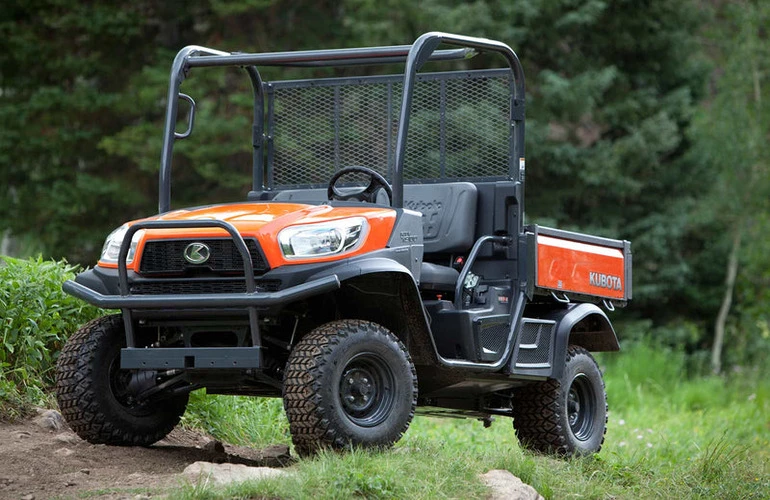
In the early 2000s, Kubota launched the RTV900, the machine that started it all. The name says it plainly: Rugged Terrain Vehicle. Kubota positioned it not as a toy or a trail machine, but as a true work vehicle.
Several features set the RTV900 apart at the time:
- A liquid-cooled diesel engine with strong low-end torque
- A CVT (continuously variable transmission) with a simple, belt-driven design
- A hydraulic dump bed for hauling and unloading material
- Selectable 2WD/4WD with a locking differential for traction
- A tow hitch and meaningful payload capacity for farm and ranch jobs
Why It Was a Big Deal
The RTV900 proved that a UTV could be a serious tool. A diesel engine meant better fuel economy, strong pulling power, and the ability to share fuel with the tractor and other farm equipment. For many owners, that convenience alone was a selling point.History and Evolution of the Kubota RTV Lineup
What the First Generation Teaches Used Buyers
Early RTV900 units are now old enough that condition matters more than model year. A well-maintained example can still work hard, but you’ll want to inspect the CVT belt, the dump bed hydraulics, and the suspension bushings. If you’re open to older machines, our used Kubota RTV inventory is a good place to compare condition, hours, and pricing.History and Evolution of the Kubota RTV Lineup
The Mid-2000s to 2010s: Expansion of the Lineup
From One Model to a Family
After the RTV900’s success, Kubota began expanding the lineup. This is where the Kubota RTV models started to diversify to fit different budgets and workloads. The company introduced refinements that made the vehicles easier to drive, more comfortable, and more capable.History and Evolution of the Kubota RTV Lineup
The RTV-X Series Arrives
The Kubota RTV-X900 and its siblings marked a major step forward. The “X” series brought improvements that owners had been asking for:
- Better ride quality through updated suspension geometry
- More refined controls and cabin ergonomics
- Stronger cargo and towing performance
- Updated styling that looked more modern
H4: The RTV-X900 as a Benchmark
For many buyers, the RTV-X900 became the benchmark model. It balanced size, power, and price, and it appeared on farms, in municipal fleets, at golf courses, and on construction sites. Today, a used RTV-X900 remains one of the most searched-for models because of its reputation for reliability.History and Evolution of the Kubota RTV Lineup
Smaller and Larger Options
Kubota also recognized that one size doesn’t fit all. Smaller, lighter models like the RTV500 were aimed at buyers who needed something nimble for tight trails and narrow gates. Larger, more powerful models like the RTV1100 and RTV1140 series served heavy-duty users who needed more torque and towing strength.
This was the era when the lineup truly became a lineup, with options for light-duty homeowners, mid-range ranchers, and commercial operators.
Cabs, Comfort, and Climate Control
The Cab Revolution
One of the most important chapters in the evolution of the Kubota RTV was the arrival of factory cab models. Anyone who has worked outdoors in January or July knows why this mattered.History and Evolution of the Kubota RTV Lineup
The RTV-X1100C and related cab models offered:
- A fully enclosed cab with doors and glass
- Factory heat and A/C on select configurations
- Better protection from dust, rain, and wind
- Windshield wipers and accessories for year-round use
Why Cab Models Command Higher Prices
Used cab-equipped RTVs often cost more than open-cab versions, and for good reason. They extend the usable season of the vehicle, protect the driver, and expand the range of jobs it can handle. If you plow snow, spray fields, or work in dusty conditions, a cab model is usually worth the premium.
H4: Checking Cab Components When Buying Used
When inspecting a used cab model, test the heater and air conditioning, check the door seals for leaks, and look for cracks in the glass or frame. These small items can add up, so it pays to inspect before you buy.History and Evolution of the Kubota RTV Lineup
The Modern Kubota RTV Lineup
A Complete Range for Every Job
Today’s Kubota RTV lineup spans a wide range of sizes, engine types, and equipment levels. While exact model offerings change from year to year, the modern range generally includes several categories.History and Evolution of the Kubota RTV Lineup
Diesel Workhorses
The diesel models remain the heart of the family. Machines like the RTV-X900, RTV-X1100C, and RTV-X1140 continue the tradition that started with the RTV900. They offer strong torque, excellent fuel economy, and the long engine life that Kubota is known for.
The Sidekick: A Gasoline Option
One notable addition is the RTV-XG850 Sidekick, a gasoline-powered model aimed at buyers who want Kubota quality in a lighter, more recreational-friendly package. It reflects Kubota’s recognition that not every customer needs a diesel, and that some people want a vehicle for both work and play.History and Evolution of the Kubota RTV Lineup
Specialty Configurations
Modern RTVs are also used with a wide range of attachments and accessories, including:
- Snow plows and blades
- Sprayer systems
- Winches and bumpers
- Cargo boxes and utility racks
- Roof, windshield, and door kits
This versatility is a major reason the RTV has become a standard tool on farms, ranches, and commercial properties across North America.
H4: Finding the Right Fit
If you’re unsure which model suits you, start by listing your top three jobs: hauling, towing, plowing, spraying, or trail riding. Then match them to the engine type, cab style, and bed capacity. Our team is happy to help you narrow down the options. You can browse all available utility vehicles or contact us for a recommendation.History and Evolution of the Kubota RTV Lineup
Engine and Drivetrain Evolution
Diesel Refinement Over the Years
Kubota’s three-cylinder and four-cylinder diesel engines have been refined repeatedly since the first RTV. Emissions standards, fuel injection technology, and cooling systems have all evolved, giving newer models smoother operation and improved efficiency.
CVT Improvements
The CVT transmission is another area where Kubota has made steady gains. Early systems were simple and effective, but newer versions offer better belt durability, smoother engagement, and improved engine braking on hills.
H4: Why This Matters for Used Buyers
If you’re shopping for a used RTV, ask about the CVT belt replacement history. A recently replaced belt is a good sign, and a worn one is a negotiating point. Regular maintenance of the clutch and belt system keeps the drivetrain healthy and extends its life significantly.History and Evolution of the Kubota RTV Lineup
Suspension, Steering, and Braking
Over the years, Kubota has also upgraded suspension travel, steering feel, and braking components. Newer models handle rough terrain more comfortably and offer greater stability when carrying loads. While older models are still capable, the ride is noticeably different, so a test drive is always a good idea.History and Evolution of the Kubota RTV Lineup
Kubota RTV Models Compared
The table below summarizes how the major Kubota RTV models fit into the family. Specifications vary by year and configuration, so treat this as a general guide rather than an exact spec sheet.
| Model | Engine Type | Best For | Typical Buyer |
|---|---|---|---|
| RTV500 | Diesel | Light-duty work, narrow trails | Homeowners, small property owners |
| RTV900 | Diesel | General farm and ranch work | Early-generation budget buyers |
| RTV-X900 | Diesel | All-around utility and hauling | Farmers, ranchers, landscapers |
| RTV-X1100C | Diesel (cab) | Year-round work in all weather | Snow removal, commercial operators |
| RTV1140 series | Diesel | Heavy towing, demanding tasks | Contractors, heavy-duty users |
| RTV-XG850 Sidekick | Gasoline | Mixed work and recreation | Hunters, trail riders, hobby farms |
H4: How to Read the Model Names
Kubota’s naming is fairly logical once you know the pattern. Numbers usually reflect engine size or class, “X” indicates the upgraded series, “C” often indicates a cab, and “G” points to gasoline power.
Buying a Used Kubota RTV: What History Teaches Us
Why Used RTVs Make Sense
New utility vehicles are expensive, and a Kubota’s durability means a well-cared-for used unit can offer excellent value. Because the RTV has such a long track record, there is a wealth of owner knowledge, aftermarket parts, and dealer support available.History and Evolution of the Kubota RTV Lineup
Inspection Checklist
Whatever generation you’re considering, check these essentials:
- Hours and service records. Lower hours are good, but consistent maintenance matters more.
- Engine condition. Look for leaks, smoke, hard starting, or unusual noise.
- CVT belt and clutches. Look for glazing, cracking, or slipping.
- Hydraulic dump bed. Cycle it up and down and watch for leaks or slow movement.
- Frame and suspension. Check for rust, bent components, and worn bushings.
- 4WD and differential lock. Confirm they engage smoothly.
- Tires, brakes, and lights. These are small items but can add up.
Which Generation Is Right for You?
- Early RTV900 units suit budget-conscious buyers who are comfortable with a bit more maintenance.
- RTV-X900 models are a sweet spot of value, reliability, and availability.
- Cab models make sense for anyone working in extreme weather.
- Sidekick models fit buyers who want a lighter, more versatile machine.
Ready to compare real units? Start with our Kubota RTV UTV for sale page to see what’s in stock right now.
Final Thoughts: A Lineup That Earned Its Reputation
The history and evolution of the Kubota RTV lineup is a story of steady, practical improvement. Kubota started with a clear idea: bring proven diesel technology to a rugged side-by-side. Then it listened to customers, added cabs, introduced new sizes, and expanded into gasoline power without losing sight of what made the original so successful.
For buyers, that history is a roadmap. It shows why a used RTV can still be a smart purchase decades after the first model rolled out, and it helps you choose the right generation for your needs and budget.
Call to Action
Whether you want a basic workhorse or a fully equipped cab model, we can help you find the right fit.
- Shop our Kubota RTV UTV for sale inventory to find your next used Kubota RTV.
- Explore our full selection of used utility vehicles if you’d like to compare brands and models.
Contact our team today for current availability, photos, and financing or shipping questions.
Frequently Asked Questions (FAQs)
When did Kubota start making the RTV?
Kubota introduced the RTV line in the early 2000s with the RTV900. It was designed as a diesel-powered work vehicle for farms, ranches, and commercial properties.
What does RTV stand for in Kubota?
RTV stands for Rugged Terrain Vehicle. The name reflects the vehicle’s focus on durability and hard work rather than purely recreational use.
Are Kubota RTVs diesel or gas?
Most Kubota RTV models are diesel-powered, which is a hallmark of the lineup. However, Kubota also offers gasoline models like the RTV-XG850 Sidekick for buyers who prefer that option.
Which Kubota RTV model is the most popular?
The RTV-X900 is widely considered one of the most popular models because of its balance of price, power, and versatility. Cab-equipped models like the RTV-X1100C are also highly sought after, especially in colder regions.
Are used Kubota RTVs reliable?
Yes, when properly maintained. Kubota diesel engines have a strong reputation for longevity, and parts and service are widely available. Always review service records and inspect the CVT, hydraulics, and frame before buying.
How many hours is too many on a used Kubota RTV?
There’s no single answer, because maintenance history matters more than hours alone. A well-serviced RTV with higher hours can be a better buy than a neglected unit with fewer. As a general guideline, use hours as a starting point and weigh them against inspection results.
Does a Kubota RTV come with a cab?
Some models do. The RTV-X1100C and similar versions offer enclosed cabs, and many open-cab models can be fitted with aftermarket or factory-style cab kits.
Where can I find a used Kubota RTV for sale?
You can browse available units on our Kubota RTV UTV for sale page, or view our broader used utility vehicle inventory.
Can I use a Kubota RTV for plowing snow?
Yes. Many owners install a plow blade, and cab models make winter work much more comfortable. Check the vehicle’s weight capacity and front-end condition when buying used.
What should I check first when inspecting a used Kubota RTV?
Start with the engine, CVT belt, hydraulic dump bed, and signs of frame damage or rust. Then test the 4WD system and look at the tires, brakes, and suspension.