
How Many Hours Is Too Many on a Used Kubota RTV? .Most used Kubota RTVs stay dependable well past 2,000 hours, and a well-kept diesel can keep working past 3,000 to 5,000. Service history, how the machine was worked, and its overall condition matter more than the number on the hour meter.
If you’ve spent any time scrolling listings, you know the feeling. One used Kubota RTV shows 400 hours and a price that makes you wince. Another sits at 2,800 hours and costs thousands less. Which one is the better buy? That’s the real question behind “how many hours is too many on a used Kubota RTV?”
I’ve seen both sides of this. Low-hour machines that sat outside for years with a dead battery, cracked boots and a seized brake caliper. And high-hour workhorses that started on the first crank because someone changed the oil on schedule. So let’s walk through what hours actually mean, which numbers are fair for different uses, and how to inspect any Kubota RTV for sale before you hand over money.
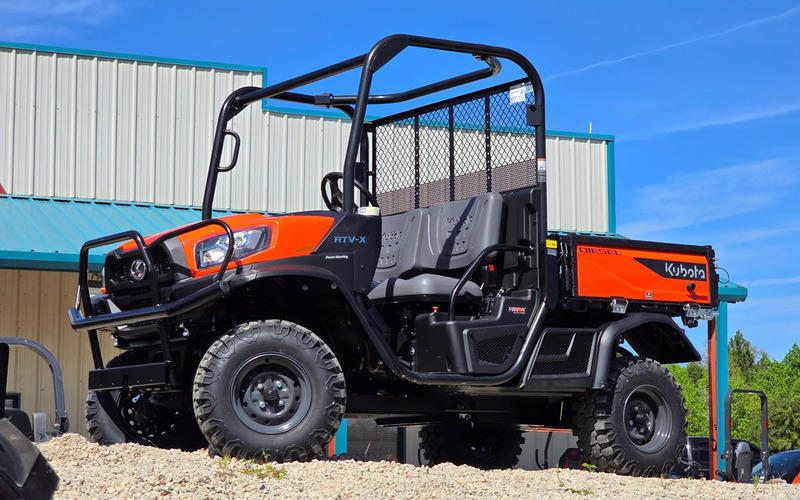
Quick answer: how many hours is too many on a used Kubota RTV?
Short answer: For most buyers, anything under 1,500 hours is low to moderate, 1,500 to 3,000 hours is acceptable with proof of maintenance, and anything above 3,000 hours deserves a hard inspection and a lower price. There is no single “too many” number. A 3,500-hour RTV with records can beat a 900-hour machine with none.How Many Hours Is Too Many on a Used Kubota RTV?
Quick answers at a glance
- What is a good number of hours? Under 1,000 hours is considered low for a used Kubota RTV.
- Is 2,000 hours too many? Not by itself. Many Kubota diesels run strong beyond that if serviced regularly.
- What’s the biggest red flag? Missing service records combined with heavy-use signs like a sagging bed, worn seat and loose steering.
- What should you check first? Cold start, hydrostatic drive response, leaks, and the chassis and frame.
Table of contents
- Why hours matter (and why they only tell half the story)
- Used Kubota RTV hour ranges: what’s low, average and high
- What matters more than hours
- A hands-on inspection checklist
- Pricing, red flags and smart buying tips
- Frequently asked questions
- Final thoughts
Why hours matter (and why they only tell half the story)
The hour meter on a Kubota RTV works much like an odometer on a truck. It counts engine run time, so it gives you a quick sense of how much wear the machine has seen. Two hundred hours of light trail riding and two hundred hours of hauling gravel up a hill are not the same, but the meter treats them alike.How Many Hours Is Too Many on a Used Kubota RTV?
What an hour meter actually measures
The meter counts time the engine is running. That includes idling at a fence line while you chat with a neighbor, warming up on a cold morning, and pulling a loaded trailer. As a rough rule of thumb (and it really is rough), one hour on an RTV is often compared to 10 to 15 miles of driving, though your terrain and load change that a lot.
That’s why a used Kubota RTV with 1,500 hours might have lived an easier life than one with 800 hours that spent every day plowing snow or pulling a sprayer.
Why hours still deserve your attention
I’m not saying ignore the number. Hours help you estimate when big-ticket items are coming due:
- Drive belts and clutch components
- Wheel bearings, ball joints and bushings
- Injectors, glow plugs and the fuel system
- Radiator, hoses and cooling system parts
- Suspension, shocks and the dump bed hydraulics
The more hours a machine has, the more of these are likely to have been replaced already or to be next in line. A sensible approach is to treat hours as a starting point, then let the inspection and the paperwork confirm or change your opinion.How Many Hours Is Too Many on a Used Kubota RTV?
The diesel advantage
Many Kubota RTV models, including the popular RTV-X900 and RTV-X1100C, use Kubota’s diesel engines. Diesels are known for long service lives and low-rpm torque, and they tolerate high hours better than many small gas engines. That doesn’t make them immortal. Skipped oil changes, dirty fuel and overheating can still end an engine’s life early. But it does explain why you’ll find plenty of high hour Kubota RTV listings that still run strong.
Used Kubota RTV hour ranges: what’s low, average and high
Here’s a practical way to read the number on the meter. These ranges are general guidelines drawn from how diesel utility vehicles are commonly bought and sold, not factory limits, so always compare against the specific model and its condition.How Many Hours Is Too Many on a Used Kubota RTV?
| Hours | Category | What to expect | Buyer approach |
|---|---|---|---|
| 0 to 500 | Low hours | Minimal wear, often lightly used or a second vehicle | Verify it wasn’t left sitting; check for age-related rot |
| 500 to 1,500 | Moderate | Normal wear, early maintenance items done | Fair price, ask for service records |
| 1,500 to 3,000 | High but workable | Wear parts likely replaced or due | Inspect closely, negotiate, confirm maintenance |
| 3,000 to 5,000 | Very high | Major components may be near end of life | Only with records, a test drive and a firm discount |
| 5,000+ | Extreme | Possible rebuild territory | Specialist buyers or a heavily discounted project |
Under 500 hours: low, but not automatically perfect
Low-hour machines are attractive, and they usually cost more. Still, a used Kubota RTV that has barely been driven can hide problems. Fuel can go stale, rubber dries out, mice chew wiring, and brake parts corrode when a vehicle sits. Ask how it was stored and look for a build date that doesn’t match the usage.How Many Hours Is Too Many on a Used Kubota RTV?
500 to 1,500 hours: the sweet spot for many buyers
This range tends to deliver the best balance of price and remaining life. The machine has been broken in, most defects have shown themselves, and there’s plenty of runway ahead. If you want a dependable Kubota RTV for sale without paying a premium for near-new hours, start your search here.
1,500 to 3,000 hours: where records decide everything
This is where the “is it too many?” debate really lives. A machine at 2,200 hours with oil changes logged every 100 to 200 hours (check the owner’s manual for your model’s exact interval), a fresh belt and no leaks is a smart buy. The same hours with no paperwork, a smoky exhaust and a sloppy steering feel is a gamble.How Many Hours Is Too Many on a Used Kubota RTV?
What to budget at this range
Plan for a few likely expenses: a new drive belt, brake pads, suspension bushings, tires and fluids. None of these is a deal-breaker. Just make sure the price reflects them.
3,000 hours and above: proceed carefully
Past 3,000 hours, you’re asking the engine, hydrostatic transmission and driveline to keep going on borrowed time, even though plenty of them do. Insist on a compression-minded inspection (listen for rough running, watch exhaust color, check for oil consumption), and treat any reconditioning as part of the cost. At this level, price is the safety net. If the seller won’t move, walk.How Many Hours Is Too Many on a Used Kubota RTV?
What matters more than hours
If I had to rank what predicts a good used utility vehicle, hours would land third or fourth. Here’s what I’d put ahead of it.
1. Maintenance history
Regular oil and filter changes are the single biggest factor in diesel longevity. Ask for receipts, a dealer service log, or even a notebook in the glovebox. A seller who tracked the work usually took care of the machine in other ways too. Also ask about air filter, fuel filter, coolant and hydraulic fluid changes.
2. How it was used
A ranch RTV hauling feed, dragging trailers and climbing hills ages faster than a hunting machine used a few weekends a year. Ask directly: What was it used for? How heavy were the loads? Was it ever used for plowing or with a sprayer? Wet, muddy or salty environments also mean more corrosion.
3. Storage and environment
An RTV kept in a barn will usually look better after 2,000 hours than one that lived outside for 600. Faded plastics, cracked dash panels, rust at the frame joints and a ruined seat are clues about how it was stored.How Many Hours Is Too Many on a Used Kubota RTV?
4. Model and configuration
Some configurations are simply more reliable or easier to repair. If you’re comparing options, browse the used Kubota RTV for sale inventory and look at how different models and cab setups hold up at similar hours.
A hands-on inspection checklist
Whether you’re buying from a dealer or a private seller, use this checklist. Take a flashlight, a rag and your phone for photos.
Start with a cold engine
Ask the seller not to warm up the machine before you arrive. A cold start reveals hard starting, smoke and unusual noises that a warm engine can hide.
- Does it crank quickly and fire within a few seconds?
- Is there blue (oil), white (coolant) or heavy black smoke at startup?
- Does the engine idle smoothly without knocking or hunting?
Check fluids and leaks
- Pull the dipstick: milky oil can point to a head gasket or coolant problem.
- Look under the machine for drips at the engine, transmission and differentials.
- Inspect the coolant color and level.
- Check hydraulic hoses and the dump bed cylinder for weeping.
Drivetrain and hydrostatic transmission
Drive forward and reverse on a slight incline. The transmission should respond smoothly without whining, slipping or surging. Test two-wheel and four-wheel drive, and the differential lock. Listen for grinding or clunks at the axles.How Many Hours Is Too Many on a Used Kubota RTV?
Belt, clutch and CVT checks
If the model you’re looking at has a belt-driven component, look for glazing, cracks and fraying. A worn belt is cheap to replace, but it can signal rough use.
Chassis, suspension and body
- Look for frame cracks, bent rails or fresh welds.
- Push down on each corner. Bouncing means worn shocks.
- Check steering for play, and look at tie rod ends and ball joints.
- Inspect tires for uneven wear, which hints at alignment or suspension problems.
- Open and close the dump bed and tailgate several times.
Electrical and comfort
Test lights, gauges, horn, wipers and the heater or A/C if equipped. Check that the hour meter looks original: no loose bezel, scratched glass or signs of tampering. Compare its reading with wear on the pedals, steering wheel and seat. If the hours say 400 but the pedals are polished smooth, ask more questions.How Many Hours Is Too Many on a Used Kubota RTV?
Pricing, red flags and smart buying tips
Once the machine passes the walk-around, it’s time to talk money. Hours, condition and records should all show up in the price.
How hours affect price
As a general pattern, each additional few hundred hours lowers the asking price, but the drop is not a straight line. Prices fall quickly in the first 1,000 hours and then level off. Condition and options, such as a cab, power steering, a winch or a hydraulic dump, can move the number as much as hours do. Instead of chasing a rule, compare similar machines side by side. Our used utility vehicles for sale page is a handy place to see how different makes, models and hours are priced in the same market.How Many Hours Is Too Many on a Used Kubota RTV?
Red flags that should make you walk away
- Hour meter doesn’t match wear. Low hours with a trashed interior is a classic warning.
- No records and a vague story. “I bought it from a guy” isn’t a history.
- Fresh paint over rust or welds. Pretty cosmetics can hide frame damage.
- Milky oil or overheating signs. Cooling system issues can get expensive fast.
- Seller refuses a test drive. A good machine sells itself on a short drive.
- Aftermarket wiring mess. Sloppy add-ons often point to careless owners.
Smart buying tips
- Decide your use first. Light property work forgives higher hours more than daily commercial use.
- Set a total budget. Include tires, belts, fluids and any transport.
- Compare at least three machines. Looking at several teaches you what “normal” feels like.
- Ask for a pre-purchase inspection. A local Kubota or utility vehicle mechanic can check things you can’t.
- Buy from a seller who stands behind the machine. A reputable dealer can answer questions about condition and service history.
Should you buy a high-hour Kubota RTV?
Yes, if the price is right and the proof is there. A high-hour machine with fresh major service, a clean engine bay and a seller who answers questions straight can be the best value in your search. No, if you’re only buying because the number looks like a bargain. A cheap RTV that needs a transmission or engine work is rarely cheap.How Many Hours Is Too Many on a Used Kubota RTV?
A quick decision rule
- Records + clean inspection + fair price: buy, even at higher hours.
- Records but cosmetic wear: negotiate and buy.
- No records + high hours: only at a steep discount, or pass.
- Low hours + signs of neglect: treat it like a high-hour machine and inspect twice as hard.
Ready to look at real machines? Browse our current Kubota RTV for sale listings and compare hours, condition and photos side by side.
Frequently asked questions
How many hours is too many on a used Kubota RTV?
There’s no fixed limit, but most buyers get cautious above 3,000 hours. Below that, a well-maintained machine is usually a safe bet. Above it, you want records, a thorough inspection and a lower price.How Many Hours Is Too Many on a Used Kubota RTV?
Is 1,000 hours a lot for a Kubota RTV?
No. One thousand hours is generally considered low to moderate for a diesel utility vehicle. If it has been serviced on schedule, it should have plenty of life left.
Is a Kubota RTV with 2,000 hours still worth buying?
Often, yes. At 2,000 hours the machine has proven itself, and the price should reflect that. Confirm maintenance, check for leaks and test the drivetrain before you commit.
How long does a Kubota RTV diesel engine last?
With regular oil changes, clean fuel and a healthy cooling system, Kubota diesels can run for several thousand hours. Many owners report 3,000 to 5,000 hours or more, though results depend on use and care.How Many Hours Is Too Many on a Used Kubota RTV?
Should I buy low hours or newer model year?
It depends on condition. A newer machine with moderate hours often beats an older one with very low hours that sat unused. Compare the two in person if you can.
What maintenance should a high-hour RTV have had?
Look for regular engine oil and filter changes, fuel and air filter replacement, coolant service, hydraulic and differential fluid changes, and a replaced drive belt. Your model’s owner’s manual lists the exact intervals.How Many Hours Is Too Many on a Used Kubota RTV?
Can the hour meter be tampered with?
It’s uncommon, but it happens. Compare the hours to wear on the seat, pedals and steering wheel, and ask for service records that show hours at each visit.
Where can I find a used Kubota RTV for sale?
You can browse current used Kubota RTV for sale listings or explore the wider used utility vehicle shop to compare options.
Final thoughts
So, how many hours is too many on a used Kubota RTV? For most buyers, the honest answer is that the number matters, but it isn’t the whole story. A machine with 2,500 hours, solid records and a clean inspection can outlast and outperform a low-hour unit that was neglected.
Use hours to set expectations, use the inspection to confirm condition, and use the price to cover whatever’s coming due. Do that, and you’ll buy with confidence.How Many Hours Is Too Many on a Used Kubota RTV?
Ready to find your next RTV?
Don’t settle for guesswork. Check out our hand-picked Kubota RTV for sale selection, or browse the full used utility vehicles shop to find the right machine for your property, farm or job site. Have a question about a specific unit? Reach out to the team, and they’ll help you pick the right one.