
Utility Vehicles for Property Maintenance: The Complete Buyer’s Guide
If you’ve ever watched a maintenance crew waste half a morning walking tools, mulch, and mower parts across a sprawling property, you already understand why utility vehicles for property maintenance have become non-negotiable equipment for landscapers, groundskeepers, facility managers, and large estate owners. A good utility vehicle (UTV) doesn’t just move things from point A to point B it changes how fast, how safely, and how profitably a maintenance operation runs.
This guide breaks down everything you need to know about choosing, using, and maintaining utility vehicles for property maintenance work, along with answers to the questions buyers ask most often.
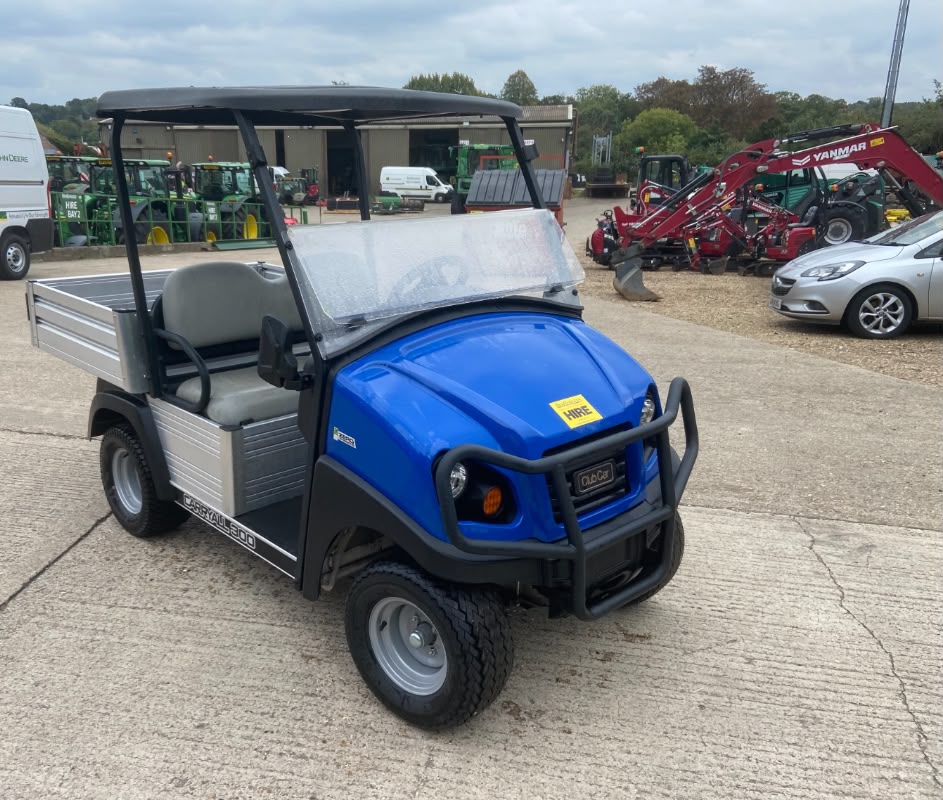
What Is a Utility Vehicle, and Why Does Property Maintenance Depend on It?
A utility vehicle (sometimes called a UTV, side-by-side, or work truck) is a small, rugged vehicle built to haul cargo, tow equipment, and carry crew members across terrain that a standard pickup truck can’t handle. Unlike consumer ATVs, which are designed primarily for recreation, utility vehicles are engineered around payload capacity, towing strength, and attachment compatibility.
For property maintenance specifically, that means:
- Hauling mulch, soil, gravel, and debris across large lots
- Towing trailers loaded with mowers, aerators, or spreaders
- Transporting tools and crew between job sites on a single property
- Navigating tight turns, slopes, and soft ground that trucks can’t access
- Running attachments like sprayers, blowers, and plows directly off the vehicle
In short, a utility vehicle is the connective tissue of a maintenance operation. It’s the difference between a crew that’s constantly walking back and forth and a crew that’s actually working.
Who Actually Uses Utility Vehicles for Property Work?
- Landscaping companies managing multiple properties per day
- Golf course and sports field crews needing quiet, low-impact vehicles
- HOA and municipal parks departments covering large public grounds
- Facility and campus maintenance teams at schools, hospitals, and corporate parks
- Large residential and estate property owners managing acreage
- Agricultural and hobby farm operators doing light maintenance work
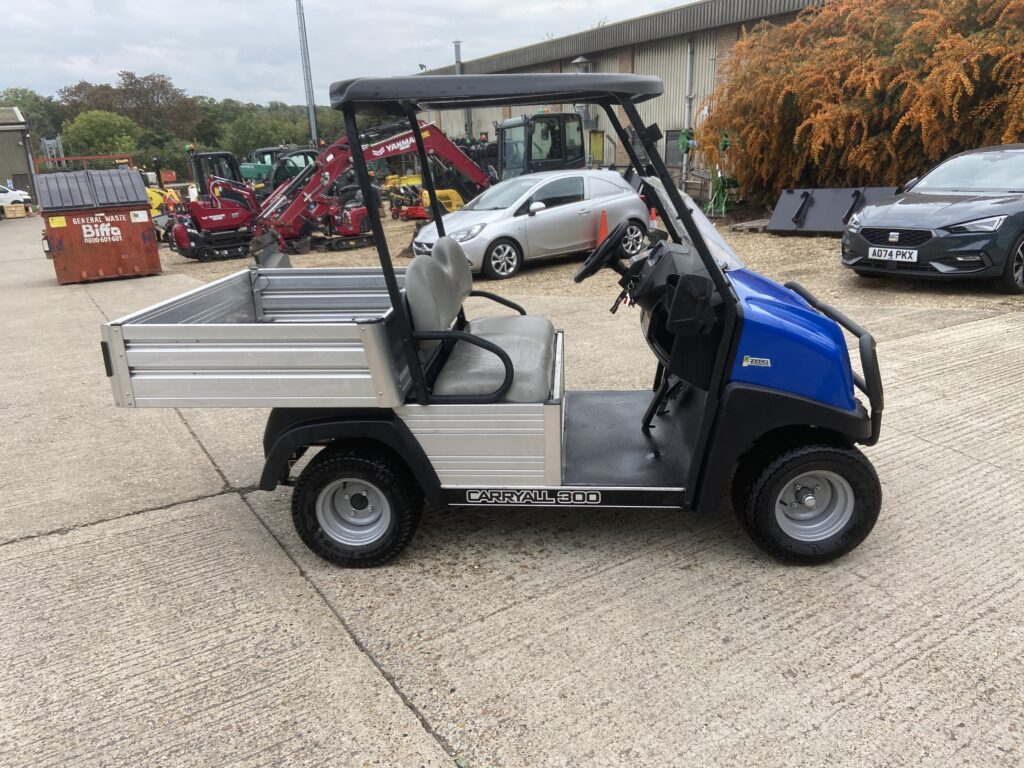
Key Benefits of Using Utility Vehicles for Property Maintenance
They Save Labor Hours
Every minute a technician spends walking to retrieve a tool or hauling debris by hand is a minute not spent doing billable work. A utility vehicle turns a 15-minute walk into a 2-minute drive, which adds up fast across a full crew and a full season.
They Reduce Physical Strain on Crews
Manually hauling bags of mulch, bundles of branches, or heavy equipment across a property takes a toll on workers’ backs and joints. Utility vehicles with dump beds and towing capacity remove most of that manual lifting and carrying, which can lower injury rates and workers’ comp claims over time.
They Protect Turf and Landscaping
Full-size trucks are heavy and hard on lawns, especially after rain. Utility vehicles distribute weight more evenly and come in configurations — including narrow-track and turf-tire models — specifically designed to minimize compaction and rutting on maintained grounds.
They Increase Daily Job Capacity
Faster movement between tasks means crews can realistically fit more stops, more square footage, or more service lines into a single day, which directly affects revenue per crew.
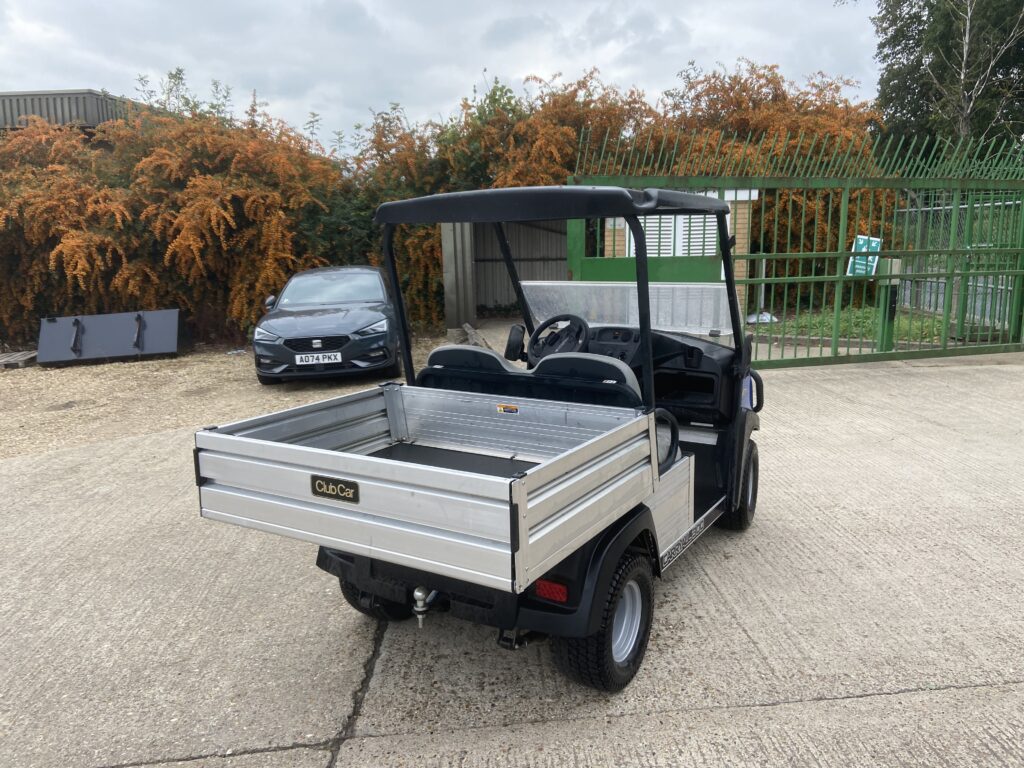
Types of Utility Vehicles for Property Maintenance
Gas-Powered UTVs
Gas models remain the most common choice for heavy-duty property work. They typically offer the highest towing capacity, fastest refueling, and best performance on hilly or demanding terrain. They’re a strong fit for large acreage, agricultural-adjacent work, and operations that run vehicles hard all day.
Electric UTVs
Electric utility vehicles have grown quickly in popularity, particularly for golf courses, HOAs, campuses, and noise-sensitive environments like hospitals or residential neighborhoods. Benefits include quieter operation, no exhaust emissions, and lower long-term fuel costs. The tradeoffs are typically shorter range and longer downtime for recharging, which matters more on large properties.
Diesel Utility Vehicles
Diesel UTVs are less common but valued in commercial and agricultural settings for their torque, fuel efficiency over long hours, and durability under continuous heavy loads.
Compact Utility Trucks
Slightly larger than a traditional UTV, compact utility trucks (sometimes called mini trucks) offer enclosed cabs, higher payload capacity, and a more truck-like driving experience useful for larger commercial properties or operations that also need road-legal capability.
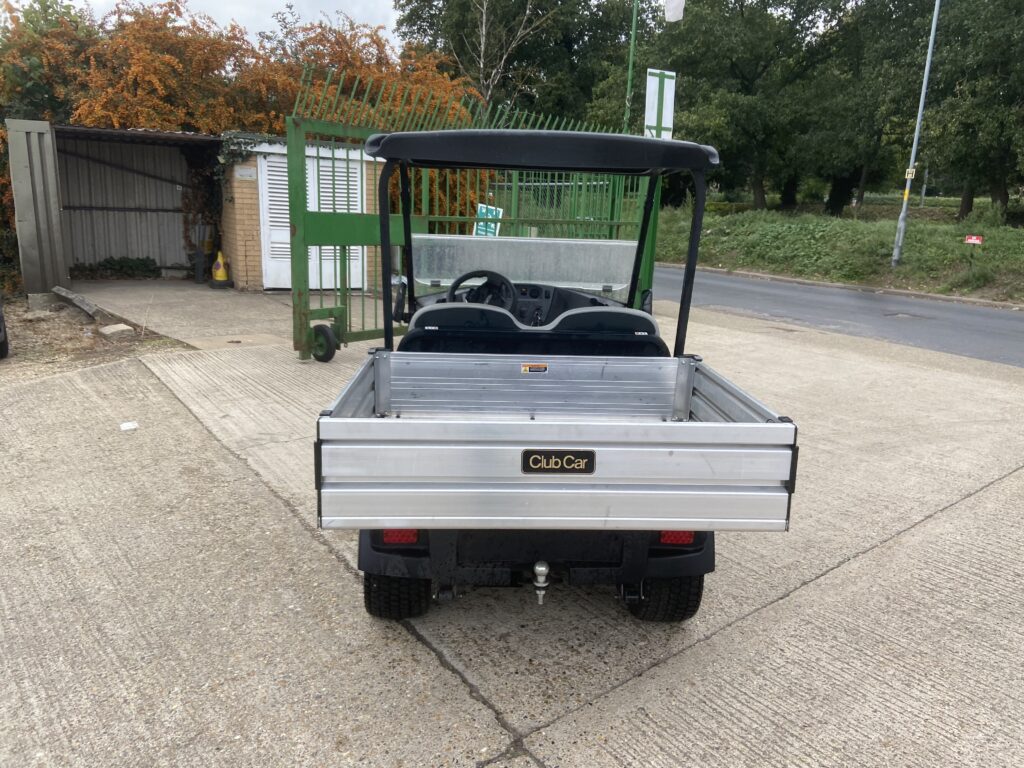
Must-Have Features for Utility Vehicles for Property Maintenance
Payload and Bed Capacity
Look at both payload capacity (how much weight the vehicle can carry) and bed volume (how much material fits, like mulch or soil). A vehicle with high payload but a small bed still limits what you can haul in a single trip.
Towing Capacity
If the vehicle will regularly pull a trailer, mower, aerator, or spreader, towing capacity is often the most important spec on the sheet. Confirm the manufacturer’s rated towing capacity, not just the hitch’s physical strength.
Ground Clearance and Suspension
Property maintenance often means crossing curbs, drainage ditches, uneven turf, and slopes. Adequate ground clearance and a suspension system built for cargo weight (not just passenger comfort) will reduce wear and improve safety.
Attachment Compatibility
Many property maintenance UTVs support front-mount plows, sprayers, spreaders, blowers, and PTO-driven implements. If you plan to expand your equipment over time, choose a vehicle with a documented attachment ecosystem rather than a proprietary, closed system.
Turf-Friendly Tire Options
For golf courses, parks, and high-visibility landscaping clients, turf tires reduce the risk of tearing up grass — something standard all-terrain tires can do quickly, especially when turning under load.
Cab and Weather Protection
Crews working in rain, cold, or intense sun benefit significantly from windshields, roofs, and optional enclosed cabs. This isn’t a luxury feature — it affects daily productivity and crew retention in tough climates.
How to Choose the Right Utility Vehicle for Your Property Maintenance Business
Step 1: Map Your Terrain
Steep slopes, wet ground, tight gates, and narrow paths all narrow your options. Measure gate widths and note any consistently muddy or sloped areas before comparing models.
Step 2: Calculate Your Real Payload Needs
Think in terms of your heaviest regular load a full trailer of sod, several bags of soil, or a loaded spreader — not just your average day. Buying slightly above your typical need avoids constant overloading, which shortens a vehicle’s lifespan.
Step 3: Decide Between Gas and Electric
If your property or route requires long daily mileage and heavy towing, gas or diesel usually wins. If you’re working shorter routes, noise-sensitive sites, or want lower operating costs, electric is worth serious consideration.
Step 4: Factor In Crew Size
Two-seat UTVs are common, but crews that regularly need to move 3-4 people benefit from extended or crew-cab configurations, reducing the need for a second vehicle.
Step 5: Plan for Attachments You’ll Need Later, Not Just Today
If you expect to add plowing, spraying, or spreading services, choose a platform with a wide attachment catalog now, even if you don’t need it on day one.
Maintenance Tips to Extend the Life of Your Utility Vehicle
Follow the Manufacturer’s Service Intervals
Oil changes, filter replacements, and belt inspections should follow the manufacturer’s schedule, not a general “when it feels due” approach. Commercial-use vehicles are typically rated for shorter service intervals than recreational models because of heavier daily use.
Inspect Tires and Suspension Weekly
Property maintenance work is hard on tires and suspension components due to constant loading and uneven terrain. A quick weekly visual check catches problems before they become breakdowns mid-job.
Keep the Cooling System Clean
Debris, grass clippings, and dust can clog radiators and air intakes quickly in landscaping environments. Regular cleaning prevents overheating, especially during summer months.
Store It Properly in the Off-Season
Batteries should be maintained or disconnected during storage, and fuel systems should be treated or drained depending on the vehicle type, to prevent corrosion and starting issues when the season resumes.
Train Every Operator, Not Just Your Most Experienced Staff
A large share of UTV damage and injuries comes from improper loading, aggressive turning on slopes, or towing beyond rated capacity. Standardized operator training reduces both repair costs and liability exposure.
Utility Vehicles vs. Trucks and Tractors: What’s the Difference?
It’s a common question, and the short answer is that these vehicles solve different problems.
- Full-size trucks are better for road travel between properties but are often too large, heavy, and turf-damaging for on-site work.
- Tractors excel at heavy ground-engaging work like tilling, mowing large acreage, or grading, but are slower and less maneuverable for general hauling and crew transport.
- Utility vehicles fill the gap between the two — fast, maneuverable, turf-conscious, and built specifically for on-property logistics rather than road travel or heavy ground work.
Most established maintenance operations end up using a combination of all three, with the UTV handling the bulk of daily on-site movement.
Frequently Asked Questions
What is the average lifespan of a utility vehicle used for property maintenance?
With regular maintenance, a commercial-grade utility vehicle typically lasts between 3,000 and 5,000 operating hours, though this varies significantly based on load levels, terrain, and how consistently manufacturer service schedules are followed.
Do I need a special license to operate a utility vehicle?
In most cases, utility vehicles used exclusively on private property do not require a special driver’s license. However, requirements vary by state or municipality, and vehicles driven on public roads may need registration, insurance, and in some cases a standard driver’s license. It’s worth checking local regulations before operating on or near public roadways.
Are electric utility vehicles powerful enough for commercial landscaping?
Modern electric UTVs can handle most standard landscaping tasks, including moderate towing and hauling. However, for continuous heavy towing, steep terrain, or all-day intensive use across large properties, gas or diesel models generally still offer more consistent performance and faster refueling.
How much can a typical utility vehicle tow?
Towing capacity varies widely by model, ranging from roughly 1,000 pounds on smaller units to over 2,500 pounds on heavy-duty commercial models. Always check the manufacturer’s rated towing capacity rather than estimating based on similar vehicles.
What attachments are most useful for property maintenance work?
The most commonly used attachments include front-mount plows for snow removal, tow-behind spreaders for fertilizer or seed, sprayers for weed control, dump beds for debris and material hauling, and utility trailers for transporting equipment between areas of a property.
Is it worth buying a used utility vehicle for a maintenance business?
A used utility vehicle can be a cost-effective option if it has a documented maintenance history and moderate hours. However, because these vehicles endure heavy use, it’s important to inspect the drivetrain, suspension, and towing components carefully before purchasing, since repair costs can offset any upfront savings.
How do I know if I need a gas or electric utility vehicle?
The decision usually comes down to daily mileage, towing needs, and noise restrictions. Gas models are typically better for large properties and heavy towing, while electric models suit smaller sites, noise-sensitive locations, and operations focused on lowering fuel and maintenance costs.
Final Thoughts
Choosing the right utility vehicle for property maintenance isn’t just an equipment decision — it’s an operational one. The right UTV reduces labor hours, protects the landscapes you’re maintaining, and lets your crew accomplish more in a single workday. Whether you’re managing a single large estate or running a fleet across dozens of commercial properties, matching the vehicle’s payload, towing capacity, power source, and attachment options to your actual daily workload is the single best way to get a strong return on investment.
Take the time to map your terrain, calculate your real hauling needs, and think a season or two ahead before buying. A utility vehicle bought for today’s workload often becomes a bottleneck by next year while one bought with growth in mind tends to pay for itself many times over.