UTV vs ATV
Table of Contents
- Quick Answer: UTV vs ATV in 30 Seconds
- What Is an ATV?
- What Is a UTV?
- UTV vs ATV: Side-by-Side Comparison Table
- The Key Differences Explained
- Which Is Better for Work, Farm and Ranch Use?
- Which Is Better for Trail Riding and Recreation?
- Safety: Which Is the Safer Choice?
- Cost: New vs Used UTVs and ATVs
- How to Choose: A Simple Decision Checklist
- What to Check Before Buying a Used UTV or ATV
- Frequently Asked Questions
- Final Verdict and Next Steps
Quick Answer: UTV vs ATV in 30 Seconds
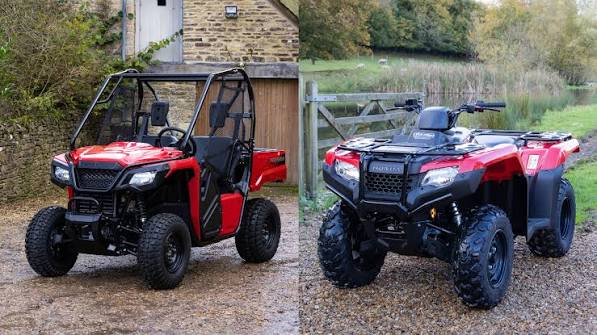
What is the difference between a UTV and an ATV? An ATV (all-terrain vehicle) is a straddle-seat, handlebar-steered machine built for one rider, sometimes two. A UTV (utility terrain vehicle), also called a side-by-side, has a steering wheel, bucket or bench seats, seat belts, a roll cage and a cargo bed, and it carries two to six people.
Which one should you buy? Choose a UTV if you need to haul gear, carry passengers or work around a farm, ranch or job site. Choose an ATV if you want a lighter, more agile machine for tight trails, solo rides or narrow gates. Not sure yet? Browse our used utility vehicles and compare real machines before you decide.
What Is an ATV?
An ATV is the machine most people picture when they hear “four-wheeler.” You sit on it like a motorcycle, steer with handlebars and shift your body weight through corners. It is narrow, light and quick to change direction, which is why it has been a favorite with hunters, trail riders and small-acreage owners for decades.
Key Features of an ATV
- Straddle seat: You ride on top of the machine, not inside it.
- Handlebar steering: Control comes from your arms, legs and body position.
- Narrow frame: Most models are around 48 inches wide or less, so they fit through tight gates and woods trails.
- Racks, not beds: Front and rear racks carry light loads, but there is no dump bed.
- Single rider design: Most ATVs are built for one person. Some “two-up” models add a passenger seat.
Common Types of ATVs
Utility ATVs
These are the workhorses. They have larger engines, strong towing ability and sturdy racks. Many riders use them for fence checks, hauling feed, plowing snow with an attachment and general property chores.
Sport ATVs
Sport models are lighter, faster and tuned for aggressive riding on trails, tracks or dunes. They are fun, but they are not built for hauling.
Youth ATVs
Smaller engines and limiters make youth ATVs a stepping stone for younger riders. Always match the machine to the rider’s age, size and experience, and supervise closely.
What Is a UTV?
A UTV, or side-by-side, is basically a small off-road truck. You sit beside your passenger, steer with a wheel, press pedals and buckle up. UTVs grew in popularity because they combine real work capability with trail fun, and families love that everyone gets a seat.
Key Features of a UTV
- Steering wheel and pedals: Driving feels familiar, which shortens the learning curve.
- Bucket or bench seats: Two-seat, four-seat and even six-seat models are available.
- Roll cage and seat belts: Built-in occupant protection is standard equipment.
- Cargo bed: Many have a tilting or dumping bed for firewood, gravel, tools and feed.
- Wider stance: Often 50 to 64 inches or more, which adds stability but limits access on some trails.
Common Types of UTVs
Utility (Work) UTVs
Built for torque, towing and payload. A work-focused side by side is a great fit for farms, ranches, hunting camps, construction sites and large properties.
Recreational and Sport UTVs
These have long-travel suspension, higher top speeds and sporty handling. They are made for dunes, desert and fast trails, and they usually carry less cargo.
Crew and Multi-Passenger UTVs
Four-seat and six-seat models move the whole crew or family at once. They are popular for hunting trips, resorts, campgrounds and big properties.
If you are leaning toward a side by side, take a look at our selection of used UTVs for sale to see what is available right now.
UTV vs ATV: Side-by-Side Comparison Table
| Feature | ATV | UTV (Side-by-Side) |
|---|---|---|
| Seating | Straddle seat, usually 1 rider | Bucket or bench seats, 2 to 6 riders |
| Steering | Handlebars | Steering wheel |
| Typical width | About 48 in. or less | About 50 to 64+ in. |
| Cargo capacity | Light, rack-based | Larger, bed-based, often dumping |
| Towing | Moderate | Moderate to heavy, model dependent |
| Safety equipment | Helmet and gear required | Roll cage, seat belts, helmets recommended or required |
| Trail access | Excellent on narrow trails | Limited by width on some trails |
| Agility | Very high | Lower, but more stable |
| Weather protection | Minimal | Optional roofs, windshields, doors |
| Price (new) | Generally lower | Generally higher |
| Best for | Solo riding, tight trails, light chores | Work, families, hauling, groups |
The Key Differences Explained
The table gives you the headlines. Here is what those differences mean in real life.
1. Seating and Passenger Capacity
This is the biggest difference in the UTV or ATV debate. An ATV is a solo machine. If you want to take a spouse, a child or a hunting buddy, you need either a two-up ATV or a UTV. With a side by side, everyone is seated, belted and able to talk to each other, which makes long rides far more comfortable.
2. Steering, Handling and Riding Style
ATVs ask more of the rider physically. You shift your weight, brace with your legs and feel every bump. That makes them playful and responsive. UTVs steer like a small truck, so they feel more relaxed over long distances, especially for people who are new to off-roading.
3. Cargo and Towing
If you move stuff for a living, this is where a UTV shines. A bed holds bags of feed, fence posts, tools, a cooler and a chainsaw at the same time. An ATV can do light hauling, but you will be strapping things to racks and making more trips.
Payload Tips
- Always check the manufacturer’s bed and towing limits.
- Distribute weight low and centered.
- Never exceed rated capacity, especially on slopes.
4. Size and Trail Access
Many public trail systems restrict vehicle width. Some trails are limited to machines around 50 inches wide or less, which fits most ATVs and some narrow UTVs. Before you buy, check the rules for the trails and parks you plan to ride. Local regulations differ, so confirm requirements with your state or provincial agency.
5. Weather Protection and Comfort
A UTV can have a roof, a windshield, doors and even heat or air conditioning in some builds. On an ATV, you are exposed to rain, mud, cold and dust. For all-day work in rough weather, that comfort matters.
6. Storage and Transport
ATVs are easier to store and can fit in the back of many full-size trucks or on a small trailer. UTVs need more garage space and usually a larger trailer, so factor that into your budget.
Which Is Better for Work, Farm and Ranch Use?
For most working properties, a UTV is the better tool. You can carry a helper, haul real loads, tow equipment and stay protected from the elements.
When a UTV Wins for Work
- Hauling feed, firewood, gravel or fencing supplies
- Moving two or more people around a property
- Towing small implements or trailers
- Working long hours where comfort reduces fatigue
- Using attachments such as plows or sprayers (where compatible)
When an ATV Still Makes Sense for Work
- Checking fence lines or livestock quickly
- Working in tight timber or narrow gates
- Handling light jobs where speed and agility matter more than payload
Many owners end up with both. A UTV handles the heavy lifting and an ATV handles the quick scouting. If you are building out a fleet on a budget, browsing used utility vehicles is a smart way to add capability without paying new prices.
Which Is Better for Trail Riding and Recreation?
This one depends on how you like to ride.
Choose an ATV for Trail Riding If
- You ride solo or with experienced friends who also ride ATVs
- Your favorite trails are narrow, twisty or heavily wooded
- You enjoy an active, hands-on riding experience
Choose a UTV for Trail Riding If
- You want to ride with family or friends in the same vehicle
- You like carrying a cooler, camping gear or extra clothing
- You want more stability and protection on long rides
A Note for Hunters
Hunters often like UTVs because they can haul game, gear and a partner in one trip. Quiet, narrow ATVs are still popular for stalking through tight cover. The right pick depends on your terrain and your hunting style.
Safety: Which Is the Safer Choice?
Neither vehicle is risk free. Off-road machines can roll, tip or crash, and the rider’s behavior matters as much as the vehicle.
Safety Advantages of UTVs
A UTV has a roll cage, seat belts and a lower center of gravity relative to its width. Those features help protect occupants in many situations. Wearing your belt and keeping arms and legs inside the cage is essential.
Safety Considerations for ATVs
ATV riders have no cage or belt. Because you ride on top of the machine, a rollover can be serious. Proper protective gear and good judgment are non-negotiable.
Safety Basics for Both
- Wear a DOT or equivalent-approved helmet, eye protection, gloves and sturdy boots.
- Take a safety course if one is available in your area.
- Never ride impaired.
- Follow the manufacturer’s age and weight guidance.
- Keep speeds appropriate to terrain and visibility.
- Inspect brakes, tires, steering and lights before every ride.
Safety rules and age requirements vary by location, so check local laws before you ride.
Cost: New vs Used UTVs and ATVs
New machines have gotten expensive, especially well-equipped side by sides. That is why many buyers now shop used.
What Affects the Price?
- Type and size: A multi-passenger UTV costs more than a basic ATV.
- Engine and drivetrain: Larger engines and advanced 4×4 systems add cost.
- Brand and model year: Popular brands tend to hold value.
- Hours and mileage: Lower use generally means a higher price.
- Condition and accessories: Winches, roofs, windshields and upgraded tires can add value.
Why Buy Used?
- Lower purchase price: You skip the steepest depreciation.
- More machine for your money: A budget that buys a basic new unit might buy a better-equipped used one.
- Proven reliability: Common issues are well documented for many models.
You can see current inventory on our used UTVs and ATVs page and compare options by type, size and use.
Don’t Forget Ownership Costs
- Insurance, registration or permits where required
- Trailer or storage
- Fuel and maintenance
- Protective gear
- Accessories such as winches, mirrors, lights or a roof
How to Choose: A Simple Decision Checklist
Ask yourself these questions:
- How many people will ride with me regularly? More than one usually points to a UTV.
- What will I haul? Heavy or bulky loads favor a UTV.
- How narrow are my trails and gates? Tight access may favor an ATV.
- How do I want to ride? Active and sporty suggests an ATV, relaxed and protected suggests a UTV.
- What can I transport and store? Check your trailer, truck bed and garage space.
- What is my budget, including gear and upkeep? Used can stretch it further.
Quick Recommendations
Best Choice for a Farm or Ranch
A work-ready UTV with a dump bed and solid towing capacity.
Best Choice for Solo Trail Riding
A lightweight, agile ATV.
Best Choice for Families
A two-seat or four-seat UTV with seat belts and a roof.
Best Choice for Hunting
A UTV for hauling and camp duty, or an ATV if you need to slip through tight cover.
Best Choice for Small Budgets
A well-maintained used ATV or compact used UTV. Check the current used inventory for options in your price range.
What to Check Before Buying a Used UTV or ATV
Buying used can be a great deal, but only if you inspect carefully.
Inspection Checklist
Engine and Drivetrain
- Look for smooth starts and steady idle.
- Listen for knocking, grinding or whining.
- Test 2WD, 4WD and any differential lock.
Frame and Body
- Check for bends, cracks, rust or poorly repaired welds.
- Inspect the roll cage on a UTV for damage or modification.
Suspension and Steering
- Look for leaking shocks and worn bushings.
- Check for play in the steering and ball joints.
Tires, Wheels and Brakes
- Check tread depth and sidewall damage.
- Test brakes for firm, even stopping.
Fluids, Belts and Electrical
- Look for leaks and dirty fluids.
- On many UTVs, inspect the CVT belt condition.
- Test lights, gauges, switches and the battery.
Paperwork
- Confirm the VIN matches the title or ownership documents.
- Ask for maintenance records when available.
Buy From a Seller You Trust
A reputable dealer can answer questions, show you the machine and help you compare models. Explore our full lineup at Used Utility Vehicles and contact the team if you want help choosing.
Frequently Asked Questions
What is the main difference between a UTV and an ATV?
The main difference is seating and controls. An ATV uses a straddle seat and handlebars, usually for one rider. A UTV uses a steering wheel, seats beside each other and a roll cage, and it carries multiple passengers plus cargo.
Is a UTV better than an ATV?
Neither is universally better. A UTV is usually better for work, hauling and carrying passengers. An ATV is usually better for tight trails, agility and solo rides.
Are UTVs safer than ATVs?
UTVs include a roll cage and seat belts, which can improve occupant protection. However, both can be dangerous if misused. Wear your gear, follow the manual and ride within your skill level.
Can a UTV go on the same trails as an ATV?
Not always. Many UTVs are wider than ATVs, and some trails limit vehicle width. Always check the rules for the specific trail or park.
Is a UTV the same as a side by side?
Yes. UTV and side by side (SxS) describe the same type of vehicle. You may also hear “RTV” or “ROV,” which are similar terms used by some brands.
Which is better for hunting, a UTV or an ATV?
A UTV is better if you want to carry a partner, gear and game. An ATV is better for narrow paths and quiet movement through tight terrain.
Which is cheaper, a UTV or an ATV?
ATVs are generally cheaper than UTVs, both new and used. Prices vary widely by brand, age, size and condition.
Is it a good idea to buy a used UTV or ATV?
Yes, if you inspect it carefully and buy from a trustworthy source. Used machines often cost less and still offer excellent performance. Browse our used utility vehicles for sale to compare options.
Do I need a license to drive a UTV or ATV?
Requirements vary by location. Some areas require registration, safety certification or minimum ages, especially for public lands or roads. Check with your local authority.
How much can a UTV haul compared to an ATV?
UTVs typically carry far more because of their cargo beds and stronger frames. Always check the manufacturer’s rated payload and towing limits for the exact model.
Final Verdict: UTV vs ATV
If you remember one thing, make it this: buy for how you will actually use the machine most of the time.
- Pick a UTV if you need passengers, cargo space, towing power and weather protection.
- Pick an ATV if you want a light, nimble, lower-cost machine for solo riding and narrow terrain.
- Consider buying used to get more capability for your budget.
The best way to decide is to see real machines side by side. Explore our current selection of used UTVs and ATVs, or start at the Used Utility Vehicles homepage to learn more.
Ready to Find Your Next Ride?
Shop used UTVs and ATVs now and find a machine that fits your work, your trails and your budget. Have questions? Reach out to the Used Utility Vehicles team and we will help you choose with confidence.