
How to Inspect a Used Kubota RTV Before Buying .Buying a used Kubota RTV can be one of the smartest equipment purchases you make. These machines have a reputation for toughness, and a well-kept one will keep hauling feed, hauling firewood and climbing hills long after cheaper side-by-sides have given up. But “well-kept” is the key phrase. Two RTVs of the same year can be in completely different condition, and the only way to know which one you’re looking at is to inspect it properly.
This guide walks you through exactly how to inspect a used Kubota RTV before buying, from the first walk-around to the test drive. Print it, pull it up on your phone, or tape it to the clipboard. You’ll know what to check, what to ask, and when to walk away.
Table of Contents
- Quick Answer: How to Inspect a Used Kubota RTV
- Before You Go: Do Your Homework
- Start With the Paperwork and Hour Meter
- The Walk-Around: Frame, Body, and Bed
- Engine and Fluids
- Drivetrain, CVT, and 4WD
- Suspension, Steering, and Brakes
- Tires, Wheels, and Bearings
- Electrical, Lights, and Dash
- The Hydraulic Dump Bed
- The Test Drive
- Red Flags That Should Stop the Deal
- Questions to Ask the Seller
- Negotiating a Fair Price
- FAQs
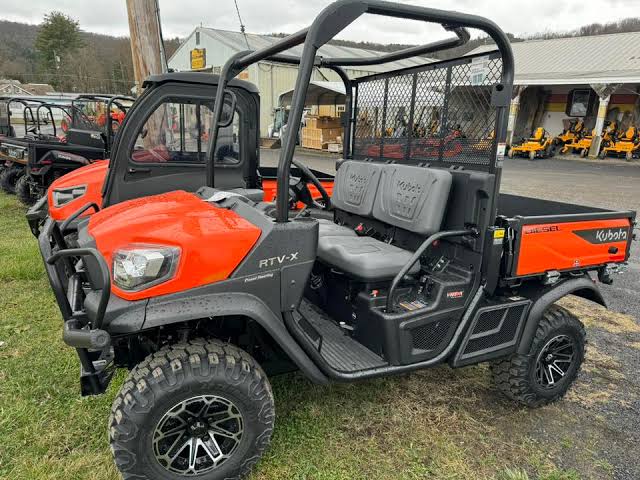
Quick Answer: How to Inspect a Used Kubota RTV Before Buying
What’s the fastest way to inspect a used Kubota RTV?
Check six things in this order: (1) hour meter and service records, (2) frame and body for cracks, welds, or rust, (3) engine and fluids for leaks, milky oil, or hard starting, (4) drivetrain, CVT belt, and 4WD engagement, (5) suspension, steering, brakes, and tires, and (6) the dump bed hydraulics. Then test drive it on varied terrain and listen for noises, slipping, or overheating. If anything looks undocumented or evasive, walk away.
That’s the short version. Now let’s go deeper, because the details are where good deals are separated from expensive mistakes.
Before You Go: Do Your Homework
A good inspection starts before you ever see the machine.
Know Which Kubota RTV Model You Actually Need
Kubota has built the RTV line in several generations and sizes, from the compact RTV-XG850 Sidekick to the diesel-powered RTV-X900 and the heavier RTV-X1140. Each one has a different personality. Some are built for light property work, others for serious hauling and towing. Before you shop, decide what you’ll actually do with it: plowing snow, working a farm, hunting, hauling at a job site, or just getting around acreage.
Buying more machine than you need wastes money. Buying less means you’ll be shopping again in two years.
Research Common Issues for That Specific Model
Spend twenty minutes reading owner forums and reviews for the exact model and year. You’re not looking to scare yourself. You’re building a short list of known wear points so you can check them in person.How to Inspect a Used Kubota RTV Before Buying
Find Reputable Sellers
Where you buy matters almost as much as what you buy. A dealer who specializes in used utility vehicles will usually have already inspected and serviced a unit, and they can answer questions a private seller can’t. If you want to see what a clean, ready-to-work unit looks like, browse the current used Kubota RTV for sale listings and compare condition, hours, and pricing before you inspect anything in person.How to Inspect a Used Kubota RTV Before Buying
Bring the Right Tools
Pack a flashlight, a rag or paper towels, a tire pressure gauge, a small magnet, a notebook, and your phone for photos. If you can, bring a friend. A second set of eyes catches things, and a second opinion helps keep emotion out of the decision.How to Inspect a Used Kubota RTV Before Buying
Start With the Paperwork and Hour Meter
It might feel backwards to start with paper when the machine is sitting right there, but documentation tells you more about the previous owner than any paint job can.
Check the Hour Meter, But Don’t Trust It Blindly
Hours are the RTV equivalent of mileage, but they’re not the whole story. A Kubota with 1,200 hours that was serviced on schedule can be a better buy than one with 400 hours that sat outside for years with old fuel and no maintenance.How to Inspect a Used Kubota RTV Before Buying
Compare the hours to the overall wear. Do the pedals, seat, steering wheel, and bed floor look like they match the number? A low-hour machine with a rubbed-smooth steering wheel and a beaten-up bed should make you suspicious.
Ask for Service Records
Regular oil changes, filter replacements, and belt inspections are the most important predictors of longevity. Ask for receipts, a logbook, or at least a detailed verbal history. No records doesn’t automatically mean a bad machine, but it does mean you should be more careful and expect to negotiate.How to Inspect a Used Kubota RTV Before Buying
Verify the Serial Number and Title
Find the serial number plate and match it against the paperwork. Confirm the seller can legally sell it, there are no liens, and the title is clean. If the numbers don’t match or the seller seems vague, stop right there.
The Walk-Around: Frame, Body, and Bed
Take your time here. Walk around the machine twice, once at normal distance and once up close with the flashlight.
H3: Inspect the Frame for Cracks and Repairs
Get down and look underneath. You’re hunting for cracked welds, bent tubing, fresh paint in odd places, or thick weld beads that look like someone repaired something. Frame damage usually means hard abuse, overloading, or an accident.How to Inspect a Used Kubota RTV Before Buying
H4: Where Frames Usually Crack
Look closely near suspension mounting points, the hitch area, and the rear frame rails under the bed. These take the most stress, especially on machines used for towing or heavy loads.
Check the ROPS and Cab Components
The roll-over protection structure should be straight, tight, and unmodified. Look for bends, cracks, or signs of welding. If the machine has a cab, check door seals, latches, window glass, and the heater and wipers if equipped. Cab parts can be expensive to replace.How to Inspect a Used Kubota RTV Before Buying
Look at the Body Panels and Plastics
Scratches are normal on a working machine. What you want to avoid is evidence of a rollover or a major impact: cracked fenders, mismatched panels, or broken mounting tabs. Sun-faded plastic tells you the machine lived outside, which is worth knowing when you inspect the rest.How to Inspect a Used Kubota RTV Before Buying
Examine the Cargo Bed
Check the bed floor for rust-through, deep dents, and cracks near the corners. Make sure the tailgate latches securely and the bed sits level. A badly bent bed can point to overloaded hauling.How to Inspect a Used Kubota RTV Before Buying
Engine and Fluids
The engine is the heart of the machine, and Kubota diesels are famous for durability. Still, you need to confirm this one has been treated well.
Do a Cold Start
Ask the seller not to warm up the machine before you arrive. A cold start reveals hard-starting problems, smoke, and unusual noises that disappear once things warm up.
On a diesel model, listen for rough idle or knocking. Watch the exhaust. A little light smoke on startup can be normal, but continuous blue smoke suggests oil burning, black smoke points to fueling or air problems, and white smoke that doesn’t clear may signal coolant issues.
Check the Oil
Pull the dipstick. The oil should be a reasonable color for its age, not milky, gritty, or sludgy. Milky oil can mean coolant contamination, and that’s a major red flag. Metal glitter on the dipstick is another reason to walk.
Inspect Coolant and Radiator
Check the coolant level and color. Look at the radiator fins for packed mud, bent fins, or leaks. Overheating is one of the most common problems on hard-worked utility vehicles, and a neglected cooling system is an easy thing for a seller to overlook.How to Inspect a Used Kubota RTV Before Buying
Look for Leaks
Shine your light around the engine, under the machine, and around the hoses and gaskets. Wet spots, drips, and caked-on grime around seals deserve a question. Some seepage on an older unit is normal, but active dripping isn’t.
Check the Air Filter and Fuel System
A dirty or damaged air filter and a loose intake boot let dust straight into the engine, which shortens its life dramatically. Open the air box and take a look. Also check fuel lines for cracks and the fuel filter or water separator for contamination.
Drivetrain, CVT, and 4WD
Kubota RTVs typically use a CVT (continuously variable transmission) drivetrain, which is smooth and efficient but worth checking carefully.
Inspect the CVT Belt and Clutches
If you can access the CVT housing, look at the belt for cracking, glazing, fraying, or uneven wear. A worn belt will slip, jerk, or make a burning smell. Replacement isn’t wildly expensive, but it tells you how well the machine was maintained and whether you can use it as a bargaining chip.How to Inspect a Used Kubota RTV Before Buying
Test 2WD, 4WD, and Differential Lock
Engage each mode and make sure it actually works. Four-wheel drive should engage without grinding, and the differential lock should activate and release cleanly. These systems are major selling points on RTVs, so don’t skip this test. Neglected front differentials and driveshafts can be pricey.
Check for Drivetrain Noise
Listen for whining, clunking, or grinding when you accelerate, decelerate, and turn. Wiggle the axles and driveshafts by hand where possible. Excessive play usually points to worn U-joints, CV joints, or bearings.How to Inspect a Used Kubota RTV Before Buying
Suspension, Steering, and Brakes
Suspension
Push down on each corner and release. The machine should rebound smoothly without bouncing repeatedly. Look at the shocks for oil leaks and the bushings for cracking. Check A-arms for bends, since they’re a common casualty of rocky terrain.How to Inspect a Used Kubota RTV Before Buying
Steering
At a standstill, turn the wheel lock to lock. It should feel smooth and tight, not loose or notchy. Excessive play often means worn tie rods, ball joints, or rack components.
Brakes
During the test drive, brake from moderate speed. The machine should stop straight without pulling, pulsing, or grinding. Check the parking brake on a slope, and look at the brake fluid level and condition.
Tires, Wheels, and Bearings
Read the Tire Wear
Tires tell stories. Uneven wear can reveal alignment problems, bent components, or low-pressure neglect. Deep cuts or sidewall damage will need immediate replacement, and four new tires add up quickly, so factor that into your offer.How to Inspect a Used Kubota RTV Before Buying
Test the Wheel Bearings
Jack up each corner if possible, or at least grab each wheel at the top and bottom and rock it. Any clunking or play points to bad bearings. Spin the wheels and listen for roughness.
Electrical, Lights, and Dash
A machine that starts and runs can still hide electrical gremlins.
Test every light, turn signal, horn, and gauge. Check the battery for corrosion and the terminals for tightness. Inspect wiring for cut insulation, rodent damage, and sloppy aftermarket splices. Pay attention to warning lights on startup. They should come on and go off normally, and any that stay on need an explanation.How to Inspect a Used Kubota RTV Before Buying
If the vehicle has accessories like a winch, plow mount, or sound system, test them too. Poorly installed add-ons are a common source of electrical headaches.
The Hydraulic Dump Bed
The hydraulic dump bed is one of the biggest reasons people choose a Kubota RTV over other side-by-sides, so make sure it works.
Raise and lower the bed several times, ideally with a bit of weight in it. It should lift smoothly, hold its position, and lower without jerking. Look at the cylinder, hoses, and fittings for leaks, and check the pivot points for excessive wear. Slow lifting or a bed that slowly sinks can point to low fluid, a weak pump, or a leaking cylinder.How to Inspect a Used Kubota RTV Before Buying
The Test Drive
Never buy a used RTV without driving it. If a seller refuses, treat that as an answer.
What to Do
Drive on varied terrain if you can: flat ground, a gentle slope, a rough section, and some turns. Run through the full throttle range and try reverse. Climb a hill under load if possible, since that’s when weak engines and slipping belts reveal themselves.
What to Watch and Listen For
Pay attention to hesitation, surging, belt slip, overheating, vibration, and pulling to one side. Notice whether the temperature gauge stays steady. After the drive, shut it off, check under the machine for new leaks, and look at fluid levels once more.How to Inspect a Used Kubota RTV Before Buying
Do a Hot Restart
After the machine is warm, shut it off and restart it. Hot-start trouble can signal fuel or starter issues that don’t appear when the engine is cold.
Red Flags That Should Stop the Deal
Some problems are negotiable. Others mean you should thank the seller and leave:
- Milky oil or coolant in the oil
- Cracked or repaired frame sections
- Evidence of flood or fire damage
- Mismatched or missing serial numbers
- A seller who won’t allow a test drive or inspection
- Active overheating
- Significant rust through structural parts
- A title that doesn’t match the seller’s name
There are plenty of machines out there. If one doesn’t pass, move on and check other used utility vehicles in your price range instead of talking yourself into a problem.How to Inspect a Used Kubota RTV Before Buying
Questions to Ask the Seller
A conversation can reveal what an inspection can’t. Ask:
- How long have you owned it, and what was it used for?
- Has it been towing, plowing, or hauling heavy loads regularly?
- When was the last oil, filter, and belt service?
- Has anything been replaced or repaired?
- Has it ever been in an accident or rolled over?
- Why are you selling it?
- Is there any aftermarket work I should know about?
Notice not just the answers but how they’re delivered. Honest sellers are usually specific and comfortable with detail.
Negotiating a Fair Price
Use everything you found. Worn tires, an aging CVT belt, missing records, or minor leaks are all legitimate negotiating points. Get rough repair quotes before you make an offer so your number is grounded in facts rather than guesswork.
Compare prices against similar units with similar hours and condition. A fair price reflects the machine as it is, not as the listing describes it. Dealers who recondition their vehicles often price a little higher, but you’re paying for inspection, servicing, and peace of mind. If you’d rather skip the guesswork, you can explore Kubota RTV UTV for sale options that have already been looked over, then use this checklist to double-check anything you like.How to Inspect a Used Kubota RTV Before Buying
Final Thoughts
Inspecting a used Kubota RTV takes an hour or two, and that time can save you thousands. Work through the paperwork, frame, engine, drivetrain, hydraulics, and test drive methodically, and don’t let excitement rush you. A great machine will welcome the scrutiny.
Ready to find your next work partner? Start by browsing our used Kubota RTVs for sale, or look through our full used utility vehicle inventory to compare options. Have questions about a specific unit? Reach out and our team will help you choose the right one.
Frequently Asked Questions (FAQs)
How many hours is too many on a used Kubota RTV?
There’s no single cutoff. Many well-maintained RTVs run strong well past 1,500 hours, and some far beyond that. Maintenance history matters more than the number. A higher-hour machine with full service records is often a safer buy than a low-hour one with no history.
What is the most common problem with used Kubota RTVs?
Wear items such as CVT belts, tires, bearings, and suspension bushings are the most common issues, especially on machines used heavily for towing or rough terrain. Cooling system neglect and leaking hydraulics also show up on poorly maintained units.
Should I get a mechanic to inspect a used Kubota RTV?
If you’re not mechanically confident, yes. A technician familiar with Kubota equipment can spot issues you might miss and often provides an inexpensive layer of protection on a major purchase.
Is a diesel Kubota RTV better than a gas model?
Neither is universally better. Diesel models are known for torque, efficiency, and longevity, which suits heavy work. Gas models can be lighter and quieter. Choose based on how you’ll use the machine.
Can I buy a used Kubota RTV without a test drive?
It’s strongly discouraged. A test drive reveals problems with the CVT, 4WD, brakes, steering, and overheating that a static inspection can’t. If a seller won’t allow one, consider that a warning sign.
How can I tell if a used RTV has been abused?
Look for bent or repaired frame parts, a heavily damaged bed, uneven tire wear, worn pedals inconsistent with the hour meter, and leaks or stress cracks near suspension and hitch points. Missing records and vague answers about its past are also clues.
Where can I find reliable used Kubota RTVs?
Look for dealers who specialize in used utility vehicles and clearly list hours, condition, and photos. You can start with our selection of used Kubota RTVs and browse more used utility vehicles to compare.